
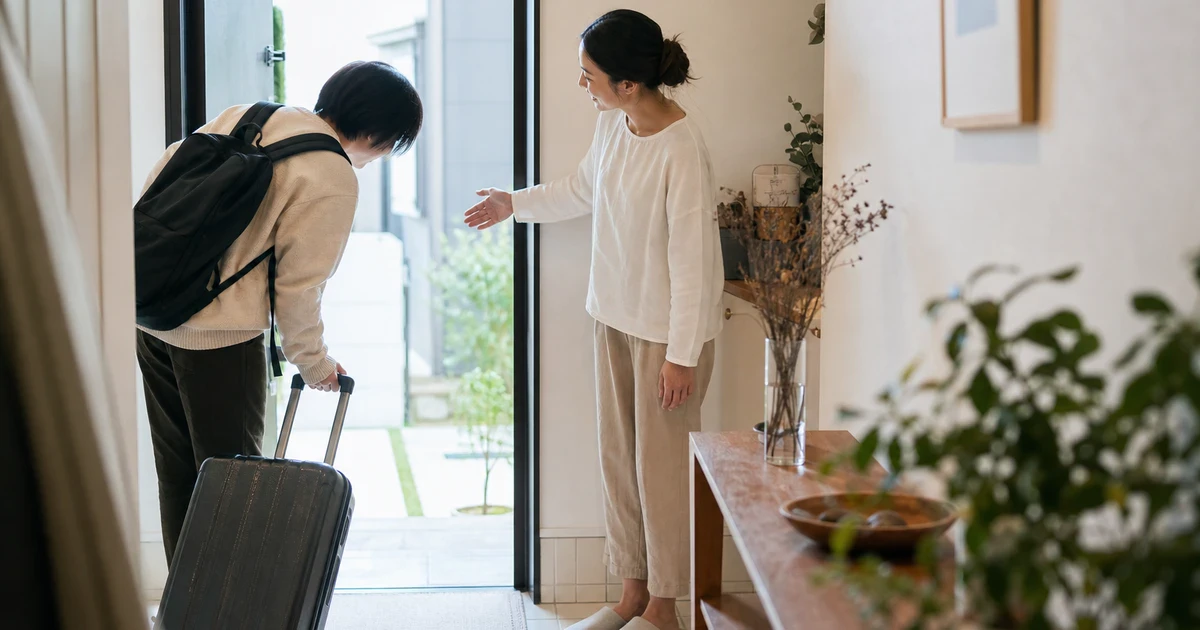
A homestay becomes much easier when you can say a few warm, practical phrases before you need them. You do not need perfect Japanese to make a good impression on your host family. You need clear greetings, polite requests, allergy and meal phrases, and a way to ask for help with house rules.
For learners who plan to study in Japan, these phrases are survival Japanese in the best sense: simple language that protects your comfort, shows respect, and helps small talk feel less stressful.
Essential Japanese Homestay Phrases
The most useful homestay Japanese is polite but not overly formal. With a host family, you are usually speaking to people who are caring for you in their home, so friendly polite Japanese is the safest starting point.
Japanese | Romaji | English Meaning |
|---|---|---|
はじめまして | Hajimemashite | Nice to meet you |
よろしくお願いします | Yoroshiku onegai shimasu | I look forward to your kindness / Please treat me well |
おはようございます | Ohayō gozaimasu | Good morning |
ただいま | Tadaima | I’m home |
おかえりなさい | Okaeri nasai | Welcome home |
いただきます | Itadakimasu | Said before eating / I humbly receive this |
ごちそうさまでした | Gochisōsama deshita | Thank you for the meal |
おいしいです | Oishii desu | It’s delicious |
ありがとうございます | Arigatō gozaimasu | Thank you very much |
すみません | Sumimasen | Excuse me / Sorry / Thank you, depending on context |
手伝いましょうか | Tetsudaimashō ka | Shall I help? |
もう一度お願いします | Mō ichido onegai shimasu | One more time, please |
ゆっくり話していただけますか | Yukkuri hanashite itadakemasu ka | Could you speak slowly? |
アレルギーがあります | Arerugī ga arimasu | I have an allergy |
食べられません | Taberaremasen | I cannot eat it |
お風呂は何時に使えますか | Ofuro wa nanji ni tsukaemasu ka | What time can I use the bath? |
門限は何時ですか | Mongen wa nanji desu ka | What time is curfew? |
門限に少し遅れそうです | Mongen ni sukoshi okuresō desu | I may be a little late for curfew |
これはどうすればいいですか | Kore wa dō sureba ii desu ka | What should I do with this? |
家のルールを教えてください | Ie no rūru o oshiete kudasai | Please tell me the house rules |
A short cultural note: many Japanese homes separate outside and inside spaces carefully. If you are unsure where to put shoes, bags, towels, or laundry, asking politely is better than guessing. A simple question like これはどうすればいいですか (kore wa dō sureba ii desu ka, what should I do with this?) is useful in many situations.
Phrases in Real Homestay Context
Useful phrases become easier to remember when you connect them to actual homestay moments: arriving, eating dinner, asking about the bath, checking curfew, and saying thank you after help.
はじめまして。今日からよろしくお願いします。 Hajimemashite. Kyō kara yoroshiku onegai shimasu. Nice to meet you. I look forward to your kindness from today.
アレルギーがあります。えびは食べられません。 Arerugī ga arimasu. Ebi wa taberaremasen. I have an allergy. I cannot eat shrimp.
お風呂は何時に使えますか。 Ofuro wa nanji ni tsukaemasu ka. What time can I use the bath?
門限に少し遅れそうです。すみません。 Mongen ni sukoshi okuresō desu. Sumimasen. I may be a little late for curfew. I’m sorry.
駅まで迎えに来てくださって、ありがとうございました。 Eki made mukae ni kite kudasatte, arigatō gozaimashita. Thank you very much for coming to pick me up at the station.
For small talk, keep your first topics simple: your hometown, food, school, hobbies, and your reason for studying Japanese. If you want more natural conversation topics, Kind Japanese also has a guide to How to Talk About Hobbies in Japanese (Phrases + Vocabulary), which pairs well with homestay preparation.
Common Mistakes
From a teacher’s perspective, learners often know the right vocabulary but need feedback on timing, pronunciation, and politeness level. Homestay Japanese is not only about grammar. It is about sounding clear, warm, and easy to understand in someone’s home.
Using casual Japanese too soon. Phrases like ありがとう (arigatō, thanks) and ごめん (gomen, sorry) are not rude among close people, but they can feel too casual at the beginning of a homestay. Start with ありがとうございます (arigatō gozaimasu, thank you very much) and すみません (sumimasen, excuse me / sorry).
Translating directly from English. “Can I take a bath?” sounds normal in English, but in Japanese it is usually more natural to ask about timing: お風呂は何時に使えますか (ofuro wa nanji ni tsukaemasu ka, what time can I use the bath?).
Forgetting to explain allergies clearly. If you have an allergy, do not rely only on “I don’t like it.” Use アレルギーがあります (arerugī ga arimasu, I have an allergy) and name the food. Clarity matters more than advanced grammar.
Saying yes without understanding. Many learners smile and say yes when they are nervous. In a homestay, it is better to ask もう一度お願いします (mō ichido onegai shimasu, one more time, please) or ゆっくり話していただけますか (yukkuri hanashite itadakemasu ka, could you speak slowly?).
Making curfew sound too casual. If you may be late, say 門限に少し遅れそうです (mongen ni sukoshi okuresō desu, I may be a little late for curfew). This sounds more responsible than simply saying “I’ll be late.”
Practice Routine for Speaking Naturally
A short daily routine is enough to make homestay phrases feel more automatic. The goal is not to memorise a huge script. The goal is to be ready for the first few seconds of real conversation.
Try this routine before you leave:
- Say five greeting phrases aloud every morning.
- Practise one meal phrase before lunch or dinner.
- Record yourself asking one house rule question.
- Repeat allergy, bath, and curfew phrases until they feel easy.
- Prepare one small talk answer about your hometown or hobby.
Three realistic LINE practice prompts you can prepare for teacher practice are:
- “I just arrived at my host family’s house. Help me make my first greeting sound natural.”
- “I need to explain an allergy politely and clearly.”
- “I want to ask about bath time, curfew, and house rules without sounding demanding.”
A simple arrival role-play can be built from three moves: greeting, thanks, and one question. For example, you greet the host family, thank them for welcoming you, then ask where to put your shoes or luggage. This kind of role-play is more useful than memorising isolated words because it trains timing and confidence.
For more casual language after you become closer to people around you, you may also want to study Japanese Phrases for Making Friends: 40 Casual Expressions. Just remember that a host family greeting should usually begin on the polite side.
Learning With a Teacher Before Your Homestay
One-on-one feedback is especially useful for homestay Japanese because small differences change the feeling of a phrase. A teacher can help you check whether your request sounds polite, whether your romaji reading matches natural pronunciation, and whether your English meaning is too literal.
In Kind Japanese’s standard one-on-one lessons, a focused 25-minute LINE lesson for homestay preparation might include:
- a quick warm-up using greetings and thank you phrases
- one target speaking task, such as explaining an allergy or asking about house rules
- correction of word choice, pronunciation, and politeness
- a short repeat practice so the corrected phrase becomes easier to say
- your own list of phrases to review before the next conversation
If you are preparing to study in Japan or live with a host family soon, bring your actual concerns: meals, bath routines, curfew, laundry, Wi-Fi, small talk, or what to say when you need help. You can start with a Free Trial lesson over LINE with Kind Japanese and practise the phrases you will really need.
FAQ
What Japanese level do I need for a homestay?
You can manage a homestay with beginner Japanese if you prepare practical phrases for greetings, meals, allergies, house rules, and asking for help. You do not need advanced grammar to be polite. Clear survival Japanese, good listening habits, and a willingness to ask again are more important at first.
Should I use romaji when practising homestay phrases?
Romaji is useful at the beginning, especially when you need to speak before you can read kana smoothly. Still, try to connect the sound to the Japanese script over time. Romaji should support pronunciation practice, not replace listening, teacher feedback, or learning basic kana.
How can I thank my host family naturally?
Use ありがとうございます for general thanks and ありがとうございました after someone has already done something for you. After meals, say ごちそうさまでした. For bigger help, add the action, such as thanking them for picking you up, helping with luggage, or explaining house rules.
What should I do if I do not understand a house rule?
Ask politely instead of pretending you understood. Useful phrases include “one more time, please,” “could you speak slowly,” and “what should I do with this?” A host family usually needs clear communication about daily routines, so simple questions are a responsible part of homestay life.

