
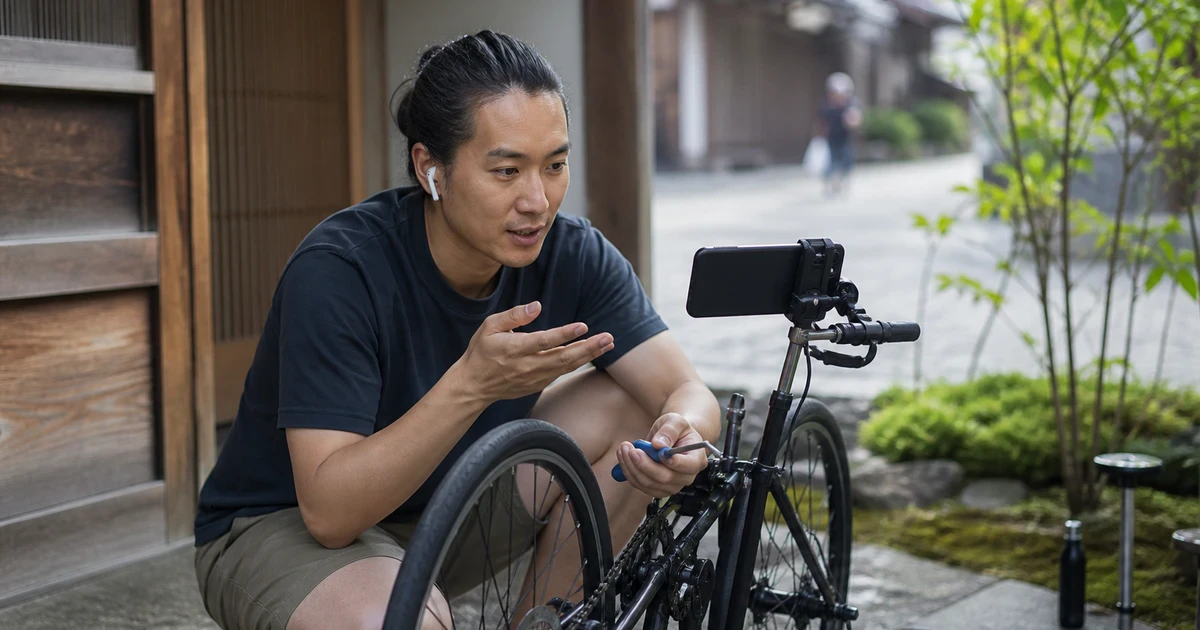
If you are searching for online japanese lessons for digital nomads in japan, the best fit is usually not a long lecture on grammar. It is a short, focused speaking session that helps you handle the exact situations you meet while moving between cities, coworking spaces, cafés, stations, and new neighbourhoods.
For many learners, online Japanese works best when it is practical, immediate, and easy to repeat. Kind Japanese offers one-on-one lessons over LINE, so you can keep your speaking practice tied to real life instead of waiting for the “perfect” study setup.
Why This Setup Works
The main advantage of online Japanese lessons for digital nomads in Japan is flexibility with purpose. Your schedule may change, but your speaking needs do not disappear. You still need to ask about Wi-Fi, confirm a meeting place, explain that you are moving today, or say that you can only study at certain hours.
A direct line of contact also matters. LINE is widely used in Japan for everyday communication, so using it for lesson contact feels natural and efficient. A short message is often enough to set up the kind of focused practice you actually need.
From a teacher's perspective, learners often do better when the lesson starts from one real situation instead of a broad topic. That way, the correction is useful immediately. If your main goal is speaking confidence, this pairs well with Build Speaking Confidence with a Japanese Tutor.
What To Practise First
Start with the phrases you need most often, then build outward. For digital nomads, the first layer is usually location, access, and scheduling.
Japanese | Romaji | English Meaning |
|---|---|---|
この近くにコワーキングスペースはありますか | Kono chikaku ni kowākingu supēsu wa arimasu ka | Is there a coworking space nearby? |
ワイファイは使えますか | Waifai wa tsukaemasu ka | Can I use Wi-Fi? |
今日は別の町に移動します | Kyō wa betsu no machi ni idō shimasu | I’m moving to another city today. |
この時間ならレッスンできます | Kono jikan nara ressun dekimasu | I can take a lesson at this time. |
もう一度ゆっくり言ってください | Mō ichido yukkuri itte kudasai | Please say it slowly one more time. |
These are simple, but they cover a lot of real use. They also give a teacher something concrete to correct, which is much more helpful than practising isolated vocabulary.
The key is not only understanding the phrase, but saying it in a natural way under light pressure. If you want more everyday conversation practice, Japanese Conversation Practice Online: Speak Naturally is a useful companion topic.
Example sentences
この近くにコワーキングスペースはありますか。 Kono chikaku ni kowākingu supēsu wa arimasu ka. Is there a coworking space nearby?
ワイファイは使えますか。 Waifai wa tsukaemasu ka. Can I use Wi-Fi?
今日は別の町に移動します。 Kyō wa betsu no machi ni idō shimasu. I’m moving to another city today.
この時間ならレッスンできます。 Kono jikan nara ressun dekimasu. I can take a lesson at this time.
もう一度ゆっくり言ってください。 Mō ichido yukkuri itte kudasai. Please say it slowly one more time.
How A 25-Minute Lesson Can Work
A 25-minute one-on-one lesson is long enough for a focused cycle: warm-up, speaking task, correction, and a short review note you make yourself. That structure is especially useful for digital nomads because you can practise one real problem instead of trying to cover everything at once.
A practical lesson flow can look like this:
- Warm-up: briefly say where you are, what changed, and what you need today.
- Target speaking task: ask about Wi-Fi, a coworking space, transport, or a new schedule.
- Correction: repeat the sentence after the teacher adjusts the wording or sound.
- Review note: write your own short question list so you can reuse the useful parts later.
Here is a simple correction sequence that often helps:
- Learner attempt:
ここ Wi-Fi 使う?is not natural Japanese. - Better:
「ここでワイファイは使えますか」(Koko de waifai wa tsukaemasu ka, Can I use Wi-Fi here?)is natural. - Follow-up: if the situation is casual, a teacher can help you shorten it; if it is more formal, the phrasing can be made softer.
That kind of repair is valuable because it shows you why a sentence sounds off, not just that it does. In one-on-one feedback, a teacher can wait until you finish speaking, then point to the exact part that needs adjustment instead of interrupting every sentence.
If you are changing cities often, it also helps to propose lesson windows in your own time zone, not just “sometime tomorrow.” Say what you can do in your local morning, afternoon, or evening, and convert only once when you message in LINE. That makes planning easier for both sides.
Common Mistakes
From a teacher's perspective, the biggest problems are often small but very repeatable. They are not usually about motivation. They are about sound, symbol, and register.
A few patterns show up clearly in speaking practice:
- Learners confuse kana shapes such as ツ/シ, ぬ/め, ね/れ, or ソ/ン/リ when reading signs, names, or chat messages.
- Learners sometimes pick up second-person words from anime or games, then use 君 (kimi, you), そなた (sonata, you, very old-fashioned), or あんた (anta, you, informal and sometimes rude) in places where a name or no subject is better.
- Learners may copy だってばよ (datteba yo, an anime-style catchphrase) into real speech, even though it is not standard everyday Japanese.
- Learners often change number readings in the middle of a sentence, which makes times, dates, and prices harder to follow.
A useful correction habit is to speak first, then review. If you stop yourself too early, you never hear the full sentence that needs help. Simple kana review cards can also be useful when you keep mixing the same symbols.
This is one reason online Japanese lessons for digital nomads in Japan work well when they stay specific. If you want to practise a message like “I’m moving cities” or “Can I work here?”, the lesson should correct that exact sentence, not just general pronunciation.
FAQ
Do I need advanced Japanese before starting?
No. One-on-one online Japanese is useful at beginner, intermediate, and advanced levels because the lesson can match your current speaking range. A teacher can simplify the sentence, correct the key part, and help you build from what you already know instead of forcing a high-level conversation.
What should I bring to a lesson if I travel a lot?
Bring one real situation, one sentence you want to say, and one question you expect to ask. For example, you might need to confirm Wi-Fi, ask about a coworking space, or explain a schedule change. That gives the lesson a clear target and makes correction easier to reuse.
How should I propose lesson times across time zones?
Use your own time zone first, then state the window plainly. For example, say whether you are free in your morning, afternoon, or evening. If you move often, avoid vague availability. Clear time windows save back-and-forth and make LINE communication much smoother.
Is speaking practice enough if I also want to read Japanese better?
Speaking practice is a strong base, but reading and listening still need their own attention. A teacher can help you turn reading items into spoken responses, but kana recognition, grammar reading, and listening speed improve faster when you practise them directly as well.
If you want online Japanese lessons for digital nomads in Japan that stay focused on the exact situation you are facing, start with a Free Trial over LINE.

