
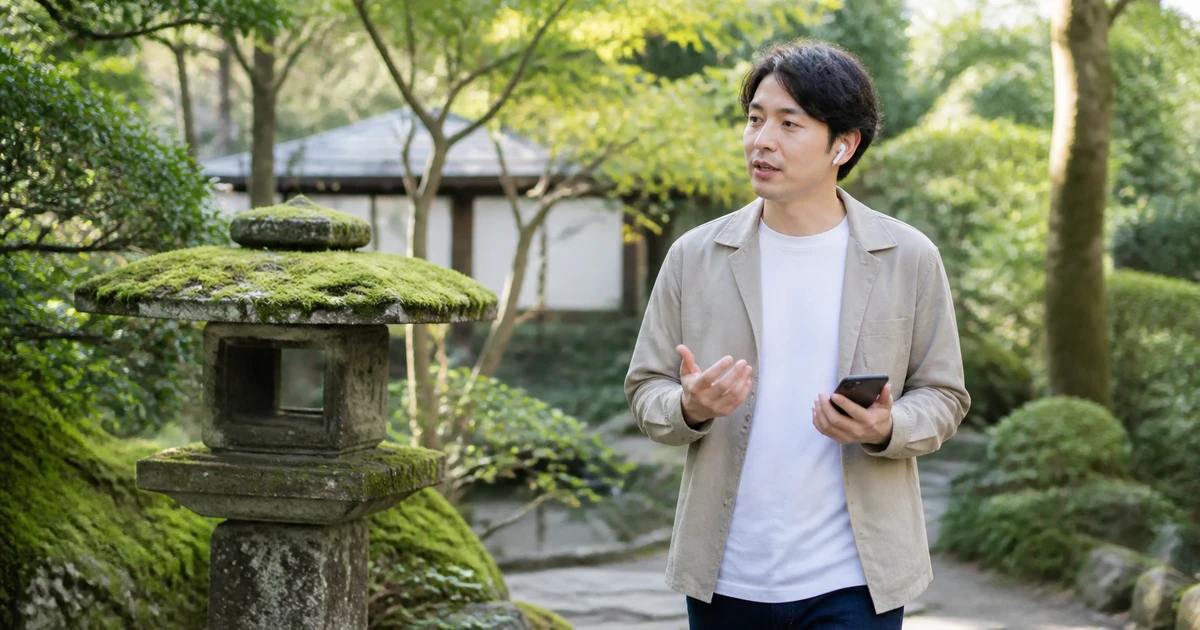
Many learners search for online Japanese lessons for shy learners practicing conversation because they want speaking practice without the pressure of a classroom. That is a sensible goal. If you feel nervous, quiet, or slow to answer, one-on-one online Japanese can still work very well, because the lesson can be built around one small exchange at a time.
The key is not to force long answers. The key is to make the first answer possible.
Why shy learners need a smaller conversation start
Shy learners usually improve faster when the speaking task is simple, repeatable, and easy to recover from. A big open-ended discussion can feel overwhelming. A short self-introduction, a clarification question, or a slow-speech request is much easier to say and much easier to repeat.
From a teacher's perspective, learners often do better when correction comes after they finish a full thought. Stopping in the middle of every sentence can break momentum. In one-on-one lessons, a teacher can let you speak first, then give a short correction, then ask you to try again in a cleaner version.
That matters in online Japanese lessons because the format is already private. You are not competing with a group. You can focus on one line, one reply, and one more try.
If you want a broader confidence-building view, Build Speaking Confidence with a Japanese Tutor explains how one-on-one support can lower the pressure of live conversation. For a more general conversation-first angle, Japanese Conversation Practice Online: Speak Naturally is a useful companion.
What one-on-one LINE lessons make easier
One-on-one online lessons over LINE are especially useful when you need a low-pressure place to speak out loud. The format is simple, familiar, and focused. You do not need to prepare a presentation. You just need a small conversation goal.
Kind Japanese's standard one-on-one lessons are 25 minutes, which is long enough to warm up, speak, get correction, and try again without making the session feel heavy. For shy learners, that balance is important. A short, focused lesson is easier to enter than a long, open-ended one.
A teacher can also help you notice when your Japanese is correct but too stiff for everyday conversation. That is a common issue. Learners may know the grammar, but the sentence still sounds like a textbook line instead of something a person would actually say. In live feedback, a teacher can show a more natural option without overwhelming you with too many changes.
A practical way to use this kind of lesson is to bring one topic only:
- a self-introduction
- asking for repetition
- asking the other person to speak more slowly
- explaining that you want to say something more simply
If your usual chat app is LINE, the lesson environment feels less formal from the start. That small familiarity can make online Japanese feel more approachable, especially when you are still building confidence.
A simple trial-preparation flow
A free trial works best when you use it to test one speaking situation, not to prove everything at once. You can share your level, state your goal, and see how one-on-one practice feels in a real conversation.
A simple trial-preparation flow is:
- Current level: say what you can already do, even if the answer is short.
- Goal: say what you want to become better at, such as speaking more smoothly.
- One speaking situation: choose one real-life scene, like introducing yourself or asking a question.
- One question: ask about one phrase, one sound, or one sentence pattern.
- Teacher feedback: listen for one or two points that can be improved first.
- Next-step advice: leave with one phrase or one small task to reuse later.
This is also where shy learners can be honest. If you are nervous, say so. If you need more time, say so. The point is not to sound polished; the point is to start speaking in a manageable way.
A simple self-introduction is often the best first task because it is short, familiar, and reusable. Once that feels safe, you can move to clarification, slower speech, and small follow-up questions.
Phrases that keep you speaking
Short phrases are enough to keep a conversation moving. You do not need a long answer every time. You need a reliable set of phrases that help you pause, repeat, simplify, and continue.
Japanese | Romaji | English Meaning |
|---|---|---|
すみません、もう一度お願いします | Sumimasen, mō ichido onegaishimasu | Sorry, could you say that again? |
ちょっと考えさせてください | Chotto kangaesasete kudasai | Please let me think for a moment |
もう少しゆっくり話してもらえますか | Mō sukoshi yukkuri hanashite moraemasu ka | Could you speak a little more slowly? |
うまく言えないんですが、もう少し簡単に言ってもいいですか | Umaku ienai n desu ga, mō sukoshi kantan ni itte mo ii desu ka | I can't express it well, but may I say it more simply? |
はじめまして、日本語の会話を練習したいです | Hajimemashite, Nihongo no kaiwa o renshū shitai desu | Nice to meet you. I want to practice Japanese conversation |
These are useful because they solve different problems.
- Use すみません、もう一度お願いします (Sumimasen, mō ichido onegaishimasu, "Sorry, could you say that again?") when you did not hear or understand the sentence.
- Use ちょっと考えさせてください (Chotto kangaesasete kudasai, "Please let me think for a moment") when you know what you want to say but need a second to form it.
- Use もう少しゆっくり話してもらえますか (Mō sukoshi yukkuri hanashite moraemasu ka, "Could you speak a little more slowly?") when the speed is too fast.
- Use うまく言えないんですが、もう少し簡単に言ってもいいですか (Umaku ienai n desu ga, mō sukoshi kantan ni itte mo ii desu ka, "I can't express it well, but may I say it more simply?") when you want to repair your own answer instead of asking for a repeat.
Three simple practice scripts help shy learners most:
- Self-introduction exchange - Say your name, where you are from, and why you want to study. - Keep it short enough to repeat once or twice.
- Clarification exchange - Ask the teacher to repeat the sentence. - Then try answering again in a shorter form.
- Slow-speech request exchange - Ask for slower speech. - Repeat the same answer at the slower pace.
A useful cultural note: Japanese small talk often feels smoother when you use brief listener responses and polite softeners. That means short phrases are not a weakness. Words like そうなんですか (sō nan desu ka, "Is that so?") and なるほど (naruhodo, "I see") help you stay in the conversation while you gather your next sentence.
Example sentences
はじめまして。日本語の会話を練習したいです。
Hajimemashite. Nihongo no kaiwa o renshū shitai desu.
Nice to meet you. I want to practice Japanese conversation.
すみません、もう一度お願いします。
Sumimasen, mō ichido onegaishimasu.
Sorry, could you say that again?
ちょっと考えさせてください。
Chotto kangaesasete kudasai.
Please let me think for a moment.
もう少しゆっくり話してもらえますか。
Mō sukoshi yukkuri hanashite moraemasu ka.
Could you speak a little more slowly?
うまく言えないんですが、もう少し簡単に言ってもいいですか。
Umaku ienai n desu ga, mō sukoshi kantan ni itte mo ii desu ka.
I can't express it well, but may I say it more simply?
Common Mistakes
From a teacher's perspective, the biggest mistake is trying to be perfect before speaking. Shy learners often wait too long, then lose the chance to answer naturally. A better approach is to give a short answer first, then improve it in the next round.
Another common mistake is mixing up two different needs: asking for repetition and buying time to think. If you need the sentence again, use すみません、もう一度お願いします (Sumimasen, mō ichido onegaishimasu, "Sorry, could you say that again?"). If you need time to phrase your own idea, use ちょっと考えさせてください (Chotto kangaesasete kudasai, "Please let me think for a moment").
Learners also often use textbook-like wording that sounds correct but not natural. In one-on-one practice, a teacher can point out which parts are fine and which parts would sound more natural in everyday conversation.
A final mistake is trying to stretch one sentence into a full answer. Shy learners usually sound more confident when they keep the first response short, then add one more sentence if needed.
If you want to try this style of lesson in a low-pressure way, book a Free Trial over LINE and bring one speaking situation you want to handle more naturally.
FAQ
Can shy learners really benefit from online Japanese lessons?
Yes. Shy learners often benefit a lot from one-on-one online Japanese because the speaking space is private and the task can stay small. Instead of performing for a group, you can practise one sentence, get a short correction, and try again without much pressure.
What should I prepare for a free trial?
Bring your current level, your goal, and one speaking situation you want to practise. If you are nervous, say that directly. In the free trial, you can use the time to see how one-on-one conversation feels and ask for help with one phrase or one response style.
What if I freeze during the lesson?
Use a pause phrase like ちょっと考えさせてください (Chotto kangaesasete kudasai, "Please let me think for a moment"). That gives you time without breaking the conversation. A teacher can then wait, repeat the idea in simpler words, or help you rebuild the sentence step by step.
Do I need long answers to practice conversation?
No. Short answers are enough at the start. In fact, short answers are often better for shy learners because they are easier to produce and easier to improve. One good exchange, repeated calmly, is more useful than one long answer that you cannot finish.

