
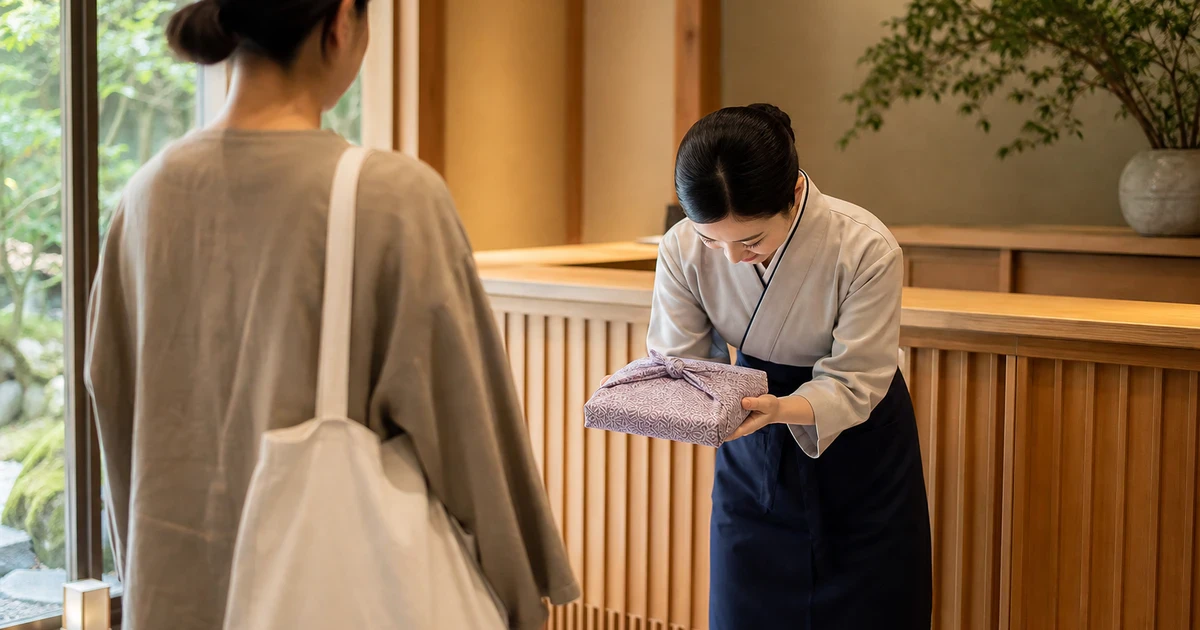
A japanese tutor for customer service role play is useful when you need to sound calm, polite, and quick in real service situations. The goal is not to memorize a script and hope it works. The goal is to learn how to confirm details, ask a customer to repeat, refuse politely, and close the interaction cleanly.
With online Japanese one-on-one lessons over LINE, a teacher can slow the scene down, correct your wording, and rebuild the line until it sounds natural enough to use. That kind of speaking practice is especially helpful if you already understand basic grammar but hesitate the moment a customer speaks back.
What a Tutor Helps You Fix
A tutor helps most when your problem is not vocabulary alone, but delivery under pressure. In customer service role play, learners often know the right words in theory and still sound too abrupt, too long, or too unsure in real time.
The biggest gains usually come from three things:
- Shortening your response so it sounds calm and professional.
- Choosing the right level of politeness for the situation.
- Practising a second attempt after correction, not just repeating the first line once.
If you want a deeper confidence-building approach, you can also read Build Speaking Confidence with a Japanese Tutor. The same principle applies here: live correction matters more than passive review.
From a teacher’s perspective, customer service role play works best when the learner practices one scene at a time. A return request, a reservation change, a phone inquiry, or a complaint all need different wording, even if the English summary sounds similar.
A 25-Minute Lesson Flow That Works
A focused 25-minute one-on-one lesson is enough for a strong practice loop. Kind Japanese standard one-on-one lessons are 25 minutes, which is long enough to role-play, correct, and retry without drifting into general conversation.
A practical lesson flow looks like this:
- Warm-up: name the situation in one sentence. - Example: “A customer wants to change a reservation.”
- Target speaking task: do one short role play. - Keep it to one scene, not five.
- Correction: fix the exact line that sounds unnatural. - The teacher can tighten grammar, politeness, and rhythm.
- Retry: say the improved line again. - This is where the learning sticks.
- Learner-owned review note: write down one pattern and one question. - That keeps the lesson focused after class.
For a free trial, shrink the scope even further. Use one speaking situation, one customer reply, and one retry. That gives you a clear sense of how the lesson feels without trying to cover everything at once.
A short micro-routine also helps you decide whether you want to continue. If you later build a weekly rhythm, How to Structure Weekly Japanese Lessons with a Tutor can help you plan what to practise between sessions.
Mini Dialogue to Reuse
Customer: 予約の時間を変えたいです。 Yoyaku no jikan o kaetai desu. I want to change the reservation time.
Learner response: 少々お待ちください。予約内容を確認いたします。 Shōshō omachi kudasai. Yoyaku naiyō o kakunin itashimasu. Please wait a moment. I will check the reservation details.
Teacher correction: 少々お待ちください。ご予約の内容を確認いたします。 Shōshō omachi kudasai. Go-yoyaku no naiyō o kakunin itashimasu. Please wait a moment. I will confirm the details of your reservation.
Improved retry line: 少々お待ちください。ご予約の内容を確認いたします。 Shōshō omachi kudasai. Go-yoyaku no naiyō o kakunin itashimasu. Please wait a moment. I will confirm the details of your reservation.
That speak-correct-repeat loop is simple, but it is exactly what many learners need. One clean retry often matters more than ten minutes of passive explanation.
Key Phrases for Customer Service Role Play
Start with a small set of phrases that cover the most common moves in service conversation. These are flexible enough to use in many scenarios, and they make a strong base for online Japanese speaking practice.
Japanese | Romaji | English Meaning |
|---|---|---|
少々お待ちください | Shōshō omachi kudasai | Please wait a moment |
内容を確認いたします | Naiyō o kakunin itashimasu | I will confirm the details |
お名前を確認いたします | O-namae o kakunin itashimasu | I will confirm your name |
もう一度お願いします | Mō ichido onegai shimasu | Please say that again |
申し訳ございませんが、その対応はできません | Mōshiwake gozaimasen ga, sono taiō wa dekimasen | I’m sorry, but I cannot handle that request |
承知いたしました | Shōchi itashimashita | Understood |
ありがとうございました | Arigatō gozaimashita | Thank you very much |
These lines become more useful when you hear them in context. Try these short examples in a lesson:
少々お待ちください。内容を確認いたします。 Shōshō omachi kudasai. Naiyō o kakunin itashimasu. Please wait a moment. I will confirm the details.
お名前をもう一度お願いします。 O-namae o mō ichido onegai shimasu. Please say your name one more time.
申し訳ございませんが、その対応はできません。 Mōshiwake gozaimasen ga, sono taiō wa dekimasen. I’m sorry, but I cannot handle that request.
ありがとうございました。失礼いたします。 Arigatō gozaimashita. Shitsurei itashimasu. Thank you very much. Excuse me.
A small cultural note matters here: in Japanese customer service, a brief and calm refusal often sounds more professional than a long explanation. That is why short, controlled phrasing can be more effective than trying to say everything at once.
Common Mistakes
Learners often make the same few mistakes in customer service role play, and a teacher can fix them quickly once they appear on the page.
- They translate directly from English and sound too blunt.
- English “No, we can’t do that” often needs a softer Japanese frame.
- They make the sentence too long.
- In service speech, shorter can sound more reliable.
- They use one polite phrase for every situation.
- Confirming details, asking someone to repeat, and closing the call all need different wording.
- They stop after the first correct sentence.
- The stronger habit is to say the improved line again until it feels usable.
Learners also often confuse “polite” with “wordy.” A careful, compact line usually sounds better than a heavily decorated sentence. The point is not to sound fancy. The point is to sound clear, calm, and appropriate.
Prepare for LINE Practice
The best lesson preparation is simple: bring one real customer-service situation and one thing you want to say better. A screenshot of a message, menu, booking page, form, or notice can be enough material for a focused role play.
Here is a practical way to prepare:
- Pick one scene.
- Reservation change, refund question, store inquiry, or complaint handling.
- Write one goal.
- For example, “I want to ask the customer to repeat the number.”
- Bring one sentence you already know.
- The teacher can improve it instead of starting from zero.
- Ask for one retry.
- The second attempt is where confidence grows.
If you want to turn this into a steady routine, use your own time zone when you think about lesson windows. Saying “I can do weekday evenings in my local time” is often clearer than giving vague availability.
A service like Kind Japanese is a good fit when you want a one-on-one lesson that stays close to actual speaking use rather than drifting into general study. If that is your goal, a focused trial conversation is usually the best first step.
FAQ
Do I need advanced Japanese to practice customer service role play?
No. You can start with basic polite forms and build from there. A tutor can help you make simple lines sound natural, even if your vocabulary is limited. The key is to practise useful responses, not to wait until your Japanese feels perfect.
What should I bring to a lesson?
Bring one situation, one sentence, and one question. A customer message, booking screen, menu, or form is enough. That gives the teacher something concrete to work with, and it keeps the lesson focused on real speaking, not abstract grammar review.
Is this useful if I already know keigo?
Yes. Knowing polite forms is not the same as using them smoothly in a live exchange. Role play helps you manage timing, tone, and reaction speed. A teacher can also show you when a shorter line sounds better than a more formal one.
How does a free trial help me decide?
A free trial lets you test the lesson style before you commit to a routine. You can see whether the correction style, pace, and speaking focus match your needs. For customer service practice, that first exchange is often enough to tell whether the format works for you.
If you want a japanese tutor for customer service role play, start with a Free Trial over LINE and bring one real situation to practise.

