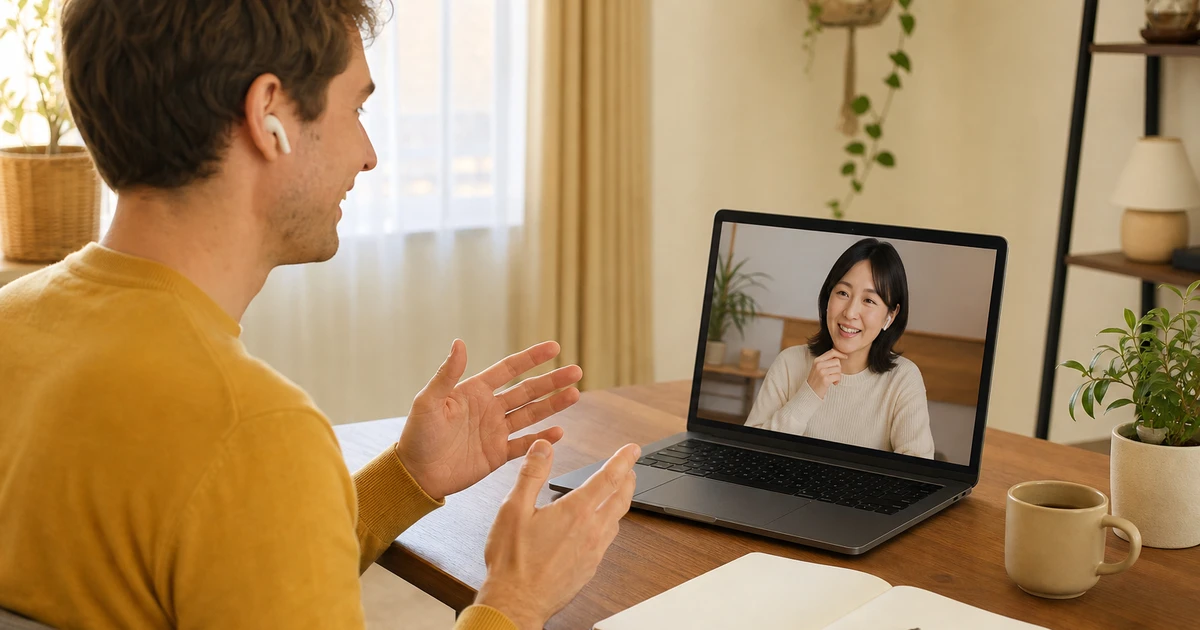
If flashcards make you quit before you start, online Japanese lessons can still work very well. The better approach is not to force more memorisation, but to use a one-on-one Japanese tutor who turns the words you actually want to say into speaking practice, correction, and a simple study plan.
That is especially useful for learners who prefer speaking-based study over isolated review. With Kind Japanese, the standard one-on-one lesson is a 25-minute lesson over LINE, so the session stays focused and practical instead of turning into a long study lecture.
Why Flashcard-Free Study Works
Flashcards help recognition, but they do not always help you speak. If you can tap the right answer on a card but freeze in a real conversation, you need retrieval in context, not more isolated prompts.
A speaking-first lesson gives you three things at once:
- real language you can use
- live correction when something sounds off
- a clear pattern to review later
From a teacher’s perspective, learners often remember a phrase better after they have tried to say it aloud than after they have only seen it on a card. That is why a short, repeatable speaking routine can beat a pile of flashcards you never open again.
There is also a cultural benefit. In Japanese conversation, it is normal to ask for clarification politely instead of staying silent. That means a small set of repair phrases can be more useful than a large deck of vocabulary cards.
If your main goal is confidence in speaking, Build Speaking Confidence with a Japanese Tutor is a helpful companion read.
What To Practise Instead
The simplest substitute for flashcards is a small set of usable phrases tied to one situation. A one-on-one Japanese tutor can turn that into a study plan by choosing one topic, one grammar point, and one correction target.
Use this kind of core material first:
Japanese | Romaji | English meaning |
|---|---|---|
まず話してみます | mazu hanashite mimasu | I’ll try speaking first |
もう一度お願いします | mō ichido onegaishimasu | Please say it once more |
ゆっくり話してください | yukkuri hanashite kudasai | Please speak slowly |
その言い方は自然ですか | sono iikata wa shizen desu ka | Is that phrasing natural? |
ここがわかりません | koko ga wakarimasen | I do not understand this part |
These phrases are useful because they support conversation, not memorisation for its own sake. They also make it easier for the teacher to see where you need help.
A good speaking-based study routine usually looks like this:
- Pick one situation, such as ordering food, introducing yourself, or asking about plans.
- Choose three to five phrases that fit that situation.
- Say them aloud before looking at any notes.
- Get teacher feedback on pronunciation, word choice, and sentence endings.
- Keep one short review note for the next lesson.
If kanji memory is your bigger obstacle, Easiest Way to Remember Kanji Without Guessing pairs well with a speaking-first routine.
A Simple 25-Minute LINE Lesson Flow
A 25-minute lesson works best when the goal is narrow. The point is not to cover everything. The point is to get one useful speaking win and leave with a clearer next step.
A practical LINE lesson flow can be this:
- warm-up: one easy question to get your mouth moving
- target speaking task: one real-life situation, such as a self-introduction or a short request
- teacher feedback: one or two corrections that matter most
- learner review note: one sentence, one pattern, or one question to remember
If you live outside Japan, propose lesson windows in your own time zone first. Say whether mornings, afternoons, or evenings work best where you live, then give two or three options. That keeps the message simple and makes the time conversion easier for everyone.
These example sentences show the kind of speech you can practise in a lesson:
今日はまず話してみます。
Kyō wa mazu hanashite mimasu.
Today I’ll try speaking first.
その言い方は自然ですか。
Sono iikata wa shizen desu ka.
Is that phrasing natural?
もう一度ゆっくりお願いします。
Mō ichido yukkuri onegaishimasu.
Please say it once more slowly.
メモを見ながら話してもいいですか。
Memo o minagara hanashite mo ii desu ka.
May I speak while looking at my notes?
This is where a LINE lesson is especially useful. You can keep the exchange light, direct, and focused on the exact sentence you want to use next.
Common Mistakes
From a teacher’s perspective, learners often make the same mistake when they dislike flashcards: they replace memorisation with no structure at all. That usually leads to random practice, weak recall, and frustration.
A better approach is to keep the structure small and manageable.
- Trying to learn too many words before speaking. A short speaking set is easier to remember than a long list of isolated items.
- Correcting every small error at once. It is usually better to focus on one high-value pattern per lesson.
- Waiting until you “feel ready” to speak. Speaking-based study works because practice comes before perfection.
- Ignoring pronunciation details that affect clarity.
In our one-on-one lessons, a live teacher can also help with small sound confusions that cards never solve. Katakana pairs like ツ (tsu, katakana “tsu”) and シ (shi, katakana “shi”) can look similar on the page until someone points out stroke direction and length. The same goes for ソ (so, katakana “so”), ン (n, katakana “n”), and リ (ri, katakana “ri”). Hearing and seeing the difference together is much more effective than guessing from memory.
A useful correction style is to let the learner finish the sentence first, then give feedback after the full thought is out. That keeps the conversation natural and makes the correction easier to remember.
FAQ
Can I learn Japanese without flashcards at all?
Yes, if you still review useful phrases in context. Many learners do better when they replace large flashcard decks with speaking practice, short corrections, and a small study plan. Flashcards are optional; speaking-based study is often more sustainable if you hate repetitive review.
Is a 25-minute lesson enough?
Yes, when the lesson has one clear purpose. A 25-minute lesson is enough for a warm-up, one target speaking task, teacher feedback, and a short review note. The value comes from focus, not from trying to cram in every grammar point at once.
What should I prepare for a free trial lesson?
Bring your current level, one goal, one speaking situation, and one question. If you want to avoid flashcards, say that clearly. A teacher can then shape the trial conversation around your needs and suggest a study plan that fits your learning style.
How do I know if this is better than self-study?
If you understand the material but still hesitate when speaking, live correction can help more than more memorisation. One-on-one feedback is especially useful when you want clearer pronunciation, faster recall, or a more natural sentence pattern in real conversation.
If you want to try a speaking-based routine without building another deck of flashcards, book a Free Trial and bring one real situation you want to say in Japanese.
LEARN WITH OUR TEACHERS
Ready to use what you learned in a real lesson?
Friendly Kind Japanese teachers support you with live online lessons shaped around your level and goals.
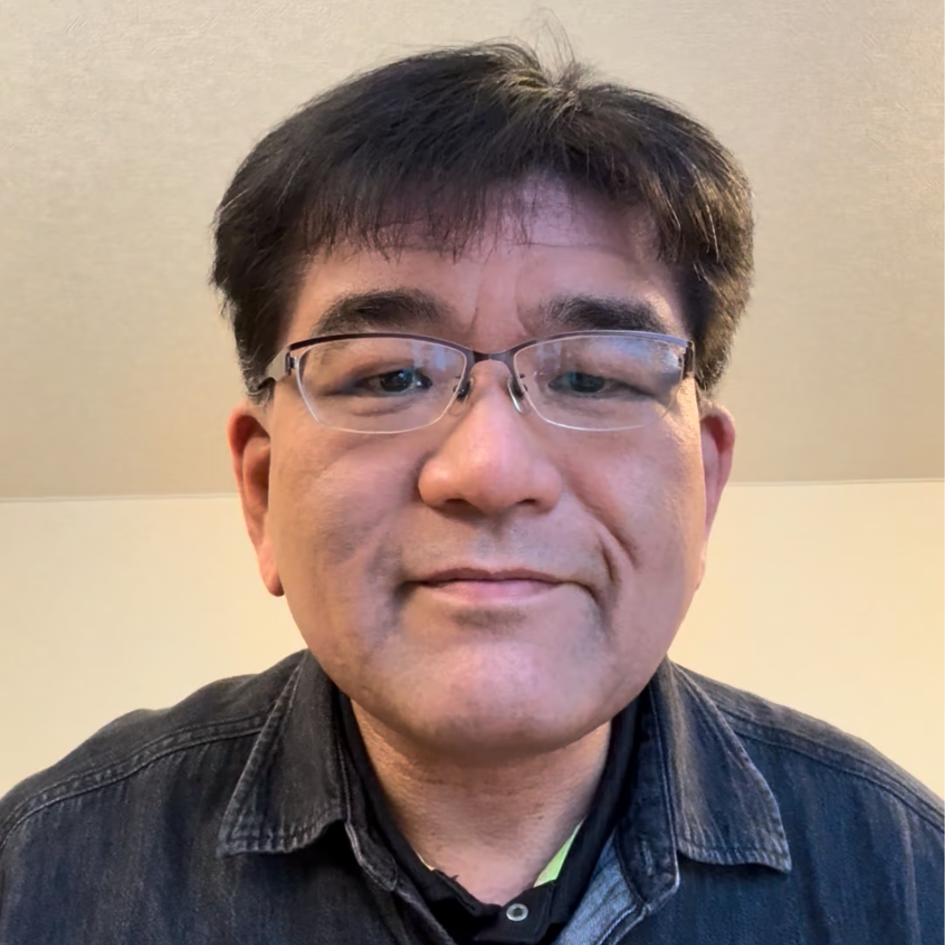
Takeshi Matsuda
Registered Japanese language teacher
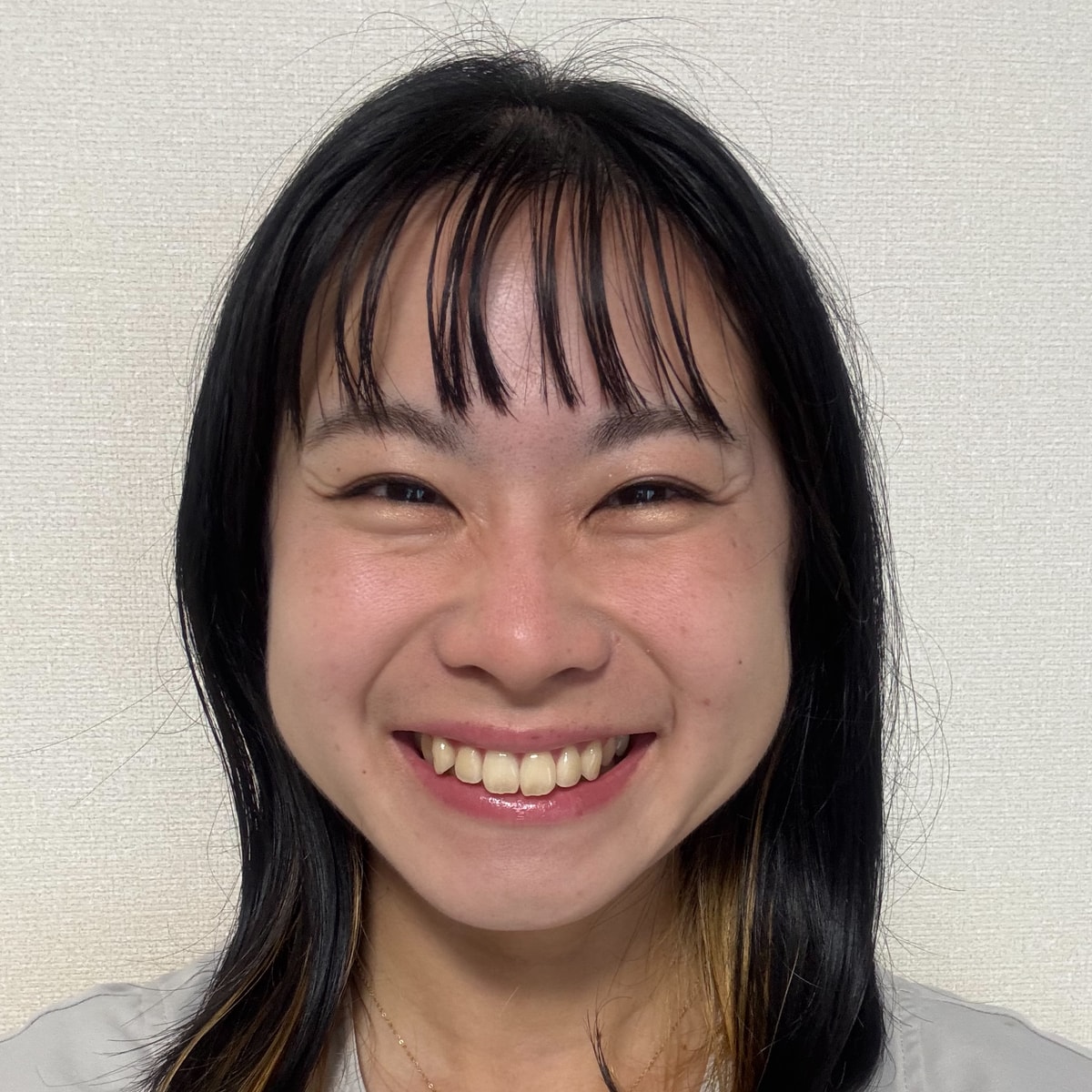
Mizuki Shimooka
Native Japanese speaker & English teacher