
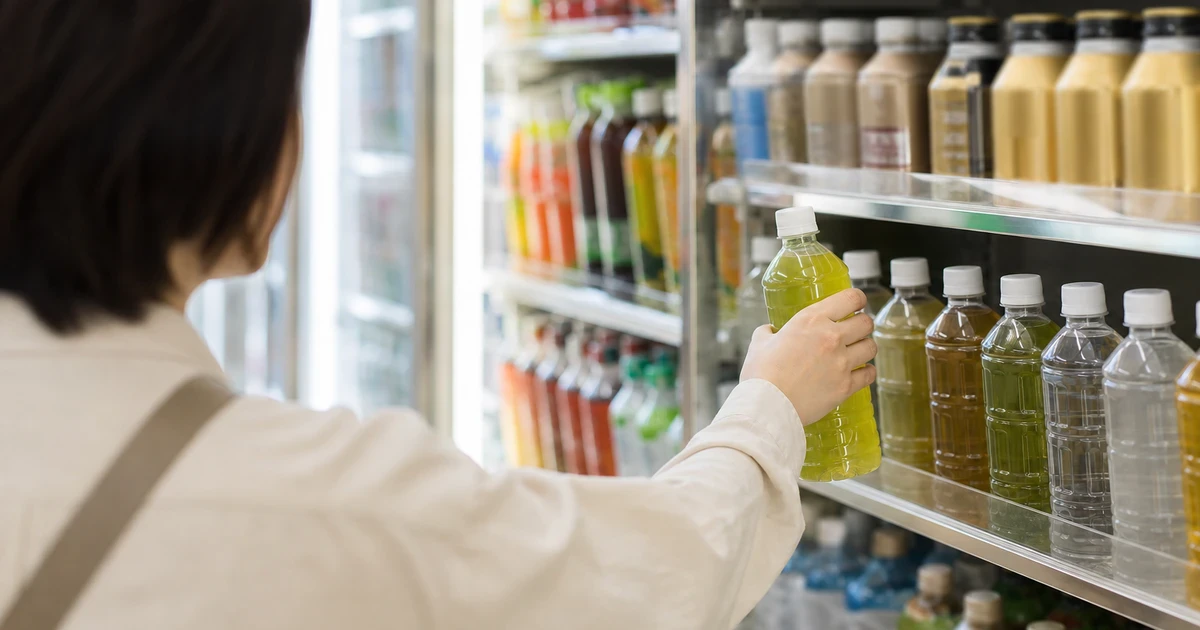
Japanese convenience store drinks are varied, convenient, and useful for everyday Japanese practice. A typical konbini (コンビニ, convenience store), often spelled “conbini” in English, offers chilled water, tea, coffee, juice, soft drinks, energy products, and alcohol.
The shops are also practical language-learning environments. Product labels introduce useful vocabulary, while checkout conversations help you practise short, natural requests. Whether you are visiting Tokyo or living elsewhere, store drinks can teach you how Japanese describes flavor, sweetness, temperature, and strength.
What Drinks Can You Find in a Japanese Convenience Store?
Japanese convenience stores usually offer familiar international products alongside distinctly Japanese options. Refrigerated shelves commonly contain water, milk, fruit juice, tea, sports drinks, carbonated beverages, and yogurt-based drinks.
Green tea is one of the most common choices. You may also find barley tea, roasted tea, black tea, milk tea, and drinks made with citrus or seasonal fruit. Many teas are unsweetened, so checking the label is more reliable than judging by the packaging.
Coffee is another major category. Depending on the location, products and services may include canned coffee, bottled iced coffee, café lattes, and fresh-brewed coffee made by an in-store machine. Fresh-brewed coffee is a well-known quick option, especially in the morning.
Common non-alcoholic options include:
- Bottled water, sparkling water, and flavored water
- Green tea, barley tea, and roasted tea
- Canned or bottled coffee
- Fruit juice and vegetable juice
- Sports drinks and energy drinks
- Soda, milk drinks, and yogurt beverages
Japan’s convenience stores also sell seasonal products. A drink may feature peach, melon, grape, yuzu, or another limited-time flavor, so the range changes throughout the year. Some stores have extensive selections, while smaller shops may carry fewer options.
Alcohol, Strong Zero, and Other Labels
Many convenience stores sell alcohol, although the exact selection depends on the shop. Beer, chūhai, wine, sake, and whisky-based drinks are common categories. A highball usually combines whisky and soda, although individual products can vary.
Strong Zero is a well-known style of canned chūhai associated with strong alcohol content and zero sugar. “Zero” generally refers to sugar, not alcohol, so read the alcohol percentage carefully before buying or drinking it.
When reading a drink label, use this simple workflow:
- Identify the category: tea, coffee, juice, soda, energy drink, beer, or another product.
- Check sweetness. 無糖 (mutō, unsweetened) indicates no added sugar or a sugar-free positioning.
- Check alcohol information. ノンアルコール (non'arukōru, non-alcoholic) indicates a non-alcoholic product, while アルコール分 (arukōru-bun, alcohol content) introduces the alcohol percentage.
- Check flavor and strength. Words describing strong carbonation, fruit, or citrus can help you predict the taste.
- If the label remains unclear, ask a store employee politely.
A cultural note is important: alcohol purchases are subject to age restrictions in Japan, and a store may check identification. Follow local rules and the store’s procedures.
Japanese | Hepburn romaji | English meaning |
|---|---|---|
水 | mizu | water |
緑茶 | ryokucha | green tea |
麦茶 | mugicha | barley tea |
ほうじ茶 | hōjicha | roasted green tea |
ジュース | jūsu | juice |
エナジードリンク | enajī dorinku | energy drink |
チューハイ | chūhai | canned alcoholic drink, usually shōchū or another spirit with soda and flavoring |
ビール | bīru | beer |
日本酒 | nihonshu | Japanese rice wine |
無糖 | mutō | unsweetened / no sugar |
ノンアルコール | non'arukōru | non-alcoholic |
アルコール分 | arukōru-bun | alcohol content |
強炭酸 | kyōtansan | strongly carbonated |
ハイボール | haibōru | whisky and soda highball |
缶コーヒー | kan kōhī | canned coffee |
カフェラテ | kafe rate | café latte |
コンビニコーヒー | konbini kōhī | convenience-store coffee |
Choosing Coffee and Practising Real Requests
Convenience-store coffee has several useful distinctions. 缶コーヒー (kan kōhī, canned coffee) is ready-made and sold in a can. カフェラテ (kafe rate, café latte) describes a milk-based coffee style. コンビニコーヒー (konbini kōhī, convenience-store coffee) often refers to coffee prepared through a store machine after ordering at the register.
A short ordering exchange can be practised without memorising complicated grammar:
「ホットコーヒーを一つお願いします。」 “Hotto kōhī o hitotsu onegai shimasu.” “One hot coffee, please.”
「サイズはいかがなさいますか。」 “Saizu wa ikaga nasaimasu ka.” “What size would you like?”
「レギュラーでお願いします。」 “Regyurā de onegai shimasu.” “Regular, please.”
A learner can bring this situation into a one-on-one lesson over LINE and practise changing the drink, size, and temperature. A teacher can then give targeted feedback on pronunciation, politeness, and whether the request sounds natural in context.
Here are four useful sentences in context:
この緑茶は無糖です。
Kono ryokucha wa mutō desu.
This green tea is unsweetened.
淹れたてのコーヒーを注文したいです。
Iretate no kōhī o chūmon shitai desu.
I would like to order freshly brewed coffee.
このハイボールはアルコールが強いです。
Kono haibōru wa arukōru ga tsuyoi desu.
This highball has a high alcohol content.
エナジードリンクではなく、水を買います。
Enajī dorinku de wa naku, mizu o kaimasu.
I will buy water instead of an energy drink.
Common Mistakes When Buying Drinks
Learners often confuse drink categories because Japanese labels combine familiar words in unfamiliar ways.
Assuming green tea is sweet. Bottled green tea is frequently unsweetened, while milk tea and fruit tea are more likely to contain sugar. Checking 無糖 (mutō, unsweetened) is more reliable than judging by package color.
Treating “zero” as alcohol-free. A Strong Zero product can contain significant alcohol. “Zero” commonly refers to sugar, so always check アルコール分 (arukōru-bun, alcohol content).
Confusing coffee categories. 缶コーヒー (kan kōhī, canned coffee) is a canned product, カフェラテ (kafe rate, café latte) is a milk-based drink, and コンビニコーヒー (konbini kōhī, convenience-store coffee) commonly means coffee prepared by a store machine. They are related, but they are not interchangeable descriptions.
Expecting every store to stock the same products. Shops differ by neighborhood, store size, and local demand. Tokyo’s busy stores may have many quick-drink options, while a smaller shop may offer a narrower range.
Using only product names when describing preferences. Learners often need feedback on small distinctions such as sweetness, carbonation, temperature, and alcohol strength. Practise complete requests, such as saying that you want an unsweetened drink or a less fizzy flavor.
For independent study ideas, Can You Learn Japanese by Yourself? explains how self-study can be combined with real speaking practice. If you are deciding whether individual instruction fits your goals, Is It Worth Paying for Japanese Lessons? offers another useful perspective.
FAQ
Are Japanese convenience store drinks expensive?
Prices vary by product, size, brand, and store location, so there is no single universal cost. Convenience stores are valued mainly for accessibility and selection, while supermarkets or vending machines may offer different prices and choices depending on the area, timing, and situation. Checking several nearby shops can help you compare everyday options.
Is green tea in Japan usually sweetened?
Bottled green tea in Japan is often unsweetened, especially when the label presents it as regular green tea. Sweetened alternatives include milk tea, fruit tea, and flavored beverages, so check for 無糖 (mutō, unsweetened) when you want to avoid sugar. Package colors alone are not a dependable guide to sweetness.
Can convenience stores in Japan sell alcohol?
Many Japanese convenience stores sell beer, chūhai, wine, sake, and other alcoholic products, but the exact selection depends on the shop. Alcohol purchases are subject to age restrictions, and staff may request identification. Follow local legal requirements and store procedures, and check the alcohol percentage before choosing an unfamiliar can.
What is Strong Zero?
Strong Zero is a well-known style of canned chūhai associated with strong alcoholic content and zero sugar. The name does not mean that the beverage contains no alcohol, so read the percentage printed on the can before drinking or purchasing it. If you prefer a milder option, compare alcohol information carefully.
A free trial is a practical way to discuss your level, choose one convenience-store situation, practise relevant vocabulary, and receive focused feedback. Book a Free Trial Lesson over LINE when you are ready to make everyday Japanese more usable.

