
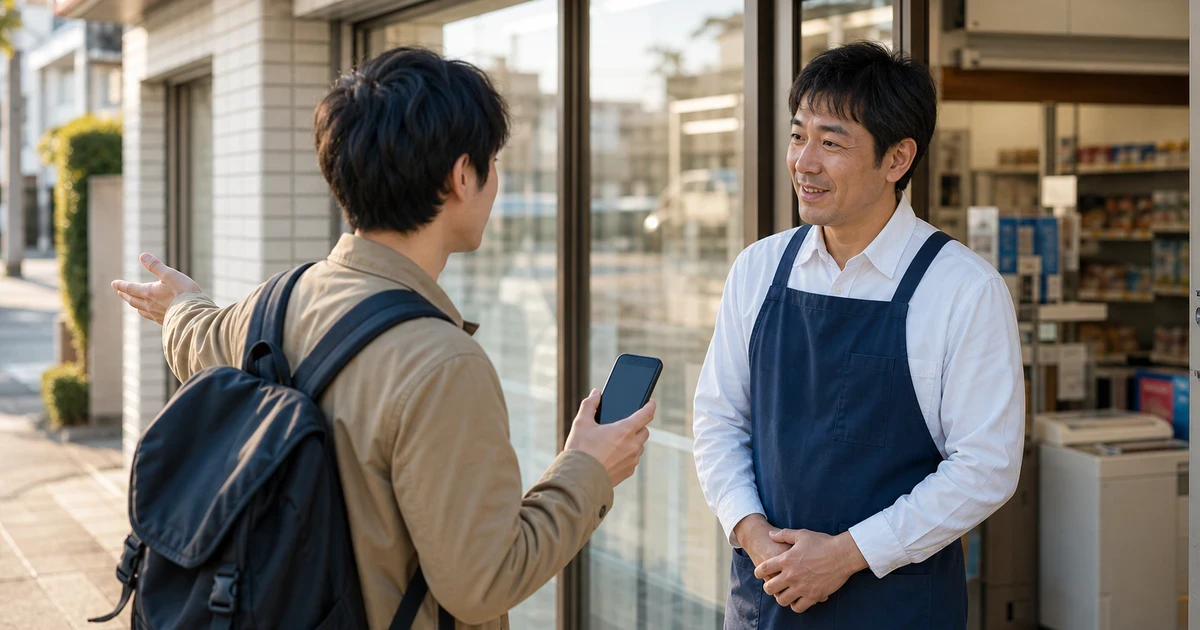
English is not an official language of Japan. Japanese is the language generally used in government, education, business, transportation, and everyday public life.
The good news for travelers is that English appears frequently in major cities, airports, stations, hotels, and popular visitor areas. Still, seeing English on a sign does not mean that every conversation can happen in English. Learning a few basic phrases—and preparing to understand simple replies—can make your trip much smoother.
What Is Japan’s Official Language?
English has no official status in Japan. Japanese functions as the country’s main language, although Japan does not have a general national law declaring one language to be its official language.
Modern Japan is linguistically more diverse than it may first appear. Alongside standard Japanese, the country has regional dialects and minority languages. English is taught widely and is visible in advertising, technology, tourism, and international communication, but visibility is different from official status.
English words have influenced Japanese vocabulary for more than a century. This helps explain why visitors may recognize words on menus or signs, yet spoken communication can still be difficult. A familiar-looking loanword may have a different pronunciation or a narrower meaning in Japanese.
The Japan Foundation provides Japanese language learning resources for people around the world. Such materials can help you build skills beyond travel phrases if a visit inspires you to continue studying.
How Much English Can Travelers Expect?
Travelers can generally find more English support in large cities and major transportation hubs than in small, local establishments. Bilingual station signs, ticket-machine options, tourist information, and hotel materials are common in many visitor areas, but support varies by location.
Even within one neighborhood, experiences may differ. A winter resort might have staff accustomed to international guests, while a nearby family-run shop may operate almost entirely in Japanese. It is best to treat English assistance as helpful when available, not guaranteed.
A practical communication kit should include:
- An offline map or saved destination details
- A charged phone and access to Wi-Fi where possible
- Written addresses or place names
- A speech translation tool for backup
- A small set of Japanese questions and requests
Speech translation can be useful, but short, concrete sentences usually work better than long explanations. Pause after one idea, let the other person respond, and confirm important details visually when possible.
A cultural note also helps: beginning a request with すみません (sumimasen, excuse me or sorry) politely signals that you would like someone’s attention. Courtesy does not require perfect grammar; a calm voice and willingness to listen matter considerably.
Basic Japanese Phrases for Visitors
These phrases cover common situations such as asking for help, finding transportation, and requesting clearer speech.
Japanese | Romaji | English Meaning |
|---|---|---|
すみません | Sumimasen | Excuse me / I am sorry |
英語を話せますか | Eigo o hanasemasu ka | Can you speak English? |
わかりません | Wakarimasen | I do not understand |
もう一度言ってください | Mō ichido itte kudasai | Please say it once more |
ゆっくり話してください | Yukkuri hanashite kudasai | Please speak slowly |
これは何ですか | Kore wa nan desu ka | What is this? |
トイレはどこですか | Toire wa doko desu ka | Where is the restroom? |
これをください | Kore o kudasai | This, please |
助けてください | Tasukete kudasai | Please help me |
ありがとうございます | Arigatō gozaimasu | Thank you very much |
Do not try to memorize every possible sentence before your trip. Choose five or six phrases that match what you expect to do, then practise saying them clearly and recognizing likely answers.
Building Real Speech from Travel Phrases
Useful Japanese comes from adapting simple patterns, not memorizing one fixed speech. Practise with realistic destinations, food choices, and requests from your own travel plans.
この電車は京都駅に行きますか。
Kono densha wa Kyōto-eki ni ikimasu ka.
Does this train go to Kyoto Station?
切符を一枚ください。
Kippu o ichimai kudasai.
One ticket, please.
この料理に肉は入っていますか。
Kono ryōri ni niku wa haitte imasu ka.
Does this dish contain meat?
写真を撮ってもいいですか。
Shashin o totte mo ii desu ka.
May I take a photo?
Learners often focus so heavily on asking a question that they cannot follow the answer. Add listening practice: imagine a short positive reply, a negative reply, and a direction involving left, right, upstairs, or another station.
Independent learning can build a strong base, especially when you combine audio, repetition, and active recall. Can You Learn Japanese by Yourself? explains where self-study works well and where personalized feedback becomes valuable.
Teachers lead standard 25-minute one-on-one lessons over LINE. One possible lesson flow includes a brief warm-up, a target speaking task such as asking station staff for help, correction of unclear wording or pronunciation, and a learner-owned review note or question list. For more guidance on moving beyond apps, read Online Japanese Lessons: From App Study to Speech.
To practise a travel situation with personal feedback, book a Free Trial Lesson with Kind Japanese and bring one conversation you would like to handle confidently.
Common Mistakes
The most common problem is assuming that visible English guarantees spoken English. Signs and menus may be translated centrally, while the person assisting you may use only basic English. Keep your question short and be ready to show a map, ticket, or written destination.
Learners also often memorize requests without practising possible replies. Knowing how to ask where a platform is has limited value if you cannot recognize a platform number or a direction. Train each question together with two or three likely answer patterns.
Another mistake is treating translation output as automatically correct. Speech translation can mishear names, omit context, or produce language that is too formal. Use it to support communication, then confirm essential information through numbers, maps, pictures, or written text.
You may see “desuka” in informal search results, but standard Hepburn presents ですか (desu ka, polite question ending) as separate words. Clear pronunciation matters more than copying compressed online spellings.
The ending なさい (nasai, a polite but firm command ending) is also easy to misuse. It can sound instructional because it is commonly directed from someone in authority toward another person. Visitors will usually find request patterns from the reference table more appropriate.
FAQ
Is English an official language in Japan?
No. English is visible in education, tourism, transportation, and commercial signs, but that visibility does not make it an official language. Japanese is the language generally used by government and in daily public life, so visitors should expect English support to vary by place and situation.
Can I travel in Japan without speaking Japanese?
Yes, many travelers manage with English, clear planning, maps, and translation tools, especially in major cities and on common transportation routes. Basic Japanese still makes a day smoother, helps in smaller places, and shows respect when you ask for directions, order food, or clarify a request.
Should I learn Japanese before visiting Japan?
You do not need fluency, but learning a small set of useful phrases is a good investment. Start with greetings, apologies, questions, numbers, and requests for repetition; then practise listening to short answers, because understanding the reply is often harder than asking the memorized question.

