
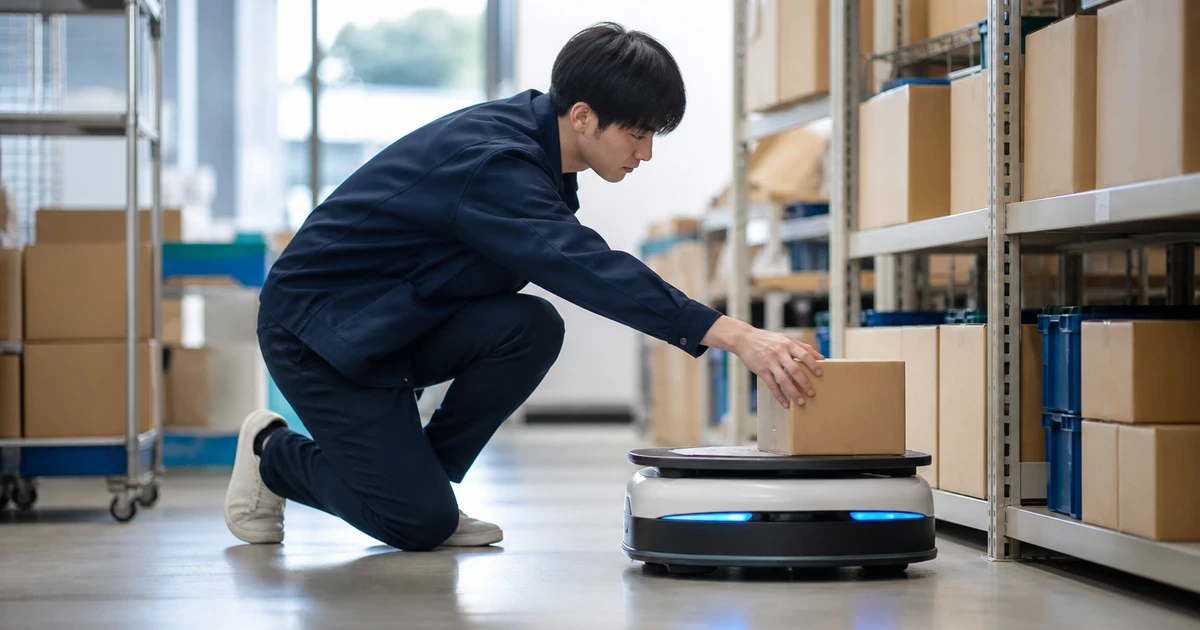
Japanese real-life robots are usually practical machines built for a defined task, not lifelike companions. They clean floors, carry food, move goods, guide visitors, support rehabilitation, or patrol buildings.
That distinction matters because “real-life robots” and “lifelike robots” are not the same thing. A humanoid may look like a person but remain a research prototype, while a quiet cleaning unit may already work daily in offices or airports.
The examples below focus on robots made or deployed in Japan, with information checked against official university, manufacturer, operator, or institutional sources. Their operational status can change as products are updated, retired, or redeployed.
Named Japanese Robots in Real Settings
The clearest way to understand Japanese robotics is to connect each named robot with its maker, task, setting, and status.
Robot and Japanese name | Maker and origin | Task and setting | Autonomy or human role | Current status and primary source |
|---|---|---|---|---|
WABOT-1(WABOT-1, Waseda humanoid robot) — WABOT-1, historical Waseda humanoid robot | Waseda University, Japan | Walking, grasping objects, and simple communication in university research | Research-operated, not a general household robot | Historical robot displayed at Waseda; Waseda University source |
WABOT-2(WABOT-2, music-playing humanoid robot) — WABOT-2, music-playing humanoid robot | Waseda University, Japan | Reading musical scores and playing an electronic organ | Research-operated | Historical research robot; Waseda University robotics history |
Pepper(Pepper, humanoid communication robot) — Pepper, humanoid communication robot | SoftBank Robotics, Japan-linked development | Communication, education, reception, and demonstrations | Scripted or application-based interaction with human supervision | Product and educational deployments continue in selected settings; SoftBank Robotics |
Whiz(Whiz, autonomous cleaning robot) — Whiz, autonomous cleaning robot | SoftBank Robotics, Japan | Floor and carpet cleaning in commercial facilities | Maps routes and operates autonomously within designed areas; staff remain responsible for oversight | Commercial product; SoftBank Robotics |
Servi(Servi, serving and delivery robot) — Servi, serving and delivery robot | Bear Robotics, developed in the United States and deployed in Japan | Carrying dishes and items in restaurants and hospitality settings | Autonomous route following with staff intervention when needed | Deployed in Japanese service settings; SoftBank Robotics example |
HAL(HAL, wearable assist robot) — HAL, wearable assist robot | CYBERDYNE, Japan | Supporting movement and rehabilitation in medical or care contexts | User-worn assistance with professional supervision | Medical and care applications; CYBERDYNE |
SQ-2(SQ-2, autonomous security robot) — SQ-2, autonomous security robot | SEQSENSE, Japan | Patrol and security monitoring in buildings | Autonomous mobile patrol with operational monitoring | Operating at Japan’s Ministry of Economy, Trade and Industry complex; SEQSENSE |
AIREC(AIREC, caregiving research robot) — AIREC, caregiving research robot | Waseda University and research partners, Japan | Research into household, care, and medical support | Development-stage research with human supervision | In development; Waseda University |
ASIMO(ASIMO, Honda humanoid robot) — ASIMO, Honda humanoid robot | Honda, Japan | Walking, running, balance, and public demonstrations | Demonstration-oriented control and autonomy | Famous research and demonstration project; Honda history |
Paro(Paro, therapeutic seal robot) — Paro, therapeutic seal robot | Intelligent System Co., Japan | Comfort and interaction support in care environments | Responsive interaction rather than independent practical labor | Used in care and therapeutic contexts; Paro official site |
This list shows why a roundup of Japanese robots should include more than humanoids. WABOT-1 and WABOT-2 are historically important, while Whiz, Servi, HAL, and SQ-2 represent narrower real-world functions.
A robot’s country of origin can also be easy to misunderstand. Servi, for example, is associated with a United States maker but has been deployed in Japan. A robot operating in Japan is not automatically a Japanese robot.
Waseda’s WABOT-1 is especially important in Japanese robotics history. It was introduced in 1973 and could walk, grasp objects with its hands, and communicate in simple Japanese. It should be discussed as a historical research achievement, not as evidence that general-purpose humanoids are common in daily life.
What These Robots Actually Do
Specialized robots succeed because their surroundings and responsibilities are limited. A cleaning robot can follow mapped routes; a serving robot can carry prepared dishes; a security robot can patrol defined areas. Each unit is useful because its task is narrower than “act like a person.”
A restaurant robot may carry dishes while staff load the trays, speak with customers, collect plates, and handle obstacles. A security robot may detect movement or patrol corridors while people decide what action to take. This division of labor is central to understanding real deployment.
Humanoid and android robots remain important for research, education, and public demonstrations. ASIMO, Pepper, WABOT-1, and AIREC help researchers explore balance, communication, manipulation, caregiving, or social interaction. Their humanlike appearance can make technical work easier to explain, but appearance does not prove humanlike understanding.
A cultural note is useful here: Japanese media and advertising often present robots as friendly social partners. That does not mean Japanese society treats every robot as a person. It reflects a long-running cultural interest in cooperation between people and machines, alongside practical concerns about safety, privacy, work, and responsibility.
How to Read a Robot Demonstration
A booth demonstration shows what happened under particular conditions. It does not automatically show how the machine behaves in a crowded restaurant, a changing warehouse, or an unfamiliar home.
When you watch a video or read a robotics article, ask:
- What exact task was completed?
- Was the route, lighting, object position, or dialogue prepared?
- Is a person supervising or remotely controlling the unit?
- Can its vision handle shadows, reflections, clutter, or unexpected movement?
- What happens when the temperature rises or cooling becomes necessary?
- How long did the demonstration last, and what happened after several minutes?
- Is the robot a prototype, a research platform, a rental product, or a widely deployed system?
- Do quoted costs in yen include installation, maintenance, training, and replacement parts?
These questions also help separate Japanese examples from foreign technologies mentioned in the same article. Qualcomm may provide robotics computing technology; Apptronik’s Apollo is a humanoid platform; Google DeepMind’s Gemini Robotics concerns AI models for physical action. Those names may be relevant to a technology comparison, but they should not be presented as Japanese robots simply because they appear in a Japan-focused roundup.
Concerns about employment, accessibility, surveillance, data use, and accountability deserve serious discussion. A balanced explanation can recognize the benefit of reducing repetitive work while asking who supervises the system and who is responsible when it fails.
Japanese for Discussing Robot Tasks
The most useful vocabulary describes a robot’s role, its operating environment, and its limitations. Learn the terms as part of a claim rather than memorizing technical labels alone.
Japanese | Hepburn romaji | English meaning |
|---|---|---|
ロボット | robotto | robot |
人型ロボット | hitogata robotto | humanoid robot |
清掃ロボット | seisō robotto | cleaning robot |
配膳ロボット | haizen robotto | food-serving robot |
警備ロボット | keibi robotto | security robot |
介護ロボット | kaigo robotto | care-support robot |
物体 | buttai | object |
作業 | sagyō | task or work operation |
画像認識 | gazō ninshiki | image recognition |
遠隔操作 | enkaku sōsa | remote operation |
自律走行 | jiritsu sōkō | autonomous navigation |
障害物 | shōgaibutsu | obstacle |
充電中 | jūden-chū | charging |
温度 | ondo | temperature |
冷却 | reikyaku | cooling |
Here are four simple examples for describing what a robot does and where human involvement remains.
このロボットは料理をテーブルまで運びます。
Kono robotto wa ryōri o tēburu made hakobimasu.
This robot carries dishes to the table.
店員が料理をロボットに載せます。
Ten'in ga ryōri o robotto ni nosemasu.
A staff member places the dishes on the robot.
人が通ると、ロボットは止まります。
Hito ga tōru to, robotto wa tomarimasu.
When a person passes, the robot stops.
この機械は決められた場所を自律走行します。
Kono kikai wa kimerareta basho o jiritsu sōkō shimasu.
This machine navigates autonomously through designated places.
Learners often need feedback on particles, verb choice, and the difference between a robot acting and a person operating it. “The robot carries the dishes” and “a staff member places the dishes on the robot” express two different parts of the same process.
Turn Robot Curiosity into Speaking Practice
Robotics becomes strong Japanese practice when you explain one concrete machine instead of describing technology vaguely. Choose one robot from the table and prepare four points:
- What is it?
- What task does it perform?
- Where is it deployed or researched?
- What is one benefit, limitation, or concern?
Then use a speak-correct-repeat cycle. First describe the robot without checking notes. Next identify one missing word or unclear sentence. Finally repeat the explanation with a more precise verb, setting, and limitation.
A focused standard Kind Japanese lesson can use a robot image, product page, or short report for a 25-minute one-on-one speaking task over LINE. A teacher can help you practise describing the task, correcting unclear phrasing, and repeating the explanation with more natural Japanese.
For solo preparation, How to Practice Speaking Japanese Alone offers a useful way to build an explanation before speaking with a teacher. If your robotics interest connects to living in Japan, Renting an Apartment in Japan as a Student provides another practical topic for describing real-life tasks and concerns.
If you want focused feedback on your technology Japanese, book a Free Trial Lesson with Kind Japanese.
Common Mistakes
Learners often confuse a robot’s appearance with its capabilities. A humanoid shape does not guarantee flexible movement, and a polished voice does not prove unrestricted conversation.
Other common mistakes include:
- Calling every robot operating in Japan a Japanese robot without checking its maker.
- Describing a demonstration as ordinary daily deployment.
- Saying that a robot “understands” when it may only match programmed inputs.
- Ignoring staff who load objects, supervise routes, or respond to problems.
- Comparing costs without checking what the quoted figure includes.
- Using “AI” without explaining whether it supports vision, navigation, speech, or planning.
- Memorizing nouns without building complete sentences about a specific task.
FAQ
Are humanoid robots common in everyday life in Japan?
Humanoid robots are visible in research, education, exhibitions, and selected public or care settings, but specialized machines are more common in ordinary operations. Cleaning, serving, security, logistics, and rehabilitation robots usually work within narrower environments and may still require supervision, preparation, or human intervention.
Is WABOT-1 still an operating robot?
WABOT-1 is a historical research robot rather than a current commercial service machine. Waseda University describes it as a landmark humanoid project from 1973, and the robot is displayed at Waseda, so its present role is educational and historical rather than everyday autonomous work.
Are Apollo and Gemini Robotics Japanese robots?
No, they are not Japanese robot examples simply because an article discusses them alongside Japanese projects. Apollo is associated with Apptronik, while Gemini Robotics refers to Google DeepMind’s physical-action AI work; they are useful comparison points, but origin, maker, deployment country, and AI software should be separated.
How can Japanese learners discuss robotics naturally?
Start with one named robot, then explain its task, setting, human involvement, and one concern using simple sentences. A teacher can correct particles, verb choice, pronunciation, and sentence endings, while repeated speaking helps you move from recognizing robotics vocabulary to using it during real conversation.

