
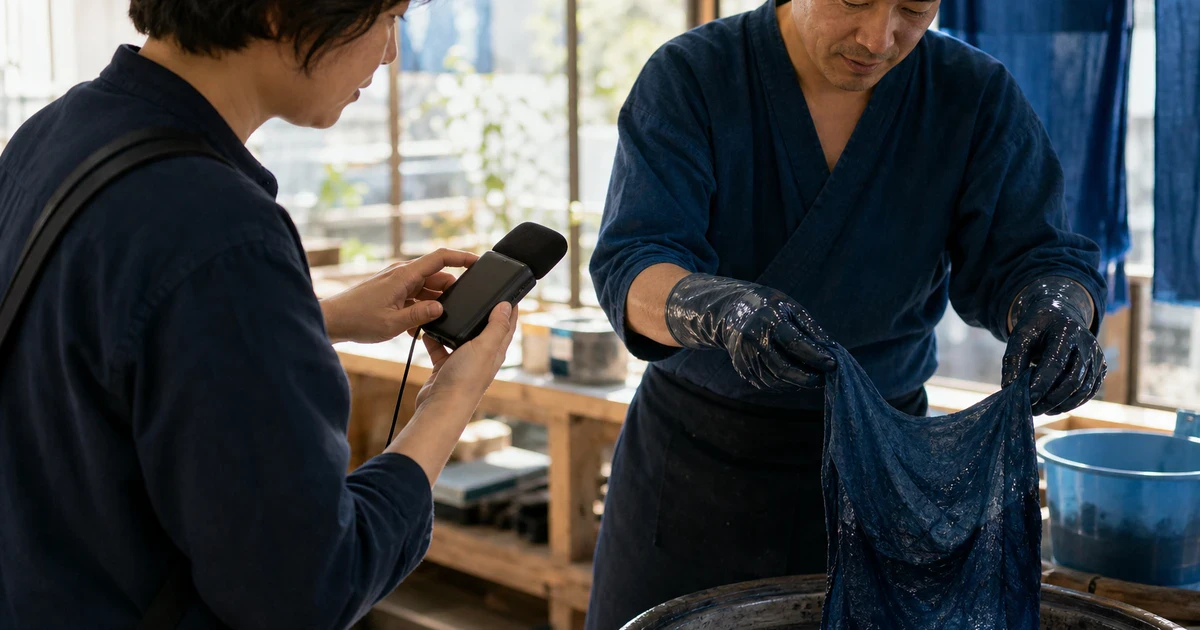
online Japanese lessons for journalists covering Japan are most useful when the challenge is not raw vocabulary, but speed, tone, and recovery. A reporter may already know the words for confirmation or follow-up, yet still freeze in a source interview when the answer comes quickly or indirectly. With online Japanese lessons, a one-on-one Japanese tutor can help you rehearse the exact exchange you need: asking for clarification, keeping the conversation polite, and moving the interview forward.
This matters even more if your reporting overlaps with business Japanese. A journalist may need to speak with PR staff, university offices, company contacts, or translators, and those conversations often require careful phrasing. A standard 25-minute lesson is enough to work on one situation well, especially when you want focused role-play practice and clear teacher feedback.
Why Journalists Need Live Practice
The short answer is this: journalists need usable Japanese, not just correct Japanese.
In self-study, it is easy to recognise a phrase on paper and still struggle to say it naturally in the moment. That gap shows up most clearly in source interviews, where you may need to ask for clarification, restate a point politely, or make a polite follow-up without sounding too direct.
From a teacher's perspective, learners often know the target topic but need help turning it into a live sentence under pressure. A one-on-one lesson is useful because the teacher can hear what you actually said, then help you repair it and try again immediately.
A small cultural note helps here: in Japanese, indirect wording often signals professionalism, not weakness. For reporters, that can be an advantage. A careful question can sound more respectful and often gets you a better answer.
If your work also includes briefing calls or planning conversations, Business Japanese Meeting Agenda Phrases can support the way you organise questions before the interview starts.
Japanese | Romaji | English meaning |
|---|---|---|
取材 | shuzai | reporting / interview coverage |
もう一度お願いできますか | mō ichido onegai dekimasu ka | Could you say that once more? |
追加で確認できますか | tsuika de kakunin dekimasu ka | Could I confirm one more detail? |
失礼ですが | shitsurei desu ga | Excuse me, but... |
後ほどご連絡します | nochihodo go-renraku shimasu | I will follow up later |
Phrases for Source Interviews
The best phrases are the ones you can say without thinking too hard.
For journalists covering Japan, a few patterns matter again and again:
- opening a question politely
- asking for clarification without sounding impatient
- confirming one fact before you quote it
- closing with a polite follow-up
Use these as the base for role-play practice in a LINE lesson. A teacher can then adjust your wording so it sounds natural for the situation, not generic textbook Japanese.
取材の前に、質問の意図を確認したいです。
Shuzai no mae ni, shitsumon no ito o kakunin shitai desu.
Before the interview, I want to confirm the intent of the question.
すみません、今の部分をもう一度お願いできますか。
Sumimasen, ima no bubun o mō ichido onegai dekimasu ka.
Sorry, could you say that part once more?
追加で確認できますか。
Tsuika de kakunin dekimasu ka.
Could I confirm one more detail?
失礼ですが、その言い方でよろしいですか。
Shitsurei desu ga, sono iikata de yoroshii desu ka.
Excuse me, is that wording okay?
The goal is not to memorise a long list. The goal is to make one sentence shape stable enough that you can use it during a source interview, a press call, or a polite message afterward.
If you also need to keep short written coordination moving, Business Japanese Chat Messages for Slack at Work is a useful companion for concise, professional wording.
A 25-Minute Lesson Flow
A standard 25-minute lesson works well when the target is narrow.
For journalists, one focused scene is usually enough: a source interview opening, a clarification moment, or a polite follow-up message. A teacher can help you build that scene step by step.
A practical flow looks like this:
- Warm-up
Say who you are, who you are contacting, and what you need in one or two simple lines. - Target speaking task
Role-play the exact moment you expect to face: asking the source to repeat, softening a question, or checking a detail before publication. - Correction
The teacher gives teacher feedback on wording, politeness level, and sentence order. If needed, the teacher can also point out pronunciation issues, especially when a word needs to sound calm and clear. - Retry
Say the line again using the correction. This second attempt matters as much as the first one. - Learner-owned review note
Write down one sentence that worked, one sentence to fix, and one question for next time. If you want, record your final corrected sentence once on your own device so you can compare it later.
That pattern is especially useful in a LINE lesson, because the exchange feels close to real messaging and speaking. You do not need a huge lesson plan. You need one clean loop: try, correct, retry.
Common Mistakes
Learners often make the same few mistakes when they try to handle reporting conversations in Japanese.
- They ask a follow-up question too directly.
- They use a polite phrase, but the rest of the sentence sounds too casual.
- They know the meaning of a word, but the sentence collapses when they have to say it out loud.
- They stop after the first correction instead of repeating the line.
- They confuse visually similar kana, especially ツ (tsu) and シ (shi), or ソ (so), ン (n), and リ (ri), which can affect reading names, notes, or contact details.
A teacher can help with all of that by slowing the sentence down, then letting the learner say the whole line first before giving a hint-based correction. That approach is useful because it preserves the flow of speech while still fixing the weak point.
For journalists, the biggest risk is not being rude on purpose. It is sounding more abrupt than intended because the question is translated too literally. In practice, the safest route is often a softer opening, one clear request, and one short confirmation.
How It Fits Your Reporting Day
The most efficient use of online Japanese lessons is to tie them to one real reporting task.
Before an interview, bring the question you want to ask. During the lesson, convert it into a version that sounds natural in Japanese and rehearse the transition into clarification. After that, practise a polite follow-up so you are not stuck when the first answer is incomplete.
If you are scheduling across time zones, propose your preferred windows in your own local time zone first and offer two or three options. That makes back-and-forth easier and reduces confusion before the lesson begins.
For example, you might prepare:
- one source interview opening
- one clarification question
- one polite follow-up message
- one short closing line
That is enough material for a meaningful 25-minute lesson, especially when the goal is live speaking rather than broad grammar review. It also keeps the lesson practical: one scene, one correction cycle, one usable improvement.
FAQ
Do I need advanced Japanese to benefit from these lessons?
No. Journalists at different levels can benefit because the lesson can focus on the exact language needed for one reporting task. Even if your grammar is still developing, a teacher can help you produce one polite question, one clarification line, and one follow-up that feels usable.
How is business Japanese relevant for journalists?
Business Japanese matters whenever you speak with PR staff, offices, editors, or institutional contacts. Those conversations often need careful politeness, not casual chat. For journalists covering Japan, the same tone skills that help in business settings also help in interviews and formal follow-up.
What should I bring to a free trial?
Bring one real reporting situation, one sentence you want to say, and one problem area such as politeness, clarity, or pronunciation. A free trial is most useful when the lesson starts from your actual work, because then teacher feedback can be immediate and specific.
Can this help with both interviews and written follow-up?
Yes. A lesson can cover both, as long as you keep the focus narrow. Practising how to open a source interview, ask for clarification, and write a polite follow-up gives you a complete communication loop instead of isolated phrases.
Book a Free Trial and try a focused one-on-one LINE lesson for your next reporting situation.

