
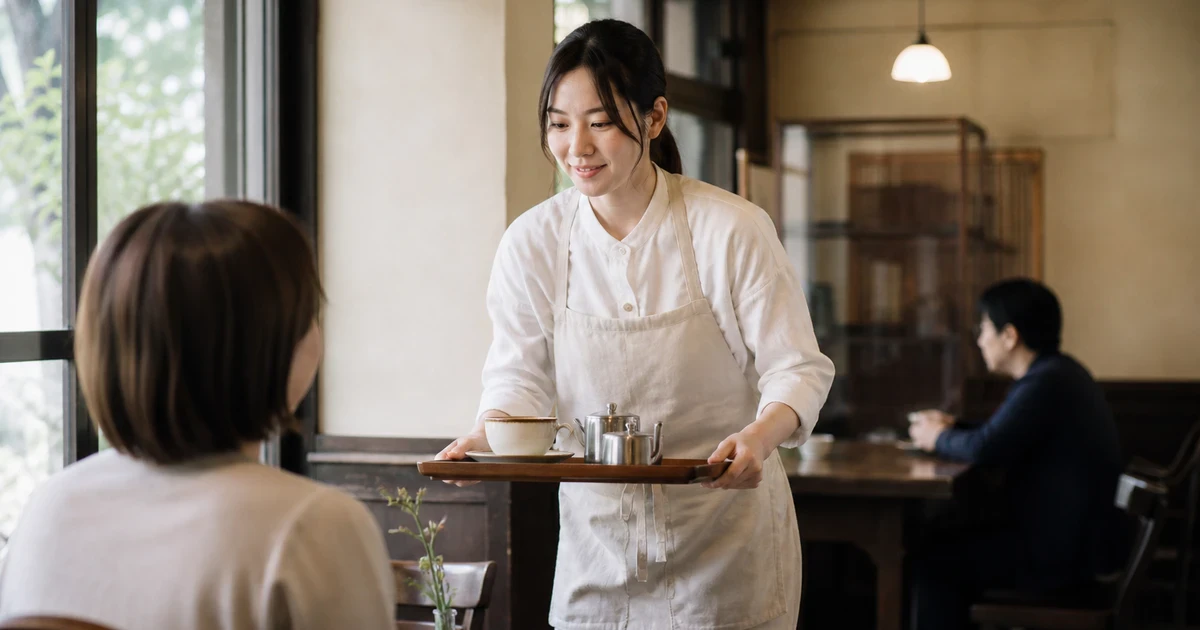
Student life in Japan runs on hundreds of small conversations: asking a professor to repeat something, buying a train pass, answering a part-time job interview, and swapping messages with new friends. Reading and grammar get you into a program, but it is spoken, situational Japanese that decides whether your first months feel smooth or stressful.
This guide focuses on the practical language you will actually use as a student in Japan—across classes, work, and daily life—so you can arrive ready to speak, not just to translate.
The Core Phrases for Everyday Student Life
Daily Japanese for students clusters around a handful of high-frequency situations: greeting people, asking for help, confirming details, and being polite about mistakes. Learn these first and you will feel functional almost immediately.
Japanese | Romaji | English Meaning |
|---|---|---|
すみません | Sumimasen | Excuse me / Sorry / Thank you (all-purpose) |
お願いします | Onegai shimasu | Please (when requesting something) |
もう一度お願いできますか | Mō ichido onegai dekimasu ka | Could you say that once more, please? |
大丈夫です | Daijōbu desu | I'm fine / It's okay / No thank you |
わかりました | Wakarimashita | I understand / Got it |
確認したいのですが | Kakunin shitai no desu ga | I'd like to confirm something, but... |
初めまして | Hajimemashite | Nice to meet you (first time) |
よろしくお願いします | Yoroshiku onegai shimasu | I look forward to working with you |
助かりました | Tasukarimashita | That really helped me |
いくらですか | Ikura desu ka | How much is it? |
A cultural note: すみません (sumimasen) is not only an apology. It works as "excuse me" to get attention and as a soft "thank you" when someone goes out of their way for you. Using it naturally instantly makes your Japanese sound more considerate.
Japanese for Classes and Campus
Classes are where you will hear the fastest, most idiomatic Japanese, and also where politeness matters. You need language to ask questions, request deadlines, and follow instructions without freezing.
Useful classroom moves:
- Ask for repetition or slower speech instead of nodding along.
- Confirm homework, dates, and submission methods out loud.
- Approach professors and office staff with polite set phrases.
質問してもいいですか。 Shitsumon shite mo ii desu ka. May I ask a question?
提出はいつまでですか。 Teishutsu wa itsu made desu ka. When is the deadline for submission?
For orientation week specifically—student ID pickup, course registration, and confirming your student portal—it helps to rehearse those exact exchanges in advance. Our guide to Japanese for University Orientation in Japan walks through the office and registration language in more detail.
From a teacher's perspective, learners often understand written class instructions perfectly but stall when the same request has to be spoken to a real professor. The fix is rehearsal out loud, not more vocabulary lists.
Japanese for a Part-Time Job (アルバイト)
A part-time job in Japan—an アルバイト (arubaito, part-time job)—usually starts with an interview and a lot of set service phrases. Employers rarely expect perfect Japanese from students, but they do expect politeness, punctuality-related vocabulary, and the ability to follow simple instructions.
Interview and workplace essentials:
- Introduce yourself and state your availability clearly.
- Understand shift-related words like 面接 (mensetsu, interview) and シフト (shifuto, shift).
- Master service phrases you will repeat hundreds of times.
いらっしゃいませ。 Irasshaimase. Welcome (to a customer entering a shop).
週に三回働けます。 Shū ni sankai hatarakemasu. I can work three times a week.
Here is a short mini-dialogue for an interview, with a correction a teacher might make:
- Interviewer: 週にどのくらい働けますか。(Shū ni dono kurai hatarakemasu ka. — How much can you work per week?)
- Learner (first try): 三回働く。(Sankai hataraku. — I work three times.)
- Teacher correction: In a job interview, use the polite potential form and です/ます. Say 週に三回働けます (Shū ni sankai hatarakemasu, I can work three times a week).
- Learner (final answer): 週に三回働けます。よろしくお願いします。(Shū ni sankai hatarakemasu. Yoroshiku onegai shimasu.)
That shift from plain dictionary form to polite potential form is exactly the kind of adjustment that one-on-one feedback catches quickly.
Making Friends and Sounding Natural
Friends are the fastest route to fluency, and casual Japanese is a different register from the polite forms you use in class. Most Japanese students communicate over LINE, so being comfortable with short, friendly messages matters as much as speaking.
Ways to open the door:
- Swap contacts early: LINE is the near-universal messaging tool among Japanese students.
- Use casual invitations and light follow-up questions.
- Keep register appropriate—friendly with peers, polite with staff.
今度一緒にご飯を食べませんか。 Kondo issho ni gohan o tabemasen ka. Would you like to get a meal together sometime?
LINE交換してもいいですか。 LINE kōkan shite mo ii desu ka. Can we exchange LINE contacts?
One caution from real teaching experience: some learners pick up Japanese from anime and reach for pronouns or catchphrases that sound odd in daily life. In our one-on-one lessons, teachers gently flag words like あんた (anta, a rough "you") or anime-only lines such as "だってばよ" that come straight from NARUTO—fun to know, but not something to say to a new classmate. A live teacher can steer you toward the natural, friendly register instead.
Daily-Life Errands: Transport, City Hall, Bank, and SIM
Student life outside campus means a steady stream of errands, each with its own script. Grouping the language by errand makes it far easier to remember under pressure.
- Transport: buying a pass or asking for directions.
- City hall (市役所, shiyakusho, city office): residence registration and paperwork.
- Bank or payment: opening an account and understanding fees.
- Phone or SIM setup: signing up for a plan as a new resident.
- Housing: confirming rent, move-in date, and utilities.
この電車は新宿に行きますか。 Kono densha wa Shinjuku ni ikimasu ka. Does this train go to Shinjuku?
口座を開きたいのですが。 Kōza o hirakitai no desu ga. I'd like to open a bank account, please.
For students still preparing their enrollment paperwork, spoken practice also helps with the language-proof side of a study visa—being able to say how long you studied, where, and what you can do now. Our overview of Japanese Proof for a Student Visa in Japan explains where that fits, and it is worth confirming any study-hour or certificate requirements directly with your school and official Immigration Services Agency guidance rather than assuming one universal rule.
A Focused Kind Japanese Lesson Flow for Student Situations
Kind Japanese runs 25-minute one-on-one lessons over LINE, which fits neatly around a student schedule and lets you rehearse the exact situations coming up that week. A typical 25-minute lesson flow looks like this:
- Warm-up (a few minutes): a quick casual exchange to settle into Japanese.
- Target speaking task: role-play one real scene—an アルバイト interview, a professor question, or a city-hall errand.
- Correction: the teacher lets you finish, then gives feedback on grammar, politeness level, and pronunciation.
- Your review note: you write down one correction and one question to carry into the next session.
For proposing lesson times from abroad, describe your window in your own time zone so nothing gets lost in translation. For example:
アメリカ時間の夜にレッスンを受けたいです。 Amerika jikan no yoru ni ressun o uketai desu. I want to take lessons in the evening, US time.
Because lessons are one-on-one, you can bring the specific errand or interview that is stressing you out and walk away with language you will use the same week. If you want to try it, book a Free Trial lesson over LINE with Kind Japanese and bring one real student situation to practice.
Common Mistakes
Learners preparing for student life in Japan tend to trip on the same few things, and naming them early saves a lot of confusion.
Confusing look-alike kana. In our one-on-one lessons, teachers regularly help learners untangle katakana pairs that look almost identical—ツ and シ, ソ and ン and リ, and hiragana such as ぬ and め or ね and れ. The trick is watching the direction and length of the strokes rather than memorizing them as whole shapes; short, targeted review of the pairs you personally mix up works better than drilling the whole chart.
Using casual forms with the wrong people. Learners often speak to professors or shop staff the way they speak to friends. Keep plain form for peers and です/ます (desu/masu) politeness for teachers, staff, and customers.
Over-relying on translation apps. Reading a translated sentence is not the same as producing it. From a teacher's perspective, learners often need real feedback on pronunciation and word choice, which an app cannot give.
Treating すみません as only "sorry." Because it also means "excuse me" and "thanks," under-using it makes requests sound blunt. Lean on it often.
FAQ
How much Japanese do I need before starting student life in Japan?
Enough to handle daily errands and basic classroom exchanges makes life much easier, roughly upper-beginner level. You do not need to be fluent, but comfort with greetings, requests, numbers, and polite forms lets you settle in faster and reduces the stress of your first weeks in Japan.
Do I need Japanese for a part-time job as a student?
Usually yes, at least conversational Japanese. Many student part-time jobs in retail, food service, or convenience stores rely on set service phrases and simple shift conversations. Employers rarely expect perfection, but they do expect politeness and the ability to follow spoken instructions, so interview rehearsal really helps.
Is LINE really necessary for making friends in Japan?
For most students, yes. LINE is the standard messaging tool among Japanese students, so exchanging contacts early is the natural way friendships continue after a first meeting. Being comfortable writing short, casual Japanese messages matters just as much as speaking, since a lot of everyday student communication happens there.
How can one-on-one lessons help with real student situations?
One-on-one lessons let you rehearse the exact scenes you are about to face—an interview, an office visit, a professor's question—and get immediate correction on politeness, grammar, and pronunciation. Because the session is built around you, you can bring this week's real problem instead of working through a generic textbook chapter.
Student life in Japan becomes far less intimidating when the everyday Japanese is already in your mouth before you arrive. Pick one situation from this guide, practice it out loud, and build from there—one real conversation at a time.

