
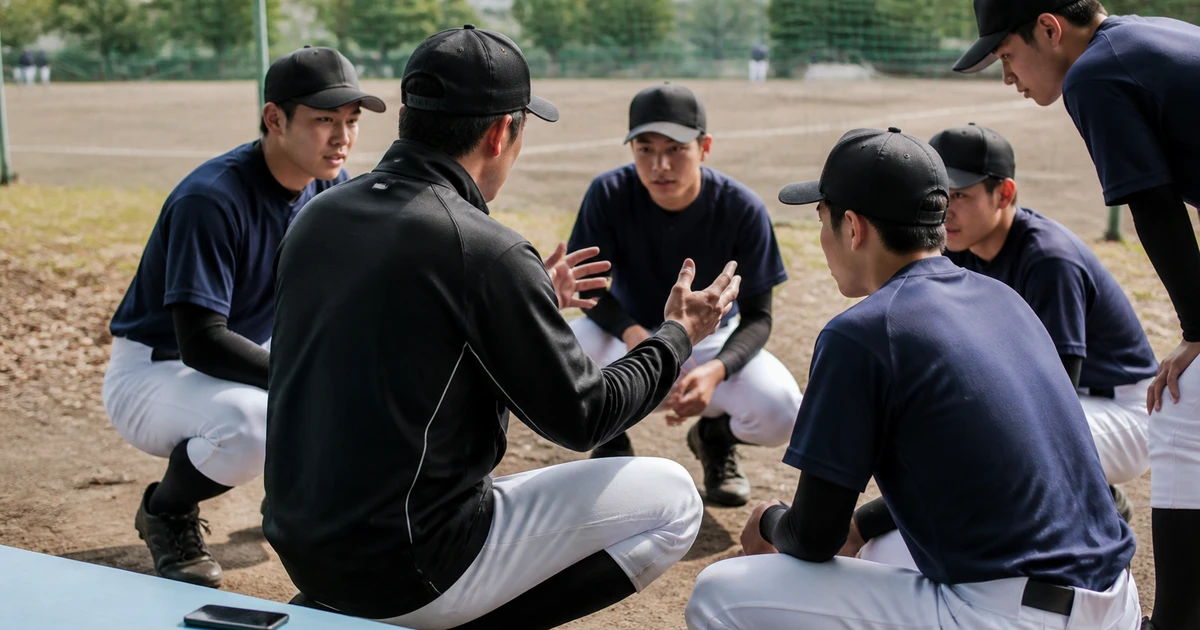
For sports coaches in Japan, online Japanese lessons work best when they focus on the exact speech you need on the court, pitch, field, or in the gym: practice instructions, team communication, and feedback tone. A one-on-one Japanese tutor can help you turn a long explanation into short, natural commands that players can follow quickly.
A free trial lesson is useful when you want to test whether that format fits your coaching routine. If your role also includes staff updates, the same language mindset supports business Japanese too, especially in brief coordination messages and meeting notes.
Why This Matters
Coaching Japanese is not the same as general conversation Japanese. You need language that works in motion, under pressure, and in front of a team.
That usually means three things:
- Clear practice instructions that players can act on immediately
- Team communication that stays short and unambiguous
- Feedback tone that sounds calm, direct, and appropriate for the moment
A useful cultural note: in many Japanese training settings, brief and calm instructions often sound more natural than long explanations. That does not mean being cold. It means making the message easy to follow in real time.
If your job also includes staff coordination, Business Japanese Meeting Agenda Phrases can help with spoken updates, and Business Japanese Chat Messages for Slack at Work is useful for short written coordination. Those are a good match for the same practical mindset you want in sports coaching.
Core Phrases for Practice Instructions
These phrases are useful because they fit common coaching moments: starting warm-ups, correcting foot position, resetting a drill, or giving calm post-practice feedback.
Japanese | Romaji | English Meaning |
|---|---|---|
少しゆっくり動きましょう。 | Sukoshi yukkuri ugokimashō. | Let's move a little more slowly. |
次は足をもう少し開きましょう。 | Tsugi wa ashi o mō sukoshi hirakimashō. | Next, spread your feet a little wider. |
左のコーンへ移動して、足を広げてください。 | Hidari no kōn e idō shite, ashi o hirogete kudasai. | Move to the left cone and widen your stance. |
もう一度、全員でやってみましょう。 | Mōichido, zen'in de yatte mimashō. | Let's all try it once more. |
今の説明は少し長いです。 | Ima no setsumei wa sukoshi nagai desu. | That explanation is a little long. |
ここは落ち着いて伝えてください。 | Koko wa ochitsuite tsutaete kudasai. | Please say it calmly here. |
These lines are a good starting point for role-play practice because they let you move from instruction to correction without changing the whole topic.
A practical shift is to replace an English-style paragraph with one short command, one correction, and one reset. That is often more useful for a coach than trying to memorize a long script.
Example sentences
少しゆっくり動きましょう。
Sukoshi yukkuri ugokimashō.
Let's move a little more slowly.
次は足をもう少し開きましょう。
Tsugi wa ashi o mō sukoshi hirakimashō.
Next, spread your feet a little wider.
左のコーンへ移動して、足を広げてください。
Hidari no kōn e idō shite, ashi o hirogete kudasai.
Move to the left cone and widen your stance.
もう一度、全員でやってみましょう。
Mōichido, zen'in de yatte mimashō.
Let's all try it once more.
今の説明は少し長いです。
Ima no setsumei wa sukoshi nagai desu.
That explanation is a little long.
How a 25-Minute LINE Lesson Can Work
A 25-minute lesson is enough if the goal is narrow. It works best when the lesson has one speaking target and one clear correction cycle.
A simple sample flow looks like this:
- Warm-up: say what kind of coaching situation you need today
- Target speaking task: practise one scene, such as starting warm-ups or correcting foot position
- Role-play practice: act out the coach-player exchange, or the coach-team reset after a mistake
- Teacher feedback: focus on clarity, rhythm, and feedback tone
- Retry: say the same line again with the correction built in
- Review note: write one sentence you want to reuse, plus one question for next time
For sports coaches in Japan, the best role-play practice is usually concrete. Try one of these:
- Starting a warm-up
- Correcting foot position during a drill
- Resetting the team after a mistake
- Giving a substitution instruction
- Offering calm post-practice feedback
If you use online Japanese lessons over LINE, make the booking request simple. Offer two possible windows in your own time zone, say whether weekdays or weekends are easier, and name your local time zone clearly. That saves time and avoids repeated time conversion.
A focused LINE lesson is also a good place to bring real material from your job, such as a team message, schedule note, or practice plan. The more the lesson stays close to real use, the easier it is to reuse the language later.
Common Mistakes
From a teacher's perspective, learners often make the same few mistakes when they try to coach in Japanese.
- They translate a long English instruction word-for-word instead of shortening it for spoken use.
- They use one tone for everything, so a correction sounds as harsh as a warning and a praise line sounds too flat.
- They try to fix pronunciation only at the end, when the speaking rhythm has already broken down.
- They let a small sound problem keep repeating, especially pairs like tsu/shi or ne/re, which can blur quickly in fast coaching speech.
The useful habit is simple: speak once, get teacher feedback, then repeat the line more cleanly. A teacher can also use short kana review when a sound keeps slipping, because a quick visual check often helps the problem stand out.
Another common issue is over-explaining. Coaches often know exactly what they mean, but players need a message they can absorb in one breath. Shorter is usually better when the drill is already moving.
FAQ
Can online Japanese lessons help if I already coach in English?
Yes. A one-on-one Japanese tutor can help you convert one real situation, such as starting warm-ups or correcting foot position, into usable Japanese. You do not need advanced grammar to start. A small, repeatable scene is often the best place to begin.
What should I bring to a LINE lesson?
Bring one coaching scene, one message, and one question. A screenshot of a team message, practice plan, or schedule is often enough. That keeps the lesson close to real team communication and makes it easier to practise the exact wording you will need again.
Is a 25-minute lesson enough for coaching Japanese?
Yes, if the goal is narrow. A 25-minute lesson can cover a quick warm-up, one role-play practice, teacher feedback, a retry, and a short review note. That is enough for practice instructions or feedback tone without trying to fix every speaking issue at once.
How does a teacher help with tone?
A teacher can help you choose the tone that fits the moment: firm, calm, or encouraging. That matters in sport because the same instruction can sound strict or supportive depending on the words, speed, and sentence ending. Small corrections can make the message feel natural.
If you want a focused starting point, book a Free Trial over LINE and bring one coaching situation you want to say clearly in Japanese.