
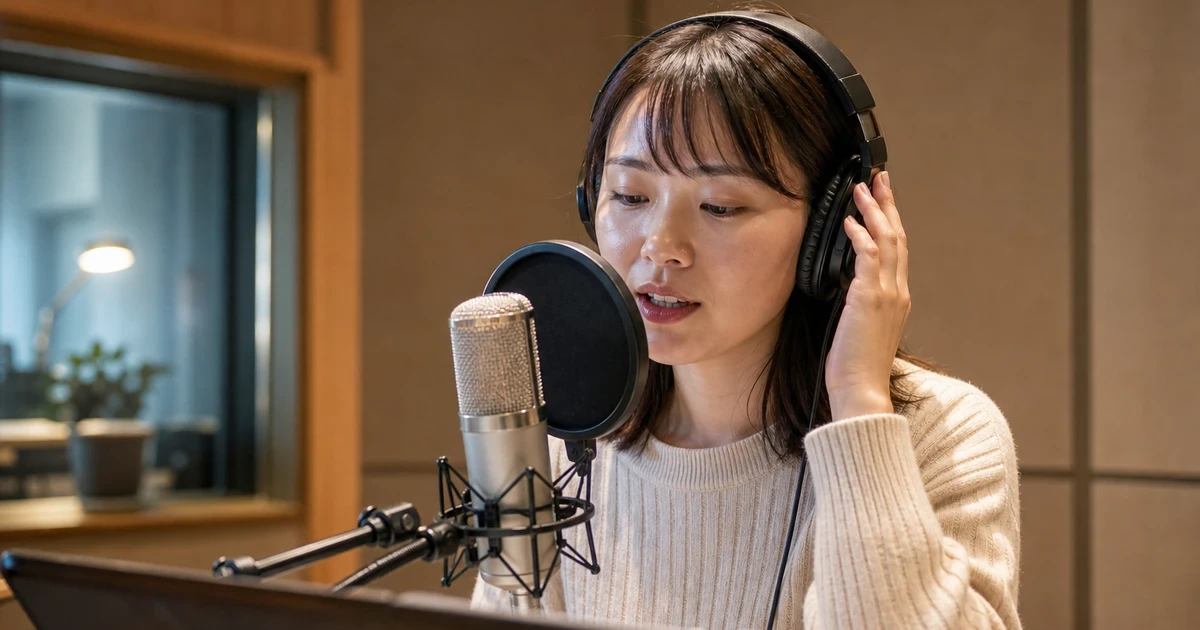
If you are looking for a Japanese tutor for pronunciation feedback online, the best fit is usually a teacher who listens to your whole sentence first, then gives focused teacher correction on the part that made the sentence unclear. That approach helps learners who can hear the difference in theory but still struggle to produce it under real speaking pressure.
Kind Japanese offers online one-on-one Japanese lessons over LINE, and standard one-on-one lessons are 25 minutes. That format is especially useful for pronunciation work because the lesson can stay narrow: one sound issue, one rhythm issue, one retry.
A free trial lesson is a good way to test whether this kind of correction style matches your needs before you commit to more practice.
If you want a broader overview of the same topic, Japanese Pronunciation Feedback Online is a useful companion read.
What a Japanese Tutor Can Fix Fast
A one-on-one Japanese tutor is most helpful when the issue is not just “pronunciation” in the abstract, but one specific thing that keeps getting in the way of clarity.
The fastest wins usually come from these points:
- Long vowels, where a sound needs to stay open longer than expected
- Small っ timing, where the pause or doubled consonant matters
- Rhythm, especially the timing of each mora
- Sentence-ending intonation, which can make a sentence sound too flat or too sharp
- Pitch accent awareness, especially when a word is correct in isolation but sounds off in a sentence
Self-study and app lookup can help you notice a pattern, but they do not fully replace human feedback. An app may tell you what the word should sound like, yet a live teacher can hear whether the sentence still sounds natural after speed, emphasis, and context are added.
That is why Build Speaking Confidence with a Japanese Tutor is also relevant if pronunciation nerves are part of the problem. Confidence and clarity usually improve together.
What the Teacher Checks First
The first check is whether the learner is reading the right symbol before the tutor even starts correcting sound.
A teacher can let the learner finish the whole sentence first, then give indirect feedback. That matters because if the sentence is interrupted too early, the learner may fix one sound but lose the rhythm of the full phrase.
A useful diagnostic order is:
- Check the written form.
- Check the target sound.
- Check rhythm and timing.
- Check sentence-ending intonation.
- Check whether the sentence still sounds natural in context.
This is where visually similar kana can matter. Learners often mix up ツ (tsu, katakana "tsu") and シ (shi, katakana "shi") when reading, or ぬ (nu, hiragana "nu") and め (me, hiragana "me"), or ね (ne, hiragana "ne") and れ (re, hiragana "re"). That is a reading problem first, not a pronunciation problem.
Separate from reading, some learners also need direct help with sounds such as た/ち/つ/て/と (ta/chi/tsu/te/to) or きゃ/きゅ/きょ (kya/kyu/kyo). A teacher can isolate the difficult part, then return to it after the learner has spoken the full sentence once.
A 25-Minute LINE Lesson Flow
A practical 25-minute lesson works best when it stays narrow and repeatable. Kind Japanese lessons happen over LINE, so the focus can stay on real speaking rather than on a long lecture about theory.
A useful flow looks like this:
- Warm-up: Say one easy sentence so the teacher can hear your current rhythm and sentence endings.
- Target speaking task: Read or say one sentence that contains the sound you want to fix.
- Role-play practice: Use the same sound in a short real-life situation, such as asking for a repetition, ordering, or introducing yourself.
- Teacher correction: The teacher points out the part that changed meaning or reduced clarity, then gives a short model.
- Retry: You say the sentence again immediately, before the new habit fades.
- Review note: You write down one correction or one question to bring into the next lesson.
This kind of speak-correct-repeat loop is more effective than trying to “study pronunciation” in general. A single 25-minute lesson is usually enough for one sound pair plus one role-play retry. That is much more realistic than trying to fix every problem at once.
A small cultural note helps here: polite retry phrases like お願いします (onegai shimasu, please) and もう一度 (mō ichido, once more) are very useful in Japanese conversation. They let you ask for repetition or correction without sounding abrupt, which makes live practice feel smoother.
Core Sounds to Practice
These are the core items that matter most in pronunciation feedback online. They help you and the teacher turn a vague “I sound unnatural” feeling into something concrete.
Skill | Japanese | Romaji | English meaning / usage note |
|---|---|---|---|
Long vowels | 長音 | chōon | Long vowel length; important for clarity |
Small っ timing | 促音 | sokuon | Doubled-consonant timing; the pause must be felt |
Rhythm | リズム | rizumu | Mora timing and sentence flow |
Sentence-ending intonation | 文末イントネーション | bunmatsu intonēshon | How the end of the sentence rises or falls |
Pitch accent | ピッチアクセント | picchi akusento | Word-level pitch pattern in speech |
Reading check | ツ / シ | tsu / shi | Visually similar katakana that learners may mix up |
Reading check | ぬ / め / ね / れ | nu / me / ne / re | Visually similar hiragana that can be confused in reading |
Here are a few short sentences you can use in a lesson:
次の文をゆっくり読みます。
Tsugi no bun o yukkuri yomimasu.
I will read the next sentence slowly.
切手を買いたいです。
Kitte o kaitai desu.
I want to buy a stamp.
もう一度お願いします。
Mō ichido onegai shimasu.
Please once more.
この文の最後を下げすぎないようにします。
Kono bun no saigo o sage-suginai yō ni shimasu.
I will try not to lower the end of this sentence too much.
A good habit is to record the sentence once, listen to it, then say it again after the teacher correction. That second attempt is where the learning sticks.
Common Mistakes
Learners often make the same few mistakes when they look for pronunciation help online.
- They focus on one word and ignore the sentence around it. Rhythm and sentence endings can still sound unnatural even when the word is correct.
- They mix up visual reading issues with sound issues. ツ (tsu, katakana "tsu") and シ (shi, katakana "shi") may be read incorrectly, while ぬ (nu, hiragana "nu"), め (me, hiragana "me"), ね (ne, hiragana "ne"), and れ (re, hiragana "re") can also be confused on the page.
- They try to fix too many sounds in one session. One sound pair plus one role-play practice is usually more effective.
- They trust app lookup more than live correction. An app can be a reference point, but it cannot fully judge how the sentence sounds in real conversation.
- They repeat the corrected sentence only once in their head. Saying it aloud again is what turns teacher feedback into a usable habit.
If your main issue is not confidence but clarity, the most useful next step is a short, focused speaking round with real correction. If confidence is also a problem, the same format can help because the learner is never left guessing what to say next.
FAQ
Can an app replace a Japanese tutor for pronunciation feedback online?
An app can help you check a word or compare your speech to a model, but it cannot fully judge how your sentence sounds after rhythm, timing, and intonation change it. A one-on-one Japanese tutor can hear what reduced clarity and point to the exact part that needs adjustment.
What should I bring to a LINE lesson?
Bring one sentence you want to say clearly, one sound that feels difficult, and one situation for role-play practice. A focused lesson works better than a long list. If you have a recording of yourself speaking, that can also help you compare before and after.
How much can a 25-minute lesson fix?
A 25-minute lesson is usually best for one sound issue, one short speaking task, and one retry. That may sound small, but it is often enough to improve a repeated pronunciation habit. The goal is not to fix everything at once, but to make one correction usable right away.
Is role-play practice useful for pronunciation?
Yes. Role-play practice shows whether a sound still holds up when you speak under light pressure. A word can sound fine in isolation and still blur inside a real sentence. Role-play lets the teacher check rhythm, intonation, and clarity in a more natural setting.
If you want this kind of focused coaching in a real lesson, book a Free Trial Lesson through LINE.

