
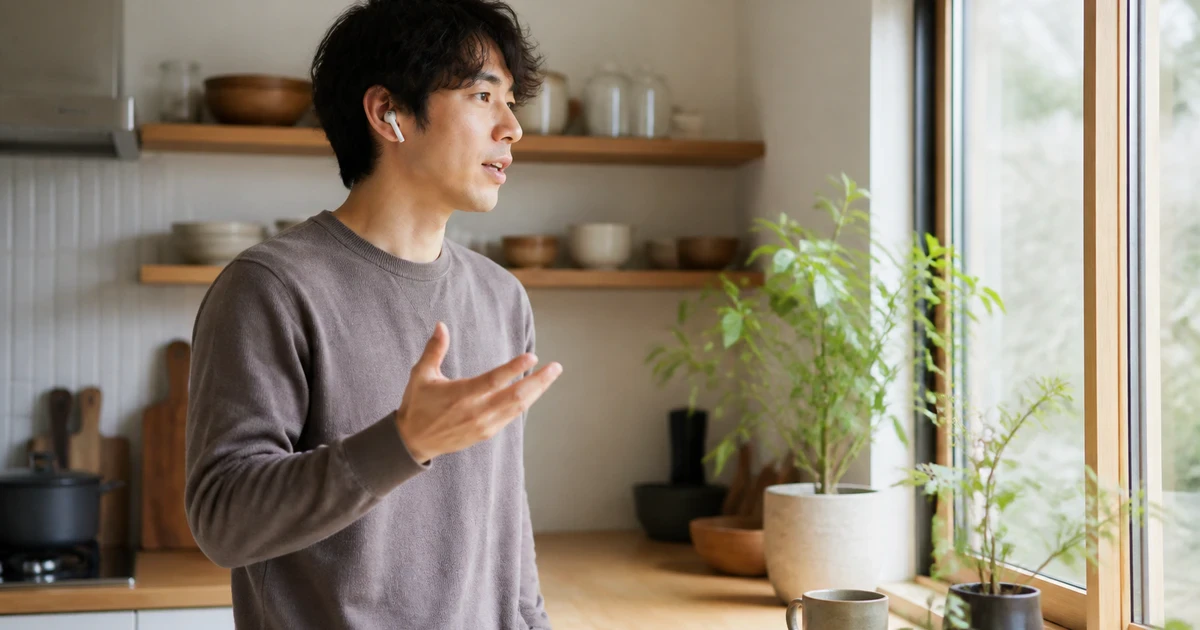
Speaking Japanese every day does not require living in Japan or studying for hours. A small, repeatable routine can help you turn passive knowledge into active speaking.
The most useful approach combines short self-practice with real conversation. You can practise a sentence, record your voice, shadow natural Japanese, and then use the same language with a teacher or someone you know.
Kind Japanese offers online, one-on-one lessons over LINE, with standard lessons lasting 25 minutes. The goal is focused speaking practice that fits into ordinary days.
Build a Daily Speaking Routine
A good routine is short enough to keep. Start with one speaking situation and one practical topic rather than trying to discuss everything at once.
For example, choose one of these topics:
- What you did today
- What you want to eat
- Your plans for tomorrow
- A recent conversation with friends
- Something you saw at work or school
- An opinion about a film, book, or hobby
A simple routine can look like this:
- Choose one sentence pattern.
- Make three personal sentences.
- Say each sentence aloud several times.
- Record yourself for one minute.
- Listen again and notice one issue.
- Repeat the sentence with a clearer rhythm.
The point is not to produce a perfect version immediately. It is to keep speaking, notice a specific problem, and try again.
For instance, you might practise the pattern “I want to…” and make sentences about food, travel, and weekend plans. A teacher can then help you adjust the grammar, word choice, or level of politeness.
Learners often need feedback on details they cannot hear alone: vowel length, sentence endings, pauses, and whether a phrase sounds natural for the relationship. A recording is useful, but human feedback helps connect pronunciation and meaning in a real sentence.
Useful Japanese for Everyday Conversation
These expressions are useful because they help you start, continue, and clarify a conversation. The word です (desu, polite sentence ending) is especially important for beginners, but everyday speaking also requires question patterns and reactions.
Japanese | Romaji | English meaning |
|---|---|---|
今日はどうでしたか | Kyō wa dō deshita ka | How was your day today? |
〜について話したいです | ~ ni tsuite hanashitai desu | I want to talk about ~ |
そうですね | Sō desu ne | That’s true / Let me think |
もう一度お願いします | Mō ichido onegai shimasu | Please say it one more time |
どういう意味ですか | Dō iu imi desu ka | What does it mean? |
まだよく分かりません | Mada yoku wakarimasen | I do not understand it well yet |
私は〜と思います | Watashi wa ~ to omoimasu | I think ~ |
それは面白いですね | Sore wa omoshiroi desu ne | That is interesting |
A useful topic sentence gives the other person a clear direction. Instead of answering with one word, add a reason, example, or follow-up question.
Example sentences
今日は仕事のあとで友だちと話します。
Kyō wa shigoto no ato de tomodachi to hanashimasu.
Today, I will talk with a friend after work.
日本の音楽について話したいです。
Nihon no ongaku ni tsuite hanashitai desu.
I want to talk about Japanese music.
この言葉はどういう意味ですか。
Kono kotoba wa dō iu imi desu ka.
What does this word mean?
私はその映画が面白いと思います。
Watashi wa sono eiga ga omoshiroi to omoimasu.
I think that film is interesting.
Practise Speaking, Not Just Studying
Speaking practice works best when you move from controlled output to spontaneous answers.
First, read a model sentence aloud. Next, replace one part with your own information. Finally, answer a related question without looking at the model.
Shadowing can strengthen rhythm and listening at the same time. Listen to a short line, speak along with it, and repeat it again after the audio stops. Focus on one feature at a time:
- Long and short vowels
- The rhythm of small っ
- ん before different consonants
- Contrast words such as “but” or “although”
- Sentence endings that show certainty, softness, or uncertainty
Do not worry if your first recording sounds slow. The purpose is to compare your second attempt with your first and identify one change.
A helpful speaking loop is:
- Speak your sentence.
- Receive one correction.
- Repeat the corrected sentence.
- Answer a new question using the same pattern.
This loop is more active than simply reading explanations. A teacher can use a live conversation to create this kind of speak-correct-repeat practice. Bring one situation, such as ordering food, meeting friends, or explaining your routine, and keep the focus narrow enough to speak repeatedly.
If pronunciation is your main obstacle, see this guide to Japanese Pronunciation Feedback Online. If you understand grammar but struggle to speak, JLPT Learners Who Can't Speak Yet may help you connect test knowledge with conversation.
Common Mistakes That Slow Everyday Speaking
Learners often make predictable mistakes when they try to speak Japanese every day.
Waiting until every sentence is perfect.
Accuracy matters, but constant planning can stop communication. Choose a simpler sentence that you can say clearly, then improve it after speaking.
Using isolated vocabulary.
Knowing a word does not guarantee that you can use it naturally. Practise each new word inside a complete sentence connected to your life.
Repeating without checking meaning.
Shadowing is useful only when you understand what you are saying. Look up an unfamiliar phrase, confirm the situation, and then repeat it with the correct intention.
Using the same level of politeness with everyone.
A polite form may be appropriate with a teacher or unfamiliar person, while close friends may use more casual language. The right choice depends on relationship and context.
Making the routine too ambitious.
A plan that takes too much time is difficult to keep. One focused minute of recording can be more valuable than a complicated schedule you abandon after a few days.
Make Conversation Part of Your Week
Self-study builds a foundation, but live speaking gives you pressure, interaction, and immediate adjustment. A 25-minute Kind Japanese one-on-one lesson can focus on one practical goal, such as describing your day, asking follow-up questions, or telling a short story.
Before a lesson, prepare:
- One situation you want to handle
- Three words you expect to need
- One sentence you can already say
- One question about meaning or politeness
- One point you want feedback on
During the lesson, try to speak before checking notes. After correction, repeat the sentence and use it in a slightly different context. Write down your own review note or question list so your next practice session has a clear starting point.
You can also practise with friends, exchange partners, or conversation groups. Ask someone to discuss one familiar topic for a few minutes, then switch roles. If the conversation becomes difficult, use a repair phrase such as “Please say it one more time” instead of changing immediately to English.
A short cultural note: Japanese conversation often leaves some information unstated when the context is clear. This can make answers feel less direct than English. Listening for the relationship, situation, and sentence ending will help you interpret the speaker’s intention.
If you would like a focused place to practise your current speaking goal, book a Free Trial Lesson over LINE.
FAQ
How can I speak Japanese every day if I have little time?
Use a compact routine built around one topic, one sentence pattern, and one recording. Even a few focused minutes can create useful repetition when you speak aloud, listen to yourself, correct one detail, and reuse the sentence in a new situation later.
Is shadowing enough to become conversational?
Shadowing improves listening, rhythm, and pronunciation, but it does not fully replace spontaneous speaking. Add personal answers and follow-up questions so you practise choosing words, responding to another person, and managing moments when you do not understand everything.
What should beginners talk about in Japanese?
Beginners can start with familiar subjects such as food, hobbies, daily routines, weather, weekend plans, and friends. Prepare a few simple sentences, then practise changing one word or adding one reason so the conversation gradually becomes more flexible.
Can one-on-one lessons help me speak more naturally?
One-on-one lessons give you time to speak, receive targeted feedback, and repeat corrected sentences in context. A teacher can also help you choose expressions that fit the topic, relationship, and politeness level, making your practice more useful than memorising disconnected phrases alone.

