
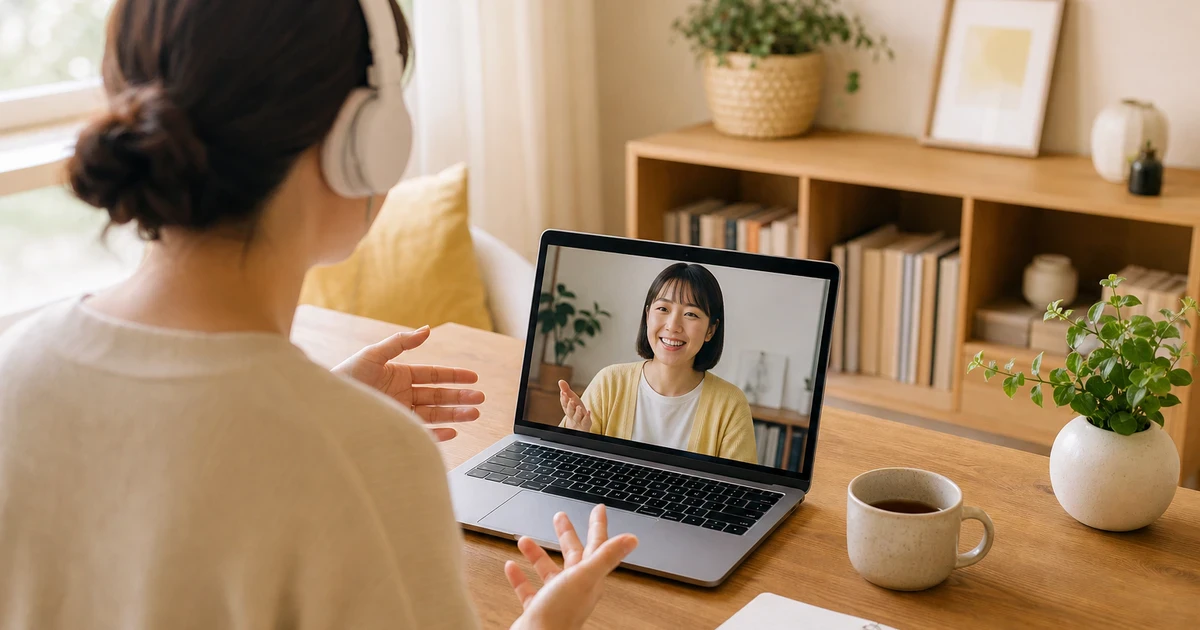
One on one japanese lessons for remote learners outside Japan work best when they are treated as a speaking system, not just a weekly video chat. The goal is simple: use online Japanese time to speak, get corrected, try again, and leave with one clear next step.
For learners outside Japan, the biggest challenge is often not motivation. It is distance from real Japanese interaction. Textbooks, apps, and videos can teach vocabulary and grammar, but they cannot easily tell you when your answer sounds unnatural, when your pronunciation changes the meaning, or when your casual phrase is too direct for the situation.
A one-on-one lesson over LINE can close that gap. Kind Japanese offers online Japanese lessons with a live teacher, delivered one-on-one over LINE, with standard lessons lasting 25 minutes. That is short enough to fit around work, school, and time zones, but focused enough for real speaking practice when the agenda is clear.
Choose Lessons Around Your Real Speaking Situation
The best lesson topic is the situation you actually need outside class. Remote learners often study broad Japanese for months, then freeze when they need to introduce themselves, ask a follow-up question, explain a schedule, or respond politely.
Start with one concrete use case:
- You want to speak with family, friends, or a partner in Japanese.
- You are preparing for travel or daily life in Japan.
- You need workplace or interview Japanese.
- You are studying for JLPT and want to turn grammar into spoken answers.
- You want to maintain Japanese while living far from Japan.
From a teacher's perspective, learners often need feedback on the gap between “I know this grammar” and “I can use this grammar while speaking.” For example, knowing the te-form is different from using it naturally in a request, explanation, or follow-up question. If conjugation is still unstable, a lesson may need to start there before moving into conversation.
A useful first goal is not “become fluent.” It is something narrower:
- “I want to explain my weekend in simple Japanese.”
- “I want to ask my teacher to repeat something politely.”
- “I want to describe my work schedule.”
- “I want to sound less stiff when answering casual questions.”
This keeps one-on-one time practical. You are not just learning about Japanese; you are rehearsing the Japanese you will actually need.
Use a 25-Minute Lesson Flow That Forces Output
A focused 25-minute standard Kind Japanese one-on-one lesson should make you speak early, receive feedback, and reuse the correction before the lesson ends. For remote learners, that structure matters because you may not have Japanese conversation around you during the rest of the week.
One practical agenda looks like this:
- Warm-up: answer one simple question about your day, study goal, or recent activity.
- Target speaking task: use one situation, such as scheduling a lesson, introducing yourself, or explaining a problem.
- Correction: notice pronunciation, word choice, grammar, and politeness level.
- Repeat: say the corrected version again, not just read it silently.
- Learner-owned review note: write down one corrected sentence or one question to bring next time.
This is where live one-on-one feedback becomes valuable. In our one-on-one lessons, teachers may notice recurring pronunciation or kana-reading patterns such as confusing similar-looking kana, then use live correction and review to help the learner identify the pattern. The important point is that correction happens while the learner is producing language, not only after a worksheet.
For remote learners, the review note should be simple enough to reuse alone. Do not try to record every detail. Write one corrected sentence, one word you misread, or one phrase you want to try again in the next lesson.
Core Phrases for Remote Lesson Setup
Use practical Japanese to manage the lesson itself. These phrases help you ask for repetition, propose your local time, and check whether your meaning was clear.
Japanese | Romaji | English meaning |
|---|---|---|
もう一度言っていただけますか | Mō ichido itte itadakemasu ka | Could you say that one more time? |
ゆっくりお願いします | Yukkuri onegai shimasu | Slowly, please. |
私の現地時間では夜が都合がいいです | Watashi no genchi jikan de wa yoru ga tsugō ga ii desu | Evening works well in my local time. |
この言い方は自然ですか | Kono iikata wa shizen desu ka | Does this way of saying it sound natural? |
もう一度言ってみてもいいですか | Mō ichido itte mite mo ii desu ka | May I try saying it one more time? |
丁寧に言うとどうなりますか | Teinei ni iu to dō narimasu ka | How would I say this politely? |
Here are simple example sentences you can adapt for online Japanese speaking practice:
私の現地時間では夜にレッスンを受けたいです。
Watashi no genchi jikan de wa yoru ni ressun o uketai desu.
I want to take lessons in the evening in my local time.
もう一度言っていただけますか。
Mō ichido itte itadakemasu ka.
Could you say that one more time?
この言い方は自然ですか。
Kono iikata wa shizen desu ka.
Does this way of saying it sound natural?
仕事のあとで日本語を勉強しています。
Shigoto no ato de Nihongo o benkyō shite imasu.
I study Japanese after work.
Cultural note: Japanese learners often focus on grammar first, but interaction style also matters. A small phrase like “Could you say that one more time?” can sound more comfortable and respectful than a very direct command, especially when speaking with a teacher, coworker, or someone you do not know well.
Plan Around Time Zones Without Losing Momentum
Time zones are part of the learning plan, not just a scheduling detail. If you live outside Japan, choose lesson windows when you can speak clearly and review soon afterward. A lesson at the wrong energy level can turn good material into passive listening.
Before contacting a teacher, prepare three pieces of information:
- Your country or region
- Your preferred time window in your local time
- Your learning goal for the next few lessons
Use natural wording such as “Evening works well in my local time” rather than vague phrases. In Japanese, 私の現地時間では夜が都合がいいです (Watashi no genchi jikan de wa yoru ga tsugō ga ii desu, evening works well in my local time) is clearer than a word-for-word translation of “my time.”
If you are in Europe, this Online Japanese Lessons Europe: Time-Zone Guide can help you think through study timing. If you are in the United States, Online Japanese Lessons for Adults in the US offers a more specific planning angle for adult learners balancing Japanese with work and daily life.
Keep the routine realistic. One strong speaking session plus a short review can be better than an ambitious schedule that collapses after two weeks.
Common Mistakes
Learners often treat online lessons like passive listening practice. Listening matters, but one-on-one time is most valuable when you are producing Japanese and receiving correction. Prepare one speaking task before the lesson so you do not spend the whole time deciding what to talk about.
Another common mistake is stopping after understanding the correction. Understanding is only step one. Say the corrected version again, preferably in a full sentence. This helps your mouth, rhythm, and grammar connect.
Remote learners also sometimes hide behind romaji for too long. Romaji can support beginners, but kana recognition matters. In our one-on-one lessons, teachers may review tricky kana confusions with visual cards or focused repetition when a learner repeatedly misreads similar characters.
Politeness level is another trap. A phrase that sounds fine with friends may feel too casual in business or formal situations. Our teachers have noted that learners can carry casual reaction phrases into professional conversation, so it helps to practise switching from casual responses to more appropriate polite ones.
Self-Check Before You Choose a Lesson
A good fit is easier to find when you know what you need. Before starting one on one japanese lessons for remote learners outside Japan, answer these questions honestly.
Can you introduce yourself for 30 seconds in Japanese? If not, your first lessons should focus on basic self-introduction, question answering, and simple follow-up phrases.
Can you ask for help in Japanese during the lesson? If not, learn phrases for repetition, slower speech, and checking meaning first. These phrases make every future lesson more productive.
Do you know your weak point: grammar, vocabulary, pronunciation, listening speed, kanji/kana, or confidence? If you are not sure, use the first lesson to diagnose it through conversation.
Can you review one correction after class? You do not need a complicated study system. One corrected sentence, spoken again the next day, is already useful.
FAQ
Are one-on-one online Japanese lessons good for beginners?
Yes, beginners can benefit if the lesson is structured clearly. A beginner lesson should use simple questions, slow speaking, basic correction, and repeatable phrases. The aim is not to speak perfectly from day one. It is to build the habit of answering, asking for help, and reusing corrected Japanese.
Do I need to live near Japan to study effectively?
No. Remote learners outside Japan can make steady progress with online Japanese lessons if they plan around time zones and practise between sessions. The key is to use lesson time for speaking practice and correction, then review one or two useful sentences before the next lesson.
Can one-on-one lessons help with JLPT study?
Yes, but remember that the JLPT tests language knowledge, reading, and listening, not speaking. One-on-one lessons can help you turn JLPT grammar and vocabulary into spoken answers, explain example sentences aloud, and notice weak grammar patterns. Use official JLPT information for test structure and official-format preparation.
What should I prepare before a free trial?
Prepare your current level, your main goal, one speaking situation, and one question you want to ask. For example, you might bring a self-introduction, a travel situation, or a workplace phrase. This gives the teacher a clear starting point and makes the trial conversation more focused.
Remote study works when the lesson is focused, the correction is immediate, and the next review step belongs to you. For one on one japanese lessons for remote learners outside Japan, start with one real speaking goal and a clear local-time window: Book a Free Trial Lesson via LINE.

