
Japanese class vocabulary is most useful when it helps you act: open a book, ask a question, follow an instruction, or explain that you do not understand. Instead of memorising an enormous school word list, begin with expressions you can use from the first day.
Students may encounter different language at a secondary school, university, language school, or club. The vocabulary below gives you a practical hub for common classroom situations.
Build Your Classroom Survival Kit
Start with words for people, materials, instructions, and responses. These are the expressions you are most likely to hear or say during a lesson.
Japanese | Hepburn | English meaning |
|---|---|---|
先生 | sensei | teacher; instructor |
生徒 | seito | secondary-school pupil |
学生 | gakusei | student, especially a university student |
職員 | shokuin | staff member |
学校 | gakkō | school |
大学 | daigaku | university |
教室 | kyōshitsu | classroom |
授業 | jugyō | class; lesson |
教科書 | kyōkasho | textbook |
ノート | nōto | notebook |
宿題 | shukudai | homework |
質問 | shitsumon | question |
答え | kotae | answer |
ページ | pēji | page |
昼食 | chūshoku | lunch; formal term |
部活 | bukatsu | club activity |
学年 | gakunen | school grade or year |
入学式 | nyūgakushiki | entrance ceremony |
上履き | uwabaki | indoor school shoes |
読んでください | yonde kudasai | please read |
聞いてください | kiite kudasai | please listen |
書いてください | kaite kudasai | please write |
言ってください | itte kudasai | please say it; please tell me |
わかりました | wakarimashita | I understand; understood |
わかりません | wakarimasen | I do not understand |
もう一度お願いします | mō ichido onegai shimasu | once more, please |
Several classroom instructions end with ください (kudasai, please). It normally follows an appropriate request form, so learn the complete expression rather than treating “kudasai please” as a word to attach anywhere.
The distinction between 生徒 (seito, secondary-school pupil) and 学生 (gakusei, student) matters. 生徒 is commonly used for children and teenagers in secondary education, while 学生 is especially natural for university students. In general conversation, learners may still hear broader terms depending on the school.
A useful cultural note is that many Japanese schools use 上履き (uwabaki, indoor school shoes) in designated areas. Rules differ, so watch what other students do and follow the school’s instructions.
Hear the Words in Real Classroom Moments
Complete sentences make vocabulary easier to retrieve under pressure. These examples connect common words with realistic classroom actions.
When the class is working from a textbook:
教科書の十ページを読んでください。
Kyōkasho no juppēji o yonde kudasai.
Please read page ten of the textbook.
When you want to speak to the teacher:
先生、質問があります。
Sensei, shitsumon ga arimasu.
Teacher, I have a question.
When an answer is unclear:
この答えがわかりません。
Kono kotae ga wakarimasen.
I do not understand this answer.
When discussing entrance-ceremony rules:
私の学校では、入学式に上履きが必要です。
Watashi no gakkō de wa, nyūgakushiki ni uwabaki ga hitsuyō desu.
At my school, indoor school shoes are required for the entrance ceremony.
Practise each sentence by changing one element. Replace the page number, question, or school event while keeping the rest of the sentence familiar. This controlled variation helps you answer quickly without memorising only one fixed script.
Polite and Formal Classroom Language
Use polite language when speaking to a teacher, staff member, or someone you do not know well. The request pattern in 読んでください (yonde kudasai, please read) is polite and suitable for ordinary classroom instructions.
Formal language may appear more strongly in school announcements, written notices, ceremonies, or official interactions with 職員 (shokuin, staff member). For example, 昼食 (chūshoku, lunch) sounds more formal than everyday お昼 (ohiru, lunch), while 入学式 (nyūgakushiki, entrance ceremony) is the standard school term.
です (desu, polite copula) helps make a statement polite, but it cannot be added mechanically to every expression. する (suru, to do) is a verb meaning “to do” and must be used in an appropriate sentence pattern.
Common mistakes often involve small but important contrasts:
- Learners often confuse 言って (itte, say or tell) with 行って (itte, go). The pronunciation is the same, so the surrounding context matters.
- Learners often confuse わかりました (wakarimashita, I understand) with わかりません (wakarimasen, I do not understand). Practise them as a pair.
- Learners often use 先生 (sensei, teacher or instructor) for every adult at school. Office staff and club members may have different roles and titles.
- Learners often add ください (kudasai, please) without changing the verb correctly. Memorise complete requests such as “please read” and “please write.”
Turn Recognition into Spoken Skill
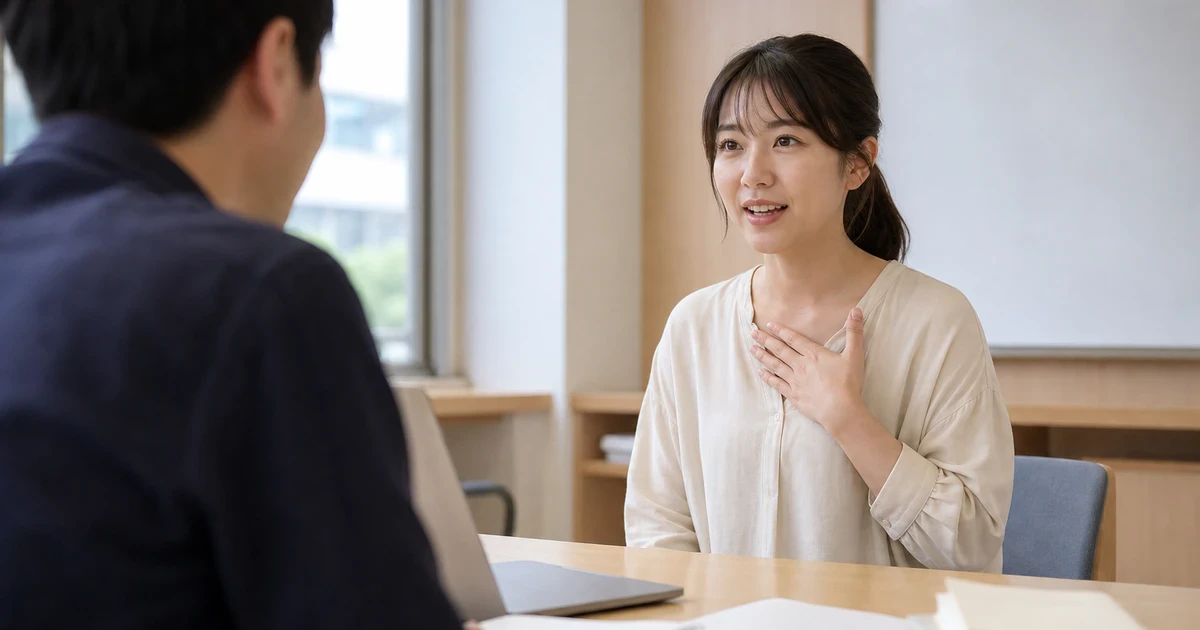
A teacher can help you check whether your response fits the situation, not only whether each vocabulary item is technically correct. Learners often need feedback on politeness, pronunciation, speed, and whether an answer sounds complete.
A focused one-on-one practice exchange might work like this:
- The teacher gives an instruction using a textbook or classroom topic.
- You respond with わかりました (wakarimashita, I understand) or わかりません (wakarimasen, I do not understand).
- You ask a follow-up question using 質問 (shitsumon, question) or もう一度お願いします (mō ichido onegai shimasu, once more, please).
- The teacher corrects one pronunciation or grammar point.
- You repeat the final answer and write one learner-owned review question.
Kind Japanese lessons take place online over LINE. A standard one-on-one lesson is 25 minutes and can include a warm-up, a target classroom speaking task, correction, and a personal review note.
This vocabulary also supports JLPT preparation. The JLPT tests language knowledge, reading, and listening rather than speaking, so use official materials for test format, timed practice, and listening endurance. You can turn JLPT grammar or vocabulary into spoken answers to strengthen recall.
Independent study can take you far when it includes active recall and careful review. Can You Learn Japanese by Yourself? explains where self-study works well and where feedback may be useful. If you are comparing private practice with a group school environment, Private Japanese Tutor vs Language School: Which Fits? offers a practical comparison.
For focused practice with classroom instructions and responses, book a Free Trial Lesson with Kind Japanese.
FAQ
How many classroom words should a beginner learn first?
Start with a small set covering listening, reading, writing, questions, repetition, books, homework, and classroom roles. Practise those words in short exchanges rather than memorising a long list. A compact vocabulary set is more useful when you can recognise it quickly and produce it while speaking during class.
Does classroom vocabulary help with the JLPT?
Classroom vocabulary can make study instructions, grammar explanations, and review routines easier to follow. The JLPT does not test speaking, so use official materials for format, timed practice, and listening endurance, then turn new vocabulary or grammar into spoken answers to strengthen recall and reveal gaps.
What should I say when I do not understand?
Say わかりません (wakarimasen, I do not understand), then ask もう一度お願いします (mō ichido onegai shimasu, once more, please). You can also identify the problem by saying whether the word, instruction, or answer is unclear, giving the teacher a precise point to explain again.
Can I use 先生 for all school staff?
Not automatically. 先生 (sensei, teacher or instructor) is commonly used for teachers and instructors, while office staff, senior students, and club members may have different roles or titles. Listen to introductions, notice how others address each person, and ask politely when uncertain instead of using one label for everyone.

