
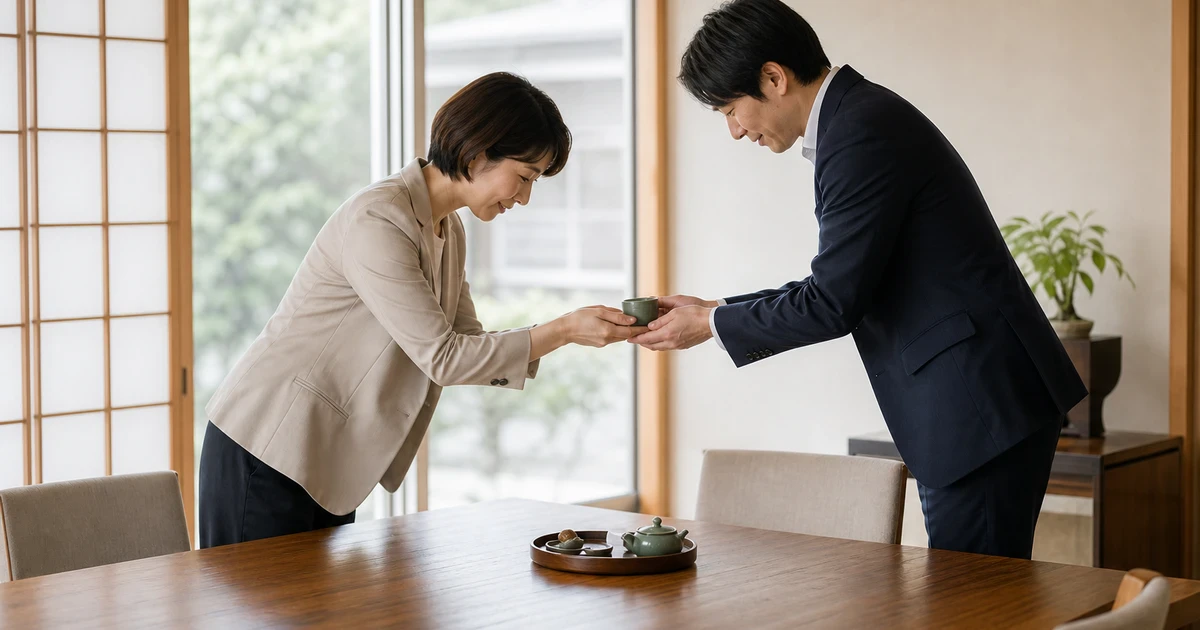
Working with Japanese culture means paying attention to context, relationships, timing, and the signals behind everyday communication. You do not need to imitate every custom perfectly. You need to observe the situation, respond respectfully, and ask when something is unclear.
This awareness helps in restaurants, stores, public spaces, and the workplace, especially when working with Japanese colleagues or international clients. Cultural knowledge can explain why a conversation feels formal, indirect, or unusually quiet even when you understand the language.
Start With Context, Respect, and Observation
The first step is to observe before acting. Japanese communication generally depends on the relationship, setting, and purpose of an interaction. Behaviour that suits close friends may not suit a client, manager, or person you have just met.
Several habits are widely useful:
- Arrive with enough time to prepare instead of appearing rushed.
- Listen fully before answering or assuming what someone means.
- Use a polite tone with clients, older people, and unfamiliar colleagues.
- Watch what others do before following an unfamiliar local custom.
- Treat silence as possible thinking time, not automatically as disagreement.
- Ask a simple clarification question when the intended action is uncertain.
Customs are not identical across Japan. Manners can vary between cities, families, companies, restaurants, and generations. Foreigners are unlikely to understand every signal immediately, so respectful curiosity is more useful than trying to perform a fixed image of “Japanese behaviour.”
A practical learning pattern is to connect each cultural idea to an action. Instead of memorizing that communication can be indirect, practise how to disagree carefully, delay an answer, confirm a request, or ask for more information. Reading the room becomes easier when you know what response options you have.
Everyday Manners for Dining and Public Spaces
Everyday manners become manageable when you look for physical cues and consider how your actions affect others. In homes, traditional rooms, some accommodation settings, and certain restaurants, wearing shoes indoors is inappropriate. Look for a raised floor, a shoe area, slippers, or guidance from your host before entering.
Dining customs also depend on the setting. When a group is clearly eating together, wait until everyone has received their food. Avoid reaching across other people’s dishes, and follow the restaurant’s ordering process. At a busy store or restaurant, observe first if customers use a ticket machine, tablet, counter, or staff service.
Japanese | Romaji | English meaning |
|---|---|---|
いただきます | itadakimasu | expression of appreciation said before eating |
ごちそうさまでした | gochisōsama deshita | expression of thanks said after eating |
靴を脱ぐ | kutsu o nugu | to take off one’s shoes |
お先にどうぞ | osaki ni dōzo | please go ahead |
すみません | sumimasen | excuse me; sorry; thank you for the trouble |
失礼します | shitsurei shimasu | excuse me; polite expression when entering, leaving, or interrupting |
名刺 | meishi | business card |
報告・連絡・相談 | hōkoku, renraku, sōdan | reporting, sharing information, and consulting |
Useful examples in context include:
靴を脱いでから、部屋に入ってください。
Kutsu o nuide kara, heya ni haitte kudasai.
Please take off your shoes before entering the room.
すみません、注文してもいいですか。
Sumimasen, chūmon shite mo ii desu ka.
Excuse me, may I order?
お先にどうぞ。
Osaki ni dōzo.
Please go ahead.
予定が変わったので、まず担当者に連絡します。
Yotei ga kawatta node, mazu tantōsha ni renraku shimasu.
The schedule changed, so I will first inform the person in charge.
Public manners usually emphasize keeping shared spaces orderly. Join the visible queue, let passengers leave a train before boarding, and keep calls and loud conversation to a minimum on public transport. At payment counters, place money or a card on the tray when one is provided and take your change from the same place.
A useful cultural note concerns chopsticks: do not leave them standing upright in rice or pass food directly from one pair of chopsticks to another. These actions are avoided partly because they resemble funeral customs. When sharing food, use serving utensils when provided.
Communication at Work
Effective workplace communication depends on sharing the right information before uncertainty becomes a larger problem. One well-known concept has three parts: 報告 (hōkoku, reporting), 連絡 (renraku, sharing information), and 相談 (sōdan, consulting). Together, they are often shortened to hō-ren-sō.
Use each action for a different purpose:
- Use hōkoku to report results, progress, delays, or completed work to the relevant person.
- Use renraku to inform affected people about logistics, decisions, deadlines, or changes.
- Use sōdan to consult someone when you need advice, approval, or help choosing between options.
Report a delay when you first know it may affect another person. Inform everyone who needs a schedule or location change. Consult a manager before acting when the risk is significant or responsibility is unclear.
Indirect wording can protect relationships, but it should not hide essential facts. In a work message, identify what happened, who is affected, what action is needed, and when a response is required. Silence may signal consideration, but it does not remove the need to confirm important decisions.
Business-card handling is another practical detail. In formal introductions, offer and receive a card carefully, often with both hands. Take a moment to read it, keep it visible during the meeting if appropriate, and avoid immediately folding it or pushing it casually into a pocket.
Practise Culture Through Usable Language
Cultural knowledge becomes useful when you rehearse real choices rather than memorize etiquette facts. Choose one situation—reporting a delay, greeting a client, ordering food, or entering a room—and practise a short exchange with several possible responses.
Teachers report that learners sometimes bring character-specific anime catchphrases or stylized second-person forms into ordinary conversations. These expressions may sound aggressive, theatrical, old-fashioned, or excessively familiar. Practising neutral alternatives helps learners preserve the intended meaning while matching the relationship.
A standard Kind Japanese lesson is a 25-minute online, one-on-one lesson over LINE. A focused lesson can move through a brief warm-up, a target speaking task, correction, and a learner-owned review note or question list. Before a workplace practice lesson, bring the message you would send, including the facts, impact, desired action, and one uncertainty.
For a more efficient overall study plan, read How to Learn Japanese Fast Without Wasting Time. If you are comparing independent study with personal feedback, Is It Worth Paying for Japanese Lessons? explains where guided practice can add value.
Common Mistakes
Learners often confuse politeness with silence. Respectful communication does not mean hiding a serious problem or avoiding all questions. At work, a clear and timely message is usually more helpful than waiting until an issue becomes urgent.
Learners also treat cultural generalizations as fixed rules. Not everyone in Japan communicates or behaves identically. Use common manners as a starting point, then take your cue from the specific people, company, restaurant, or city.
Another mistake is copying an action without understanding its purpose. Removing shoes protects an indoor space; queueing supports an orderly shared system; careful business-card handling shows attention to the person represented by the card. Understanding the purpose makes the behaviour easier to remember.
Learners also focus on vocabulary while missing the workplace action. Knowing the labels for reporting, informing, and consulting is not enough. Practise deciding which action is needed, who needs the information, and how soon the message should be sent.
FAQ
Do I need fluent Japanese to work with Japanese culture?
No. Cultural awareness begins with observation, patience, and respectful behaviour rather than fluency. Basic Japanese can make daily interactions smoother, but timing, gestures, and careful listening also matter. When you miss something, ask a polite clarification instead of pretending that you understood every detail correctly.
Is silence always a sign of disagreement?
No. Silence can signal thinking, uncertainty, respect, or a wish not to interrupt, and its meaning changes with context. Notice the relationship, facial expression, and what happens next. If a decision or instruction remains unclear, wait briefly and ask a calm follow-up question for confirmation.
What should I practise before working with Japanese clients?
Practise introducing yourself, confirming requirements, reporting changes, and asking for clarification politely. Use realistic scenarios involving deadlines, requests, misunderstandings, and agreed next steps. Focused role-play is useful because a teacher can adjust your wording, tone, and level of directness while you speak under realistic pressure.
Can online lessons help with cultural communication?
Yes. Online one-on-one lessons can turn cultural ideas into focused role-play for meetings, dining, introductions, and workplace problems. You can practise one situation, receive live feedback, and repeat the exchange using more suitable language. Book a Free Trial Lesson to begin with a communication challenge you want to handle better.

