
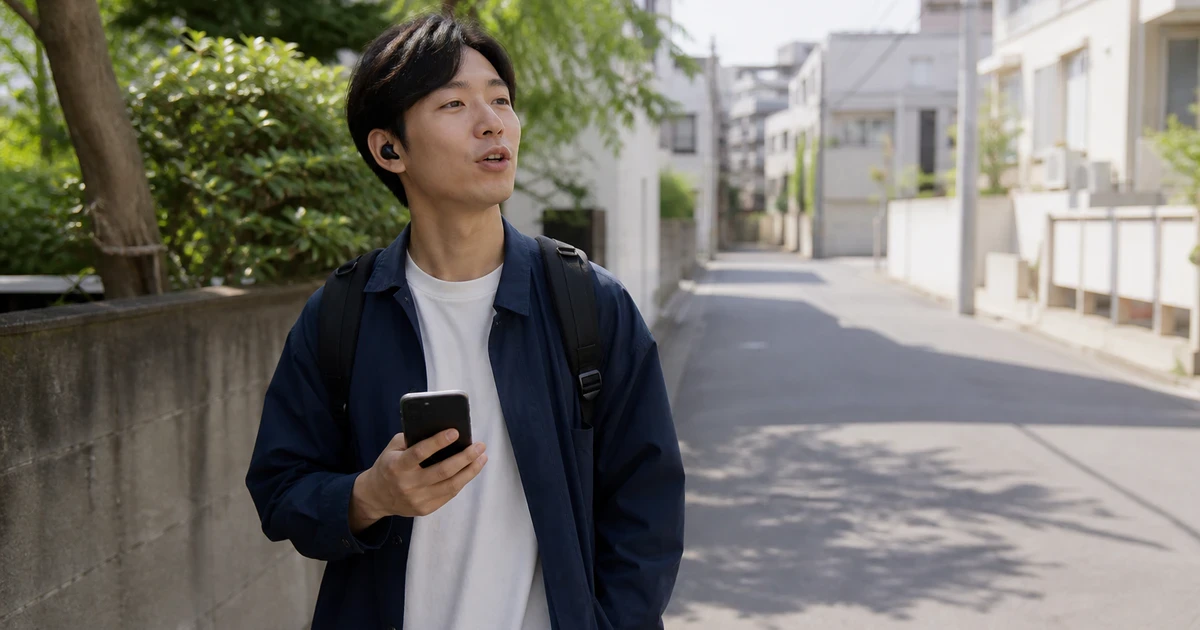
The best Japanese conversation podcast is one you can understand often enough to keep listening, while still challenging you to improve. A good podcast offers natural conversations, clear pronunciation, useful vocabulary, and support such as transcripts or translations.
Popular options connected with Teppei, Noriko, and Miku suit different learners. Some focus on slow, accessible speech; others offer more natural Japanese conversation about daily life, culture, and experiences in Japan.
Podcasts build listening habits, but passive listening alone rarely creates confident speaking. The strongest approach combines repeated listening, vocabulary and grammar review, pronunciation practice, and opportunities to use what you hear with a live teacher.
Best Japanese Podcasts Compared
The right podcast depends on your level, preferred pace, and need for English support. Use this comparison as a starting guide, then sample a recent episode before committing to a series.
Japanese Podcast for Beginners by Teppei is a strong choice for beginner and lower-intermediate learners. Teppei generally uses clear, relatively slow speech and familiar topics, making it useful for building basic listening confidence. It is especially suitable when you want a manageable introduction to Japanese conversation. Episode support can vary, so check whether the specific episode includes a transcript or other notes.
Japanese with Noriko is better suited to intermediate learners who want more explanation, personal topics, and structured listening practice. Noriko’s episodes often connect language with everyday life, opinions, and culture. The pace may feel more natural than absolute-beginner material, while episode pages or related resources may provide additional support depending on the series.
Japanese with Miku Real Japanese appeals to learners seeking practical everyday language and a lively conversational style. It can suit intermediate learners moving toward more natural speech, particularly those interested in daily life and modern Japanese usage. Check each episode for available transcripts, subtitles, or English explanations because support is not identical across every platform.
For a useful first test, choose one episode from each style and evaluate:
- Can you identify the topic after one listen?
- Can you recognise several repeated words without reading?
- Is the speech challenging because of vocabulary, pronunciation, or speed?
- Does the speaker use language you could imagine saying?
- Are transcripts, translations, or English explanations available for that episode?
A Japanese podcast is not automatically better because it is popular. The best choice is the one that gives you enough understanding to notice patterns and enough difficulty to make active review worthwhile.
How to Turn Listening into Conversation
Listening improves conversation when you transform audio into your own speech. Use one episode in four stages:
- Listen once for the main idea, speakers, mood, and conclusion.
- Listen again with a transcript or translation, marking only useful vocabulary and grammar.
- Replay a short section without support, noticing particles, sentence endings, and connected speech.
- Summarise the episode, answer a question about it, or imitate one short passage aloud.
Learners often need feedback on vowel length, mora rhythm, pronunciation, and sentence endings even when their vocabulary is strong. A recording gives you a model, but it cannot always explain why your own sentence sounds unclear.
Teachers also address the difference between textbook Japanese and expressions used naturally in conversation. In one-on-one lessons, you can finish an idea before receiving focused feedback, then practise a more natural alternative while keeping your original meaning.
A standard Kind Japanese lesson is a 25-minute one-on-one lesson over LINE. A focused session can use one podcast episode for a warm-up, a target speaking task, correction of important language, and a learner-owned review note or question list.
For additional speaking practice, explore Beginner Online Japanese Conversation Lessons or Japanese Conversation Practice Online: Speak Naturally.
Useful Podcast Language
Keep your reference list short. Choose expressions that help you understand an episode or express your own opinion, rather than recording every unfamiliar word.
Japanese | Hepburn romaji | English meaning |
|---|---|---|
会話 | kaiwa | conversation |
聞き取る | kikitoru | to catch or understand by listening |
話題 | wadai | topic of conversation |
表現 | hyōgen | expression or wording |
発音 | hatsuon | pronunciation |
もう一度聞く | mō ichido kiku | to listen one more time |
文字起こし | mojiokoshi | transcript or written transcription |
Shadowing works best with a short passage. Repeat immediately after the speaker and follow the rhythm instead of translating every word.
Retelling is another useful bridge to conversation. Explain the episode in simpler Japanese, even if you need basic grammar. You can also create one question about the topic and answer it aloud.
A short cultural note can make listening easier: Japanese often omits a subject when the situation makes it obvious. Do not assume every missing subject represents unknown vocabulary; sometimes the listener is expected to infer it from context.
この話題について、もう少し詳しく聞きたいです。
Kono wadai ni tsuite, mō sukoshi kuwashiku kikitai desu.
I would like to hear a little more about this topic.
このポッドキャストは、会話のスピードがちょうどいいです。
Kono poddokyasuto wa, kaiwa no supīdo ga chōdo ii desu.
The conversation speed of this podcast is just right.
聞き取れなかった部分を、トランスクリプトで確認しました。
Kikitorenakatta bubun o toransukuriputo de kakunin shimashita.
I checked the parts I could not catch using the transcript.
この表現を使って、自分の経験を説明してみます。
Kono hyōgen o tsukatte, jibun no keiken o setsumei shite mimasu.
I will try explaining my own experience using this expression.
Common Mistakes
Choosing an episode that is far too difficult. Learners often confuse exposure with progress. Advanced speech can be valuable, but if you cannot identify the topic or any key phrases, start with a simpler episode.
Reading English translations first. Translations help confirm meaning, but they should follow an initial listening attempt. Otherwise, your reading speed may hide the listening problem you need to solve.
Collecting vocabulary without using it. A long list is less useful than a few expressions used in a summary, question, or personal example.
Copying pronunciation without checking rhythm. Learners may pronounce each sound carefully but still sound unclear because vowel length, mora timing, or sentence endings differ. A teacher can give feedback on the complete sentence.
Expecting a podcast to correct you. Podcasts provide input but do not respond to your errors. One-on-one practice can connect what you hear with what you need to say.
FAQ
Is Teppei the best Japanese conversation podcast for beginners?
Teppei can be an excellent starting point for learners who want clear speech, everyday topics, and a manageable pace. It is not automatically the best choice for everyone, because some beginners need more visual support while advanced learners may need faster, less carefully controlled conversations. Sample an episode before deciding.
Should I use Japanese podcast transcripts and translations?
Yes, transcripts and translations are useful tools for checking vocabulary, grammar, pronunciation, and details you missed while listening. Try the audio first, use support to investigate only important sections, and then replay those sections without help so listening—not reading—remains the central skill.
How can a podcast improve my Japanese conversation?
A podcast supplies models of rhythm, vocabulary, grammar, pronunciation, and turn-taking, but you must convert that input into speech. Summarise an episode, answer questions aloud, and practise with a teacher who can correct unclear sounds, unnatural wording, or unsuitable levels of politeness. This makes listening active rather than passive.
How often should I listen to a Japanese podcast?
Regular listening is more valuable than an ambitious routine you cannot maintain. Choose a short section, repeat it several times, review a small number of useful expressions, and add speaking practice whenever possible. Even brief, focused sessions can build recognition, pronunciation awareness, and confidence more effectively than passive background sound.
If you want personalised guidance on turning podcast listening into speaking practice, book a Free Trial Lesson over LINE with Kind Japanese.

