
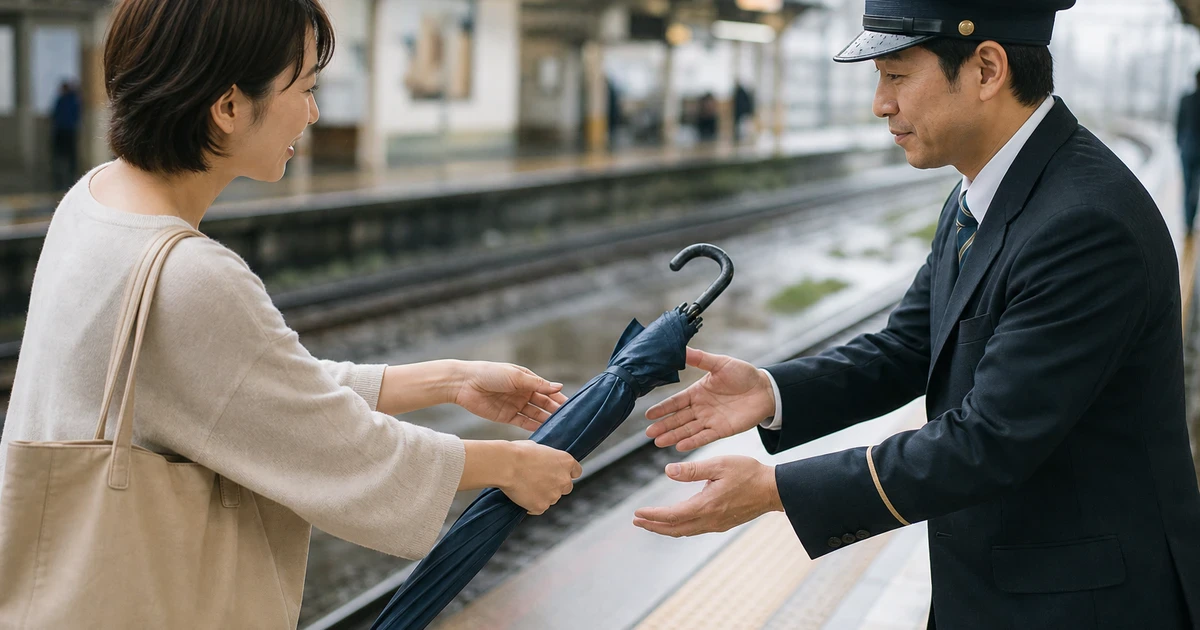
Plain form is not “wrong Japanese.” It is casual Japanese. The hard part is knowing when to switch it into polite form quickly, naturally, and without freezing mid-sentence.
A search for “japanese tutor for plain form to polite form practice” usually means you already know some grammar, but you need speaking practice with live correction. That is a good place to be: the next step is not memorising more rules, but training your mouth to choose the right ending for the person in front of you.
Why Plain-to-Polite Switching Needs Live Practice
Plain-to-polite switching is a conversation skill, not just a grammar chart. Many learners can recognise forms in textbooks but still answer too casually when speaking with a teacher, host family, coworker, or someone they have just met.
The cultural note is simple: Japanese sentence endings carry relationship information. Plain form can sound relaxed, close, or blunt depending on the situation. Polite form is usually safer when speaking to someone new, older, senior, or in a service setting.
This is why one-on-one feedback matters. A teacher can stop you after one sentence and ask:
- Who are you talking to?
- Is this a close friend or a new person?
- Does the ending match the relationship?
- Can you repeat it more naturally?
If your bigger issue is hesitation rather than grammar knowledge, you may also find Build Speaking Confidence with a Japanese Tutor useful alongside plain-to-polite drills.
japanese tutor for plain form to polite form practice
A good practice session should focus on one clear target: changing casual sentences into polite spoken answers under light pressure. You do not need a long grammar lecture every time. You need short prompts, immediate correction, and repetition until the polite form comes out before you overthink it.
This type of online Japanese practice is especially useful for learners who:
- understand dictionary form but pause before polite form
- use casual endings from anime, dramas, or friends too broadly
- want to sound more appropriate in first meetings
- can write the answer but cannot say it smoothly
- need one-on-one correction instead of more passive input
For homestay or family situations, plain and polite choices can affect first impressions. If that is your goal, pair this article with Japanese Phrases for a Homestay Host Family and practise changing your own self-introduction into polite form.
Core Plain-to-Polite Conversion Table
The core pattern is simple, but speech speed makes it feel difficult. In the table, particles are romanised by pronunciation; は (wa, particle pronounced “wa”) is shown that way inside negative copula forms.
Plain form | Polite form | Coaching use |
|---|---|---|
行く (iku) - to go; plain non-past | 行きます (ikimasu) - to go; polite non-past | Basic verb conversion |
行かない (ikanai) - do not go; plain negative | 行きません (ikimasen) - do not go; polite negative | Negative answer practice |
食べる (taberu) - to eat; plain non-past | 食べます (tabemasu) - to eat; polite non-past | Ru-verb speed drill |
食べない (tabenai) - do not eat; plain negative | 食べません (tabemasen) - do not eat; polite negative | Negative ru-verb drill |
する (suru) - to do; plain non-past | します (shimasu) - to do; polite non-past | Irregular verb practice |
来る (kuru) - to come; plain non-past | 来ます (kimasu) - to come; polite non-past | Irregular verb practice |
だ (da) - is; plain copula | です (desu) - is; polite copula | Noun and na-adjective sentences |
ではない (de wa nai) - is not; plain negative | ではありません (de wa arimasen) - is not; polite negative | Polite denial or correction |
高い (takai) - expensive or tall; plain adjective | 高いです (takai desu) - expensive or tall; polite adjective | I-adjective politeness |
静かだ (shizuka da) - is quiet; plain na-adjective | 静かです (shizuka desu) - is quiet; polite na-adjective | Na-adjective politeness |
A Focused 25-Minute LINE Lesson Flow
Kind Japanese offers one-on-one online Japanese lessons over LINE, and standard one-on-one lessons are 25 minutes. That length works well for one focused speaking target, such as changing plain form into polite form while answering realistic questions.
A practical lesson flow could look like this:
- Warm-up: answer two easy questions so your teacher can hear your current style.
- Target speaking task: change short plain-form ideas into polite answers.
- Correction loop: say the corrected sentence again immediately.
- Context check: decide whether the sentence fits a friend, teacher, host family, or workplace situation.
- Learner-owned review note: write down the pattern or question you personally need to practise next.
For time-zone planning, propose lesson windows in your own time zone and name the zone clearly, such as Eastern Time, Pacific Time, Central European Time, or Japan Standard Time. Avoid vague phrases like “my evening” unless you also give the time zone.
Drill Patterns You Can Practise This Week
The best drill is speak, correct, repeat. Do not only rewrite sentences silently. Say the answer aloud, correct the ending, and say the corrected version again.
Plain input for a diary or close-friend context:
明日、宿題をする。
Ashita, shukudai o suru.
I will do my homework tomorrow.
Polite version for a teacher or someone you just met:
明日、宿題をします。
Ashita, shukudai o shimasu.
I will do my homework tomorrow.
Correction target for a polite negative answer:
今日は行きません。
Kyō wa ikimasen.
I will not go today.
Context check for a polite denial:
これは私の本ではありません。
Kore wa watashi no hon de wa arimasen.
This is not my book.
A simple home routine is to choose three plain sentences from your own life, convert them into polite form, record yourself once, and mark where you hesitated. Bring the hesitation point to a teacher instead of bringing a long list of unrelated grammar questions.
Common Mistakes
Learners often attach politeness to the wrong part of the sentence. 行くです (iku desu, incorrect “go” plus polite copula) is not the polite form of “go.” The correct polite verb form is 行きます (ikimasu, to go; polite non-past), as shown in the table.
Learners also sometimes change only the verb ending and ignore the relationship. A sentence can be grammatically polite but still sound too direct if the situation requires softer wording, a request form, or more context.
Learners often show that some learners copy anime-style address terms or catchphrases into normal conversation. 君 (kimi, casual “you”), そなた (sonata, archaic “you”), あんた (anta, rough or casual “you”), and だってばよ (dattebayo, character catchphrase) are not general-purpose polite Japanese.
Teacher survey responses also point to a practical habit: steady preview and review help learners improve. For this topic, that means reviewing a few personal plain-to-polite pairs before class and returning to the same patterns after class until they become automatic.
FAQ
Is plain-to-polite practice only for beginners?
No. Beginners need it because polite form is essential for first conversations, but intermediate learners also need speed and judgment. The real skill is not only knowing a grammar rule; it is choosing the right ending while speaking, before the conversation moves on.
Can I practise plain-to-polite switching alone?
Yes, but self-study usually trains recognition more than timing. You can rewrite diary sentences, record short answers, and check endings. For live conversation, one-on-one feedback helps you notice when a sentence is grammatically correct but too blunt, too casual, or slow to produce.
What should I bring to a first lesson?
Bring three sentences you can say in plain form, one situation where you want to sound polite, and one question about when casual speech is acceptable. This gives the teacher enough material to correct your endings, check context, and make the practice immediately useful.
Does the JLPT test this as speaking?
No. The JLPT tests language knowledge, reading, and listening; it does not include a speaking section. Plain and polite forms can appear in grammar, reading, and listening contexts, but producing them smoothly in conversation needs separate speaking practice with feedback and repetition.
Practice With Feedback Over LINE
If you want a japanese tutor for plain form to polite form practice, choose one real situation first: meeting a host family, speaking with a teacher, answering at work, or making small talk with someone new. Focused practice is easier to correct than vague “conversation practice.”
Kind Japanese offers one-on-one lessons over LINE, and a free trial is available for learners who want to test this style of live correction. Book a Free Trial Lesson with Kind Japanese and bring one plain-form sentence you want to make more polite.

