
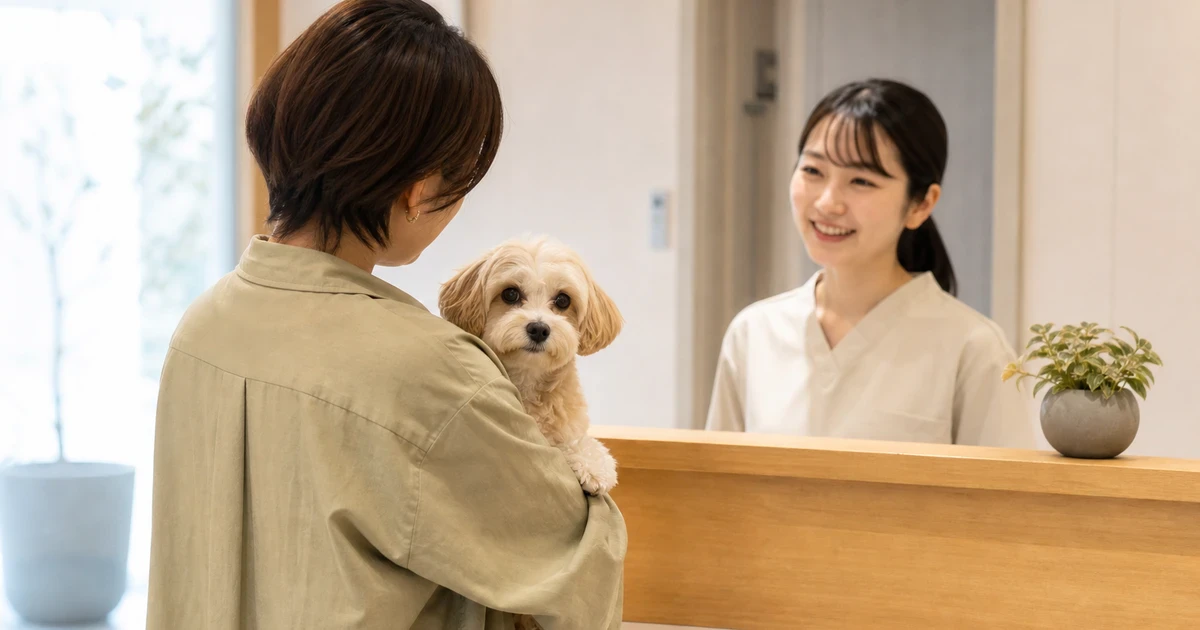
At a pet clinic reception, the safest Japanese is short, factual, and easy to repeat. If you already know some daily Japanese, this is one of those situations where simple safe phrases matter more than long grammar.
For an appointment at a pet clinic, reception staff usually need a few things: whether it is a first visit, the pet type and name, the symptoms, and when they started. The goal is not to sound advanced. The goal is to be clear.
A small amount of practice goes a long way here. Learners often try to translate a full English explanation word for word, but reception is easier when you reduce it to just the useful facts. If you want a broader base for this kind of conversation, Japanese Customer Service Phrases: Practical Guide is a useful companion, and Survival Japanese Phrases for Real Situations helps with other everyday errands.
What Reception Usually Needs
Reception at a pet clinic is usually a short information exchange. The staff may ask for a patient card, the pet’s name, and whether this is a first visit. Then they may ask about symptoms and timing.
The safest approach is to state only what you can observe. That means: - What kind of pet it is - The pet’s name - Whether this is a first visit - What symptoms you can see - When the symptoms started - Whether you can show a note or screenshot
A short cultural note helps here: in Japan, brief factual answers at reception are normal and efficient. Short sentences are not rude. They are often the clearest way to move the appointment forward.
If speaking feels difficult, you do not need to build a perfect sentence on the spot. A note or screenshot can be enough to support the conversation.
Core Phrases for Pet Clinic Reception
Japanese | Romaji | English Meaning |
|---|---|---|
動物病院 | dōbutsu byōin | veterinary clinic; animal hospital |
受付 | uketsuke | reception; front desk |
初診 | shoshin | first visit |
初めてです | hajimete desu | It is my first visit. |
診察券 | shinsatsuken | clinic card; patient card |
診察券はありますか | shinsatsuken wa arimasu ka | Do you have a patient card? |
私の名前は〜です | watashi no namae wa ~ desu | My name is ~. |
飼い主の名前は〜です | kainushi no namae wa ~ desu | The owner’s name is ~. |
ペットの名前は〜です | petto no namae wa ~ desu | My pet’s name is ~. |
犬です | inu desu | It is a dog. |
猫です | neko desu | It is a cat. |
吐いています | haite imasu | [My pet] is vomiting. |
症状は嘔吐です | shōjō wa ōto desu | The symptom is vomiting. |
食欲がありません | shokuyoku ga arimasen | [My pet] has no appetite. |
元気がありません | genki ga arimasen | [My pet] has low energy. |
いつからですか | itsu kara desu ka | Since when has it started? |
メモに書いていただけますか | memo ni kaite itadakemasu ka | Could you write it down in a memo? |
これを見てください | kore o mite kudasai | Please look at this. |
This table is enough for a first reception conversation at a pet clinic. You do not need to memorise a huge list. You need a few safe phrases that you can use quickly under pressure.
A Simple Reception Script
The best way to learn this topic is to practise a short script until it feels automatic. Start with the first visit, then pet type and name, then symptoms, then timing.
Reception
初診ですか。
Shoshin desu ka.
Is this your first visit?
Learner
はい、初診です。犬です。ペットの名前はポチです。
Hai, shoshin desu. Inu desu. Petto no namae wa Pochi desu.
Yes, it is my first visit. It is a dog. The pet’s name is Pochi.
Reception
症状は何ですか。
Shōjō wa nan desu ka.
What are the symptoms?
Learner
犬が吐いています。昨日からです。メモに書いていただけますか。
Inu ga haite imasu. Kinō kara desu. Memo ni kaite itadakemasu ka.
My dog is vomiting. It started yesterday. Could you write it down in a memo?
This is a good model because it stays close to what reception needs. It does not try to diagnose the pet. It does not add unnecessary detail. It gives the desk the exact facts needed to continue the appointment.
If you know only a little Japanese, shorter is safer than translating a full English sentence. For example, “my pet seems sick and maybe ate something strange” can become too long and too uncertain. A clearer version is usually something like “vomiting” plus “since yesterday” or “has low energy.”
How to Practise This in a 25-Minute Lesson
A short one-on-one online lesson is a practical way to rehearse a pet clinic reception script before you need it in real life. Kind Japanese offers one-on-one online lessons over LINE, and this topic fits that format well because you can practise one small scenario at a time.
A simple 25-minute lesson flow works like this: - Warm-up: confirm the situation, such as a first visit, a dog or cat, and a reception conversation. - Target speaking task: say the opening line, the pet name line, and the symptom line without looking at a full paragraph. - Correction: trim any English-style overexplaining into short, natural Japanese. - Review note: finish with your own short review note or question list so you can reuse the phrases later.
This is also where a teacher can help you avoid over-diagnosing in Japanese. Learners often know the English meaning they want, but the cleaner Japanese choice is to describe only what can be seen or heard. If speaking is difficult, bring a clinic screenshot, a note, or even a short list of symptoms and practise saying it out loud.
For broader daily-life support, the same style of practice works well with Survival Japanese Phrases for Real Situations. The point is not to memorise dozens of lines. The point is to make a few safe phrases easy to access when you are nervous.
Common Mistakes
Learners often make the same few mistakes in pet clinic reception Japanese.
- They try to explain too much. Reception only needs the essentials: first visit, pet type, name, symptoms, and timing.
- They guess a diagnosis. It is safer to say what you observe, such as vomiting or low energy, instead of trying to sound medically precise.
- They forget the pet identity line. Saying whether it is a dog or cat helps the desk move quickly.
- They rely on a long English thought. A shorter Japanese line is usually clearer and less stressful to say.
- They wait until the last second to practise. One short rehearsal before the appointment makes the real exchange much easier.
A safer line is often shorter than the original English thought.
今朝から元気がありません。
Kesa kara genki ga arimasen.
[My pet] has had low energy since this morning.
That is enough information for a reception conversation. It is direct, polite, and easy to repeat.
FAQ
What should I learn first for a pet clinic visit?
Start with four things: whether it is a first visit, the pet’s name, the pet type, and one symptom line. After that, add timing, such as “since yesterday.” Those phrases cover most reception conversations without making you memorise unnecessary vocabulary.
Should I describe the cause or only the symptoms?
Start with symptoms, not guesses. Reception staff mainly need observable facts such as vomiting, no appetite, or low energy. If you know a clear cause, you can mention it later, but a simple symptom description is safer and easier to say correctly.
What if I only know a few Japanese words?
Use the few words that matter most. “First visit,” “dog,” “cat,” “vomiting,” and “since yesterday” are enough to begin. Short lines are better than a long broken sentence. The desk can ask follow-up questions if they need more detail.
Can I show a note or screenshot instead of speaking a lot?
Yes. A note or screenshot is a practical backup when speaking feels difficult. You can point to the text, then say one short line aloud. This lowers pressure and helps you avoid mixing up symptoms, timing, and pet information in the moment.
If you want to practise these safe phrases with a teacher, book a Free Trial lesson over LINE.

