
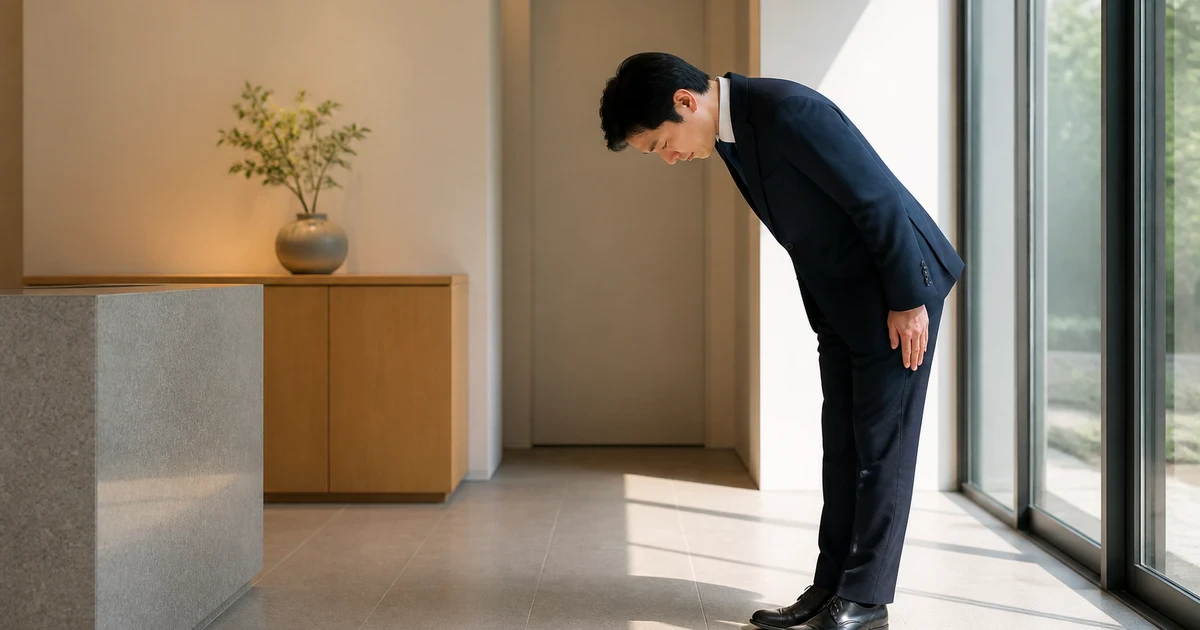
For a Japanese job interview, the safest dress code is conservative, clean, and polished. A dark suit, plain shirt, modest shoes, tidy hair, and limited accessories usually create the right impression across many Japanese companies and industries.
Expectations still vary by company, industry, and recruitment type. New-graduate recruitment tends to be more uniform, while a mid-career interview may allow greater flexibility. A traditional employer may expect formal clothing, whereas a modern tech company might prefer business casual.
The safest outfit for a Japanese interview
A dark navy, charcoal, or black suit is the most reliable choice when no instructions are provided. Choose a well-fitting jacket with matching trousers or a skirt, avoiding bold patterns and anything that requires frequent adjustment.
A safe formal outfit generally includes:
- A dark, plain suit
- A white or light-coloured shirt or blouse
- Simple, polished shoes
- A modest belt and professional bag
- Minimal jewellery and fragrance
- Neat hair that keeps your face visible
A conservative tie is appropriate with a traditionally tailored shirt and suit. Small patterns can work, but plain or restrained designs reduce the chance that your clothes will distract from your answers.
Comfort matters too. You’ll need to sit, greet people, and possibly walk through an office without pulling at your jacket, adjusting your top, or worrying about your shoes. Try the complete outfit before the interview rather than wearing a new combination for the first time that day.
New-graduate, mid-career, and industry norms
Different recruitment contexts call for different levels of formality. Japanese companies do not follow one universal dress code, but these distinctions provide a useful starting point.
New-graduate recruitment: A dark recruitment suit, white shirt, understated accessories, and polished shoes are common conservative choices. This setting often values consistency, so strongly fashionable styling may attract unnecessary attention.
Mid-career interviews: A dark navy or charcoal business suit remains safe, particularly for client-facing or managerial positions. The outfit can reflect your professional experience without becoming flashy.
Traditional industries: Finance, law, manufacturing, and government-related organisations often favour formal business clothing. A conservative appearance communicates respect for the interview setting; it does not guarantee success, but it prevents clothing from competing with your qualifications.
Modern tech and creative workplaces: Some companies have a more relaxed daily culture. Even then, job interviews normally require a deliberate, tidy look. A plain jacket, smart trousers, a clean knit top, or a simple blouse may be appropriate when the company signals business casual.
Company-designated casual interviews: Treat the word “casual” as a description of the meeting style, not permission to wear weekend clothes. Casual interviews can still influence recruitment decisions. Unless the employer explicitly suggests otherwise, avoid ripped denim, athletic wear, graphic T-shirts, and beach-style shoes.
Applicants working in media may also benefit from the professional communication guidance in Online Japanese Lessons for Journalists Covering Japan.
Details and useful Japanese vocabulary
A neat overall impression matters more than owning an expensive outfit. Fit, cleanliness, grooming, and consistency show that you prepared carefully for the occasion.
Japanese | Hepburn romaji | English meaning |
|---|---|---|
面接 | Mensetsu | Interview |
服装 | Fukusō | Clothing; attire |
スーツ | Sūtsu | Suit |
リクルートスーツ | Rikurūto sūtsu | Recruitment suit |
ビジネスカジュアル | Bijinesu kajuaru | Business casual |
身だしなみ | Midashinami | Grooming and overall personal presentation |
清潔感 | Seiketsukan | A neat and clean impression |
新卒採用 | Shinsotsu saiyō | New-graduate recruitment |
中途採用 | Chūto saiyō | Mid-career recruitment |
私服 | Shifuku | Personal clothes; attire other than a uniform |
服装自由 | Fukusō jiyū | Flexible or unrestricted dress code |
Check these practical details before leaving:
- Remove lint, loose threads, and visible creases.
- Make sure shoes are clean and comfortable.
- Choose a bag that holds documents without looking overfilled.
- Keep jewellery quiet and visually restrained.
- Use fragrance sparingly or omit it.
- Prepare a neat coat for cold weather.
- Allow time to cool down before a summer interview.
For an online interview, test your full outfit on camera. Fine stripes can flicker on screen, bright white fabric may appear overexposed, and dark clothing can disappear against a dark background. If you interview Japan-based teams from elsewhere in the world, also check lighting, sound, framing, and the name displayed on your device.
A helpful cultural note is that formal presentation in Japan often works together with punctuality, careful greetings, and considerate behaviour. Clothing is only one part of showing respect, but it helps establish a professional first impression.
Practise what you will say as well as wear
A polished outfit cannot replace clear, adaptable answers. Learners often need feedback on register, pronunciation, answer structure, and whether their Japanese sounds memorised rather than responsive.
Teachers collectively report that advanced learners sometimes carry casual reaction phrases into formal business conversations. Those reactions may sound natural among friends but overly familiar during a Japanese interview, so practice should include professional listening responses as well as prepared answers.
A 25-minute Kind Japanese one-on-one lesson over LINE can be shaped around:
- A warm-up using your self-introduction
- One target speaking task, such as explaining your motivation
- Correction of wording, pronunciation, politeness, and structure
- A learner-owned review note or question list for later practice
A realistic drill might begin with an interviewer asking why you want to join a small tech company. The learner gives an accurate answer but starts with an overly casual reaction. The teacher identifies the register problem, and the learner repeats the answer with a calm acknowledgment and a direct connection between previous experience and the new role.
Here are four original practice sentences:
これまでの経験を御社で活かしたいです。
Kore made no keiken o onsha de ikashitai desu.
I would like to apply my experience at your company.
チームで協力しながら、新しい業務を学びたいです。
Chīmu de kyōryoku shinagara, atarashii gyōmu o manabitai desu.
I would like to learn new duties while working with the team.
日本の仕事の進め方を学び、理解を深めたいです。
Nihon no shigoto no susumekata o manabi, rikai o fukametai desu.
I would like to learn about and deepen my understanding of how work is carried out in Japan.
ご質問の意味をもう一度確認してもよろしいでしょうか。
Go-shitsumon no imi o mō ichido kakunin shite mo yoroshii deshō ka.
May I confirm the meaning of your question once more?
If you are preparing for a hospitality role, Hotel Front Desk Japanese for Real Guest Conversations offers additional workplace language practice.
Common Mistakes
The most common mistake is interpreting “casual” as “informal.” A casual interview may permit business-casual clothing instead of a matching suit, but the outfit should still look intentional and professional.
Learners also commonly make these mistakes:
- Copying the daily office style too closely. Employees may dress casually after joining, but candidates are still being evaluated in job interviews.
- Focusing only on the upper body online. Wearing a professional top with unsuitable trousers can become embarrassing if you need to stand.
- Choosing formality over comfort. Tight clothing, unstable shoes, or hair that repeatedly falls across your face can undermine concentration.
- Ignoring company instructions. If an invitation specifies a suit, business casual, or personal clothing, follow that direction instead of applying a general rule.
- Practising only a memorised introduction. Interviewers may ask follow-up questions about your experience, decisions, strengths, or understanding of the industry.
- Using language learned from entertainment without checking its register. Dramatic anime expressions and unusually casual forms of address may be inappropriate in a professional setting.
For focused interview-answer practice, book a Free Trial Lesson with Kind Japanese.
FAQ
Do I need to wear a suit for every Japanese interview?
A suit is the safest choice when a company gives no guidance, especially for new-graduate recruitment or a traditional industry. For a mid-career Japanese interview, modern workplaces may accept business casual, but you’ll still need clothing that looks clean, intentional, and respectful rather than like relaxed weekend wear.
What should I wear for an online Japanese interview?
Wear a complete professional outfit, even if the interviewer will mainly see your upper body. Before the call, check your camera position, lighting, background, and sound, then test how the fabric appears on screen; plain colours and subtle patterns keep attention on your face and spoken answers.
Is black the only acceptable suit colour in Japan?
Black is acceptable, but it is not the only safe option for job interviews in Japan. Navy and charcoal are also polished choices and can appear softer on camera, so prioritize a restrained colour, good fit, clean fabric, and compatibility with the company’s stated dress code.
Can I ask a company about its interview dress code?
Yes, asking the recruiter is sensible when the invitation is unclear, and it shows that you want to respect the company’s expectations. Ask whether a suit or business casual is preferred for the interview, then follow the answer closely without requesting broader promises about workplace attire.

