
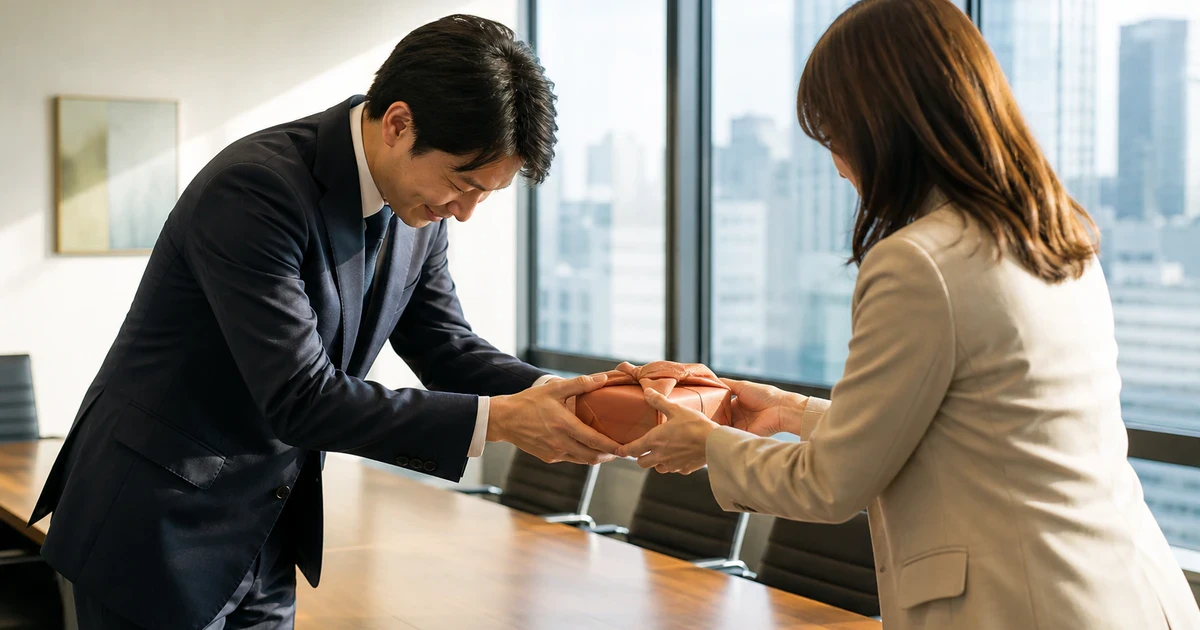
When you thank client contacts after meeting in Japanese, the goal is not only to say “thank you.” A good business email also confirms respect, keeps the relationship warm, and makes the next action clear.
The safest pattern is:
- Thank the client for their time.
- Mention the meeting or discussion.
- Confirm the next step.
- Close with a polite relationship phrase.
This article focuses on client-facing polite Japanese, with a shorter internal version for comparison.
The Client Thank-You Email Formula
A Japanese thank-you email after meeting should usually be brief, specific, and slightly more formal than everyday conversation. For a client, avoid sounding too casual even if the meeting itself felt friendly.
A simple structure is:
- Subject line: “Thank-you note regarding today’s meeting”
- Opening: Thank the client for their time
- Middle: Mention what you will confirm, send, or discuss internally
- Closing: Continue the relationship politely
Cultural note: in Japanese business writing, the thank-you line often does more than express gratitude. It shows that you respect the other person’s time before moving into practical follow-up. That order helps the email feel cooperative rather than demanding.
If your message includes action items, deadlines, or meeting notes, you may also want to compare this with Japanese Follow-Up Email After a Meeting.
Core Phrases for Polite Japanese
Use these phrases as building blocks. The key is to match the phrase to the relationship: coworker, senior internal person, or external client.
Japanese | Romaji | English meaning |
|---|---|---|
本日の打ち合わせのお礼 | Honjitsu no uchiawase no orei | Thank-you note regarding today’s meeting |
本日はお忙しい中、お時間をいただきありがとうございました | Honjitsu wa o-isogashii naka, o-jikan o itadaki arigatō gozaimashita | Thank you for taking time out of your busy schedule today |
貴重なお時間をいただき、誠にありがとうございました | Kichō na o-jikan o itadaki, makoto ni arigatō gozaimashita | Thank you very much for your valuable time |
先ほどの内容 | Sakihodo no naiyō | The details discussed earlier |
社内で確認いたします | Shanai de kakunin itashimasu | I will confirm internally |
ご確認いただけますか | Go-kakunin itadakemasu ka | Could you please check it? |
ご返信いただけますと幸いです | Go-henshin itadakemasu to saiwai desu | I would appreciate your reply |
引き続きよろしくお願いいたします | Hikitsuzuki yoroshiku onegai itashimasu | I look forward to your continued support |
取り急ぎお礼まで | Toriisogi orei made | A brief note of thanks for now |
恐れ入りますが | Osoreirimasu ga | I am sorry to trouble you, but |
For client email, choose the more careful options: “thank you for your time,” “I will confirm internally,” and “I look forward to your continued support.” For a teammate, shorter wording is often enough.
Copyable Examples by Relationship
Replace placeholders with the real company and recipient information. Do not pronounce placeholder labels aloud; they are only there to show where details go.
- Client-facing subject line
件名:本日の打ち合わせのお礼
Kenmei: Honjitsu no uchiawase no orei
Subject: Thank-you note regarding today’s meeting
- Full client template
[会社名] [氏名]様 本日はお忙しい中、お時間をいただきありがとうございました。先ほどの内容を社内で確認し、明日までにご連絡いたします。引き続きよろしくお願いいたします。
Honjitsu wa o-isogashii naka, o-jikan o itadaki arigatō gozaimashita. Sakihodo no naiyō o shanai de kakunin shi, ashita made ni go-renraku itashimasu. Hikitsuzuki yoroshiku onegai itashimasu.
Dear [Name] at [Company], thank you for taking time out of your busy schedule today. I will confirm the details internally and contact you by tomorrow. I look forward to your continued support.
- Shorter internal version
本日の打ち合わせ、ありがとうございました。内容を確認して、明日までに返事します。
Honjitsu no uchiawase, arigatō gozaimashita. Naiyō o kakunin shite, ashita made ni henji shimasu.
Thank you for today’s meeting. I will check the details and reply by tomorrow.
- Same request, different relationship level
同僚には「明日までに確認してください」、上司には「明日までにご確認いただけますか」、取引先には「明日までにご確認いただけますと幸いです」を使います。
Dōryō ni wa “ashita made ni kakunin shite kudasai,” jōshi ni wa “ashita made ni go-kakunin itadakemasu ka,” torihikisaki ni wa “ashita made ni go-kakunin itadakemasu to saiwai desu” o tsukaimasu.
For a coworker, use “please check by tomorrow”; for a senior internal person, use “could you please check by tomorrow?”; for an external client, use “I would appreciate it if you could check by tomorrow.”
The client version is longer because it protects the relationship. A grammatically correct direct request can still feel abrupt when the other person is outside your company.
Common Mistakes
Learners often understand the grammar but miss the business tone. These are the main problems to watch for.
Using casual thanks for a client. A simple “thank you” may be fine inside your team, but client-facing email usually needs a fuller opening. 本日はお忙しい中、お時間をいただきありがとうございました (Honjitsu wa o-isogashii naka, o-jikan o itadaki arigatō gozaimashita, thank you for taking time out of your busy schedule today) is safer.
Making the follow-up sound like an order. Direct request forms can be correct Japanese but too sharp for a client. Use softer wording such as ご確認いただけますか (go-kakunin itadakemasu ka, could you please check it?) or a more formal client version from the table.
Treating internal and external email the same. A coworker message can be short. A senior internal message should be more respectful. A client message should add gratitude, context, and a polite close.
Forgetting the closing line. Japanese business email often feels unfinished without a closing relationship phrase. For more closing options, see How to Close a Polite Japanese Email.
How to Practise the Follow-Up
Practise the whole email, not isolated phrases. A useful routine is to write one client thank-you email, read it aloud, then revise the relationship level.
In Kind Japanese’s standard 25-minute one-on-one online lessons, you can use a focused flow like this:
- Warm-up: explain who the client is and what happened in the meeting.
- Target task: read your thank-you email aloud.
- Correction: check whether the tone is internal, senior-internal, or client-facing.
- Review: keep your own note of one phrase to reuse and one question to ask next time.
A teacher can let learners finish a full attempt before giving feedback, which is especially helpful for business email practice. It keeps the message flow intact before correcting tone, wording, or pronunciation.
To practise one real draft with focused support, Book a Free Trial Lesson through LINE and bring one client thank-you email you want to improve.
FAQ
How soon should I send a Japanese thank-you email after a client meeting?
A client thank-you email is usually strongest when sent soon after the meeting, while the conversation is still fresh. The email does not need to be long. A short message thanking the client, confirming the discussed point, and stating the next action is often more useful than a delayed perfect draft.
Is it okay to write only “thank you for today” in Japanese?
For an internal coworker, a short thank-you can be fine. For an external client, it may feel too casual or incomplete. Add a polite time-respect phrase, mention the meeting content briefly, and close with a relationship phrase so the email sounds like proper business Japanese.
Should I use keigo in every follow-up business email?
Use keigo for clients, senior people, and formal external communication. With close coworkers, lighter wording may be more natural. The important point is relationship control: the same request should become softer and more indirect as the recipient becomes more senior or more external.
What should I prepare before practising this in a lesson?
Prepare the situation, the recipient relationship, your draft subject line, and one action you want the client to take. Also mark any phrase you are unsure about. This gives a teacher enough context to help you adjust tone, grammar, and natural business flow.

