
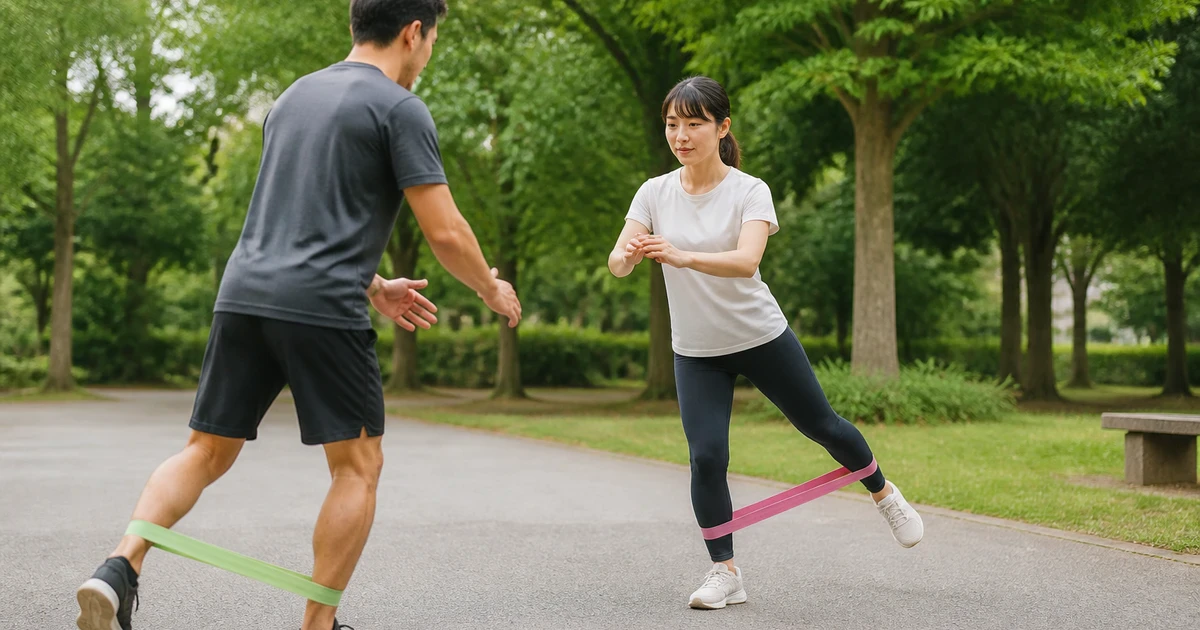
Fitness instructors need Japanese that works in motion: short, clear, polite enough, and easy to understand while someone is stretching, lifting, breathing, or moving across the studio. If you are searching for online Japanese lessons for fitness instructors in japan, your goal is probably not “general fluency someday.” You need usable language for real coaching situations.
That means learning how to:
- Give safe, simple instructions
- Correct posture without sounding harsh
- Ask about pain, limits, and experience
- Explain class flow
- Handle reception, payment, and small talk professionally
- Understand what clients say back
A one-on-one tutor can make this practical because fitness language depends on timing. You do not only need vocabulary; you need role-play, teacher feedback, and repeated speaking practice until the sentence comes out naturally.
What Fitness Instructors Actually Need in Japanese
Fitness instructors in Japan need direct but polite classroom Japanese. Long textbook sentences are usually too slow for live instruction, especially in a gym, yoga studio, pilates class, personal training session, or group workout.
In many coaching situations, short instruction patterns are best:
- “Please bend your knees a little.”
- “Do not hold your breath.”
- “Let’s check your form.”
- “Tell me if it hurts.”
- “Please rest if it feels difficult.”
The key is not memorising hundreds of words. It is building a small set of flexible sentence patterns you can reuse with different body parts, movements, and intensity levels.
From a teacher’s perspective, learners often need feedback on two things at the same time: whether the Japanese sentence is correct, and whether it sounds natural in the real situation. A phrase can be grammatically fine but too long, too casual, or too vague for a client who needs immediate guidance.
A short cultural note: in Japan, many service interactions use soft, polite phrasing even when the instruction is direct. For fitness coaching, this does not mean you must sound stiff. It means using clear commands with a respectful tone, especially with new clients.
Core Phrases for Coaching Clients
Use these phrases as a base, then practise changing the body part, movement, or intensity with a teacher. This is where online Japanese lessons become more useful than phrase memorisation: you can practise saying the line, receive correction, then repeat it in a realistic coaching rhythm.
Japanese | Romaji | English Meaning |
|---|---|---|
フォームを確認しましょう | Fōmu o kakunin shimashō | Let’s check your form |
膝を少し曲げてください | Hiza o sukoshi magete kudasai | Please bend your knees a little |
背中をまっすぐにしてください | Senaka o massugu ni shite kudasai | Please keep your back straight |
息を止めないでください | Iki o tomenaide kudasai | Please do not hold your breath |
ゆっくり戻しましょう | Yukkuri modoshimashō | Let’s return slowly |
痛みがありますか | Itami ga arimasu ka | Do you have any pain? |
無理をしないでください | Muri o shinaide kudasai | Please do not push yourself too hard |
もう一回やってみましょう | Mō ikkai yatte mimashō | Let’s try one more time |
休憩しましょう | Kyūkei shimashō | Let’s take a break |
水を飲んでください | Mizu o nonde kudasai | Please drink some water |
These are not just vocabulary items. They are coaching tools. In a lesson, you can practise them while describing movements, correcting a client, and responding when the “client” says something unexpected.
Online Japanese Lessons for Fitness Instructors in Japan
Online Japanese lessons for fitness instructors in japan should focus on speaking scenarios, not abstract grammar lists. If you already work in fitness, your lesson time is most useful when it turns your real work situations into Japanese practice.
A focused 25-minute lesson over LINE might look like this:
- Warm-up: explain your fitness role and the type of clients you work with
- Target speaking task: practise one coaching situation, such as correcting squat form
- Role-play: teacher acts as a client asking simple questions or making mistakes
- Correction: improve grammar, word choice, pronunciation, and politeness
- Repeat: say the corrected version again until it feels easier to use
This speak-correct-repeat loop is especially important for live instruction. You may know the sentence when reading it, but coaching requires you to say it quickly, clearly, and calmly.
If you live outside Japan or work across time zones, propose lesson windows in your own time zone with simple wording such as “weekday evenings” or “Saturday morning.” If Europe-based scheduling is your main concern, the Online Japanese Lessons Europe: Time-Zone Guide can help you think through practical lesson timing.
Role-Play Scenarios Worth Practising
Role-play is one of the fastest ways to make Japanese useful for fitness work. Instead of studying “gym Japanese” as isolated words, you practise the exact moment when language is needed.
Good role-play situations include:
- A first session with a new client
- Explaining a warm-up
- Correcting posture during a squat, plank, or stretch
- Asking whether something hurts
- Explaining lighter and harder options
- Ending a class politely
- Talking with reception or studio staff
- Responding when a client says they do not understand
For example, a teacher might ask you to give one instruction, then pause as the client and say, “I feel pain in my knee.” Your job is to respond naturally, not perfectly. Then teacher feedback can help you shorten the sentence, choose a safer phrase, or adjust the level of politeness.
フォームを確認しましょう。 Fōmu o kakunin shimashō. Let’s check your form.
膝を少し曲げてください。 Hiza o sukoshi magete kudasai. Please bend your knees a little.
痛みがありますか。 Itami ga arimasu ka. Do you have any pain?
無理をしないでください。 Muri o shinaide kudasai. Please do not push yourself too hard.
If speaking confidence is your bigger challenge, you may also find Build Speaking Confidence with a Japanese Tutor useful before starting more specialised fitness role-play.
Common Mistakes
From a teacher’s perspective, learners often make mistakes that are small on paper but important in a live coaching environment.
Using sentences that are too long.
Fitness instruction needs short, repeatable Japanese. If a sentence takes ten seconds to say, it may be too slow for a moving client. Practise one clear instruction at a time.
Sounding too casual with new clients.
Anime, games, and casual media can teach memorable Japanese, but some words sound too rough, dramatic, or character-like in real life. A teacher can help you replace those with neutral, professional phrases.
Confusing similar kana and sounds.
Our teachers have seen learners mix up similar-looking kana such as ツ (tsu, the katakana syllable “tsu”) and シ (shi, the katakana syllable “shi”), especially when reading class menus or notes. For pronunciation, also check long vowels, small っ (sokuon, doubled-consonant pause), and sentence-ending intonation.
Overusing direct commands.
Japanese has many ways to soften instructions. For coaching, patterns like “please do,” “let’s do,” and “try doing” often sound better than blunt command forms.
Skipping client response practice.
You need to understand replies such as “It hurts,” “I’m tired,” “I don’t understand,” or “One more time, please.” Listening and response practice should be part of the lesson, not an afterthought.
How to Prepare for a LINE Lesson
A LINE lesson works best when you bring one concrete situation, not a vague goal like “I want to speak better.” Before a 25-minute lesson, choose one situation you actually face or expect to face.
Prepare:
- Your fitness role: personal trainer, yoga instructor, pilates instructor, gym staff, class coach, or another role
- One client situation: first session, form correction, pain check, warm-up, cool-down, or reception talk
- Three English sentences you want to say in Japanese
- One question about tone, politeness, or pronunciation
- One phrase you have heard but are not sure how to use
During the lesson, focus on output. Say the sentence first, receive correction, then say it again. If pronunciation is part of the issue, listen for before-and-after changes: vowel length, rhythm, the small pause in doubled consonants, and whether your sentence ending sounds confident but not abrupt.
A useful learner handoff sentence is: “I want to practise giving safe, polite instructions to a client during a fitness session.” That gives the teacher a clear starting point for role-play and correction.
FAQ
Can online Japanese lessons help if I teach fitness in Japan?
Yes, if the lessons focus on your real coaching situations. General Japanese study helps, but fitness instructors need short instructions, safety questions, client responses, and polite correction language. One-on-one role-play lets you practise the exact phrases you need while receiving teacher feedback on clarity and tone.
Do I need advanced Japanese to coach clients?
Not always. Beginners can start with simple, polite patterns for posture, breathing, pain checks, and class flow. Intermediate learners can add softer phrasing, explanations, and client-specific adjustments. The goal is not perfect Japanese first; it is safe, understandable communication that improves through practice.
What should I practise with a one-on-one tutor?
Practise real scenes: greeting a new client, explaining an exercise, correcting form, asking about pain, offering easier options, and ending a session. A one-on-one tutor can turn each scene into role-play, correct unnatural wording, and help you repeat the improved sentence until it becomes easier to say.
Is a LINE lesson suitable for busy fitness instructors?
A LINE lesson can be practical because the format is simple and online. Kind Japanese’s standard one-on-one lessons are 25 minutes, so you can focus on one specific coaching situation at a time. Prepare your target phrases before class so the lesson can move quickly into speaking practice.
Ready to practise fitness coaching Japanese with a live teacher? Book a Free Trial lesson with Kind Japanese over LINE.

