
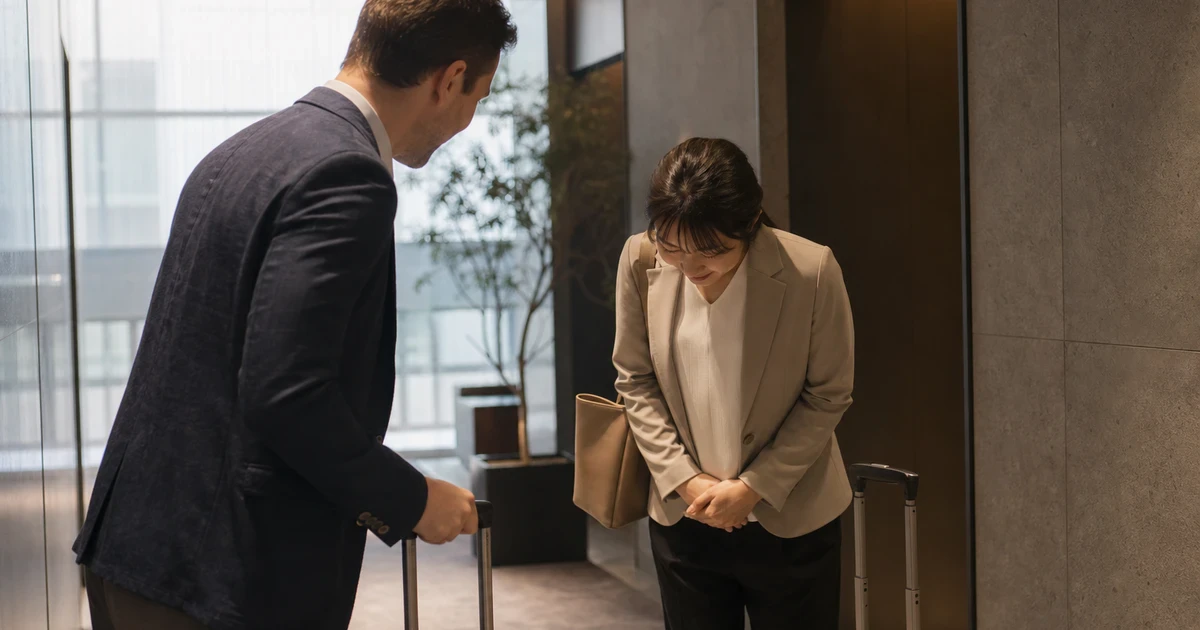
Online Japanese lessons for sales reps visiting Japan work best when they focus on the exact conversations you will actually need: greetings, business card exchange, short product explanations, and polite follow-up. If you are travelling for client visits, exhibitions, or partner meetings, the goal is not broad textbook Japanese. The goal is to speak clearly in a small number of high-value situations.
A good online Japanese lesson plan also keeps the pressure low. One-on-one speaking practice lets you rehearse the same phrase several times, adjust the level of politeness, and stop worrying about whether your wording sounds too direct. A free trial can help you see whether that style feels useful before you commit.
What Sales Reps Need Most
The fastest progress comes from practical language you can use on day one. Sales reps visiting Japan usually need three things first: a strong self-introduction, a polite way to enter a conversation, and simple language for describing products or services.
From a teacher's perspective, learners often already know a few useful words but struggle when they need to say them smoothly under time pressure. That is why short speaking practice matters more than long vocabulary lists. You want the words to come out in one natural flow.
If your trip includes meetings, Business Japanese Meeting Agenda Phrases is a useful companion read. For follow-up messages after the visit, Hō-Ren-Sō for Japanese Workplace Communication can help you keep communication clear and professional.
The most useful lesson topics for this situation are usually:
- introductions and greetings
- business-card exchange
- asking for time politely
- describing a product or proposal
- confirming the next step
- closing the conversation politely
A short lesson built around these patterns is often more valuable than studying many unrelated grammar points.
Core Phrases to Practice
These phrases give you a reliable base for a sales visit. They are simple, polite, and easy to adapt to different meetings.
Japanese | Romaji | English meaning |
|---|---|---|
初めまして | Hajimemashite | Nice to meet you |
少々お時間よろしいでしょうか | Shōshō ojikan yoroshii deshō ka | Do you have a moment? |
名刺をお渡しします | Meishi o owatashi shimasu | I will hand you my business card |
こちらの製品 | Kochira no seihin | This product here |
ご確認ください | Go-kakunin kudasai | Please check |
またご連絡します | Mata go-renraku shimasu | I will contact you again |
A useful cultural note: 名刺 (meishi, business card) exchange is usually handled carefully with both hands, and people often pause to look at the card before putting it away. That small pause matters because it shows attention and respect.
These phrases are not the whole conversation, but they are a strong starting point for online Japanese lessons for sales reps visiting Japan. Once you can say them smoothly, you can build more specific lines around your own product, industry, and meeting style.
Example Sentences for Client Visits
These short examples show how the core phrases work in real situations. They are simple on purpose, because simple sentences are easier to make reliable under pressure.
初めまして。営業担当の田中です。
Hajimemashite. Eigyō tantō no Tanaka desu.
Nice to meet you. I’m Tanaka, the sales representative.
少しお時間をいただけますか。
Sukoshi ojikan o itadakemasu ka.
May I have a moment of your time?
名刺をお渡しします。
Meishi o owatashi shimasu.
I’ll hand you my business card.
こちらの製品についてご説明します。
Kochira no seihin ni tsuite go-setsumei shimasu.
I will explain this product.
ご質問があれば、お知らせください。
Go-shitsumon ga areba, oshirase kudasai.
If you have any questions, please let me know.
If your work trip involves a meeting, it helps to practise a few “bridge” sentences too. These are the lines that move you from greeting to business, or from explanation to next steps. They are often the difference between sounding prepared and sounding unsure.
How a 25-Minute LINE Lesson Helps
A focused lesson on LINE works well because the conversation stays close to the real task. One-on-one online Japanese lets you practice, correct, and repeat without wasting time on material you will not use.
A practical 25-minute lesson flow for a sales trip usually looks like this:
- Warm-up: a short self-introduction and the purpose of the visit.
- Target speaking task: one role-play, such as a first meeting or product explanation.
- Correction: the teacher lets you finish, then gives brief correction on wording, sound, and politeness.
- Review note: you write down a few phrases or questions you want to reuse next time.
That structure is useful because it keeps the lesson active. You speak first, then refine. If needed, the teacher can also help with sound pairs that cause trouble under pressure, such as ツ (tsu, the katakana sound in many loanwords) and シ (shi, the katakana sound often confused with ツ), or ソ (so, the katakana sound) and ン (n, the katakana nasal sound). Small sound differences can matter a lot when you are speaking quickly in a meeting.
LINE is also practical for quick questions. When you notice a phrase you could not say smoothly, it is easier to return to it and ask about the exact wording later. If you are arranging lessons from another country, send two or three possible windows in your own time zone instead of only saying you are flexible. That makes it easier to match the lesson to your travel schedule.
If you want to test this style with your own material, start with a Free Trial and bring one real sales situation you expect to face.
Common Mistakes
Sales reps often make the same few mistakes, and they are all fixable with focused practice.
- Memorizing a phrase without practicing the next sentence. A greeting sounds fine by itself, but the conversation breaks down if you cannot continue naturally.
- Translating too literally from English. A direct business sentence in English may sound stiff or incomplete in Japanese unless the politeness level is adjusted.
- Ignoring small sound differences. A teacher can let you speak through the full reply first, then point out recurring issues like ツ (tsu, katakana sound), シ (shi, katakana sound), ソ (so, katakana sound), or ン (n, nasal sound) without interrupting the flow.
- Forgetting the relationship. Japanese business speech changes depending on whether you are speaking to a new client, a long-term partner, or a receptionist.
- Stopping after the greeting. Sales conversations usually need one more step: a reason for the visit, a request, or a clear closing line.
A useful way to review is to take one mistake and turn it into a new speaking pattern. For example, if you can say “please check” but not “please check this and tell me your thoughts,” the second version becomes your next practice target.
FAQ
Can lessons focus only on my industry's vocabulary?
Yes, but the best sessions usually mix industry words with full sentences, so you can use them naturally in a meeting. Bring a product sheet, a pitch outline, or the exact explanation you need to give. A teacher can turn those materials into speaking practice instead of isolated memorization.
What should I bring to a lesson?
Bring one real situation, one short self-introduction, and any words you already expect to use. If you have a meeting agenda or a client email, that is even better. In one-on-one online Japanese lessons, those materials make correction faster and keep the lesson close to your actual trip.
Is this useful if my Japanese is beginner level?
Yes. Beginner learners can start with greetings, business-card exchange, simple requests, and a few safe follow-up questions. You do not need fluent conversation to benefit. The goal is to sound polite, clear, and prepared in the exact situations a sales visit creates.
How do I use the free trial well?
Use the free trial to test the lesson style with one goal, one situation, and one question you expect to need on the trip. Ask for feedback on wording, pronunciation, and politeness level. Then decide whether the format feels useful for your own preparation.

