
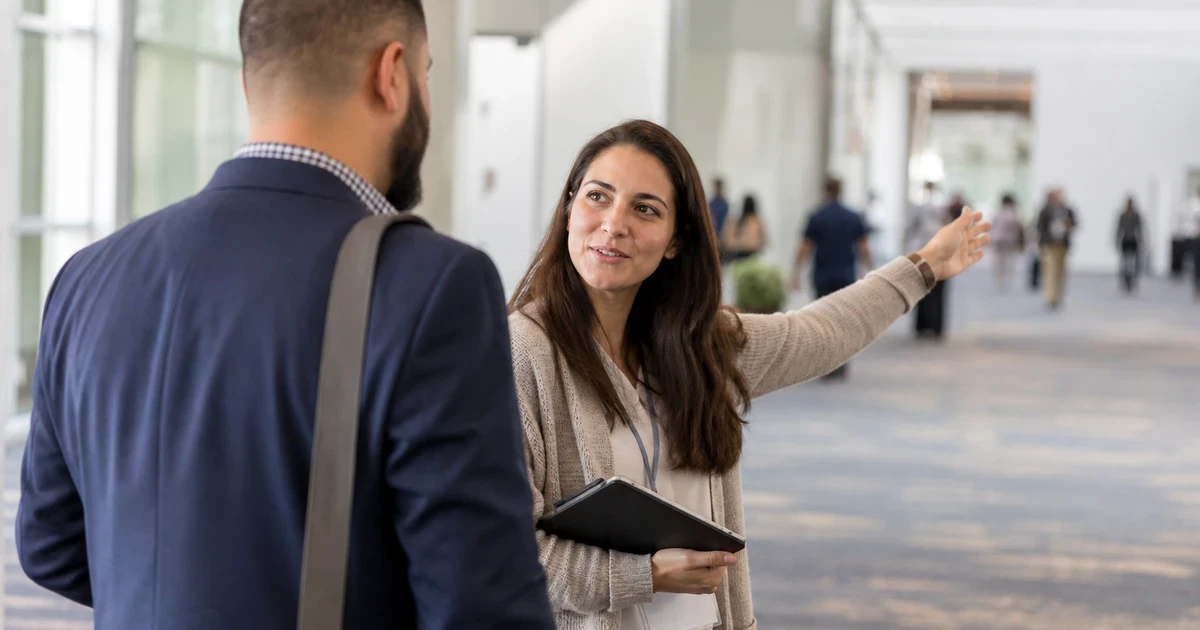
If you are searching for online japanese lessons for conference staff using japanese, the real goal is not perfect grammar. It is calm, clear speech when a guest is waiting, a speaker is late, or the room plan changes.
For conference work, Japanese is most useful when it helps you do three things quickly: greet people, guide them, and confirm changes. One-on-one online Japanese lessons over LINE are a strong fit here because a teacher can focus on your exact work situation instead of on generic textbook dialogue.
If your role includes briefings, handoffs, or status updates, Business Japanese Meeting Agenda Phrases can help you prepare short, useful lines. If you also need to keep supervisors informed in a neat way, Hou Ren Sou for Japanese Workplace Communication is a good companion read.
What conference staff need most
Conference staff usually need short, polite Japanese that works under pressure. The most important skills are:
- greeting a guest without hesitation
- directing people to the right place
- confirming names, times, and room numbers
- handling a delay or mistake without sounding blunt
- asking one follow-up question when the first answer is not enough
From a teacher's perspective, learners often know the meaning of these phrases before they can say them smoothly. The gap is usually not vocabulary alone. It is the speed, politeness, and confidence needed in a live moment.
A useful lesson goal is simple: make your first response automatic, then practise one natural follow-up. For conference staff, that often matters more than learning a large number of new words.
One cultural note matters here. In Japanese service settings, a short apology followed by the next action often sounds more natural than a long explanation. For example, a quick apology plus "please wait a moment" is usually better than trying to explain everything at once.
Core phrases for desk, directions, and delays
These are the kinds of lines that help in reception, hallway support, and schedule changes. They are short enough to memorise, but flexible enough to use in many situations.
Japanese | Romaji | English meaning |
|---|---|---|
受付です | uketsuke desu | This is the reception desk |
お名前をお願いします | onamae o onegai shimasu | Your name, please |
少々お待ちください | shōshō omachi kudasai | Please wait a moment |
こちらです | kochira desu | This way / Here it is |
確認します | kakunin shimasu | I will check |
申し訳ありません | mōshiwake arimasen | I am very sorry |
ご案内します | go-annai shimasu | I will guide you |
These phrases are most effective when you practise them in context, not as a list. A teacher can turn them into role-play for a registration desk, a hallway question, or a room-change announcement.
If your work includes speaking with presenters or vendors, it helps to practise the exact moment when a question is not fully clear. One-on-one speaking practice can focus on how to ask for repetition, how to confirm details, and how to sound polite while staying brief.
A 25-minute LINE lesson flow
A standard Kind Japanese one-on-one lesson is 25 minutes, so the lesson needs to stay tight and practical. For conference staff, a focused lesson over LINE can be organised like this:
- Warm-up: say your current job situation in simple Japanese.
- Target speaking task: role-play one conference scene, such as greeting guests or announcing a room change.
- Correction: say the line again after the teacher adjusts wording, tone, or word order.
- Learner-owned review note or question list: keep the phrases or questions you want to reuse later.
This structure works well because it keeps the lesson connected to real work. Instead of studying a broad topic like "hospitality," you practise the exact line you may need at the registration desk or in the corridor.
When you message on LINE, it also helps to propose lesson windows in your own time zone and mention the conference timing you are preparing for. For example, you can say whether you need practice before a morning check-in, between sessions, or after a long work block. That gives the teacher a clearer scenario to work with.
If your sentence patterns are weak, a teacher can use a speak-correct-repeat approach: you say the line, get one correction, then say it again in a more natural form. That is especially useful for quick service Japanese where one small wording change can make a sentence sound much smoother.
Example Sentences to Rehearse
These example sentences are simple, exact, and useful for front-desk or hallway support. Practise them aloud until they feel automatic.
受付はこちらです。
Uketsuke wa kochira desu.
The reception is this way.
少々お待ちください。
Shōshō omachi kudasai.
Please wait a moment.
お名前をお願いします。
Onamae o onegai shimasu.
Your name, please.
開始時間が少し遅れます。
Kaishi jikan ga sukoshi okuremasu.
The start time will be a little late.
If you want to make these lines more useful, add one follow-up sentence for each one. For example, after saying that the start time is late, practise what to say next if someone asks "How long?" or "Which room?"
A teacher can help you decide which reply sounds natural, which reply is too direct, and which reply is polite but too long for a busy desk.
Common Mistakes
From a teacher's perspective, learners often make the same few mistakes when preparing for conference work.
- They translate too directly from English and end up with a sentence that is technically understandable but not efficient.
- They learn the first line, but not the follow-up line that comes after a question.
- They use a phrase that is polite in general, but too soft or too long for a busy service moment.
- They practise only the planned script and do not rehearse a small change, such as a new room number or a later start time.
The biggest issue is usually not knowledge. It is response speed. Conference staff need Japanese that is short enough to say while people are waiting, but polite enough to sound calm and reliable.
If you are unsure where to begin, start with the most common work scene you face: reception, direction-giving, delay notices, or speaker support. Then build one clean response and one backup response for each scene.
FAQ
Do I need advanced Japanese for conference work?
No. Many conference tasks depend on short, clear, polite Japanese rather than advanced grammar. A learner can start with greetings, directions, and simple confirmation lines, then add one or two follow-up questions for moments when the first answer is not enough.
What should I practise first?
Start with the sentences you will use at the desk or in the hallway: greeting, name check, direction, and "please wait." Then practise one problem case, such as a delay or room change, because that is where pressure usually appears during a real event.
How can a teacher help in a one-on-one lesson?
A teacher can listen to your role-play, correct the wording, and ask you to say it again in a more natural way. In a one-on-one format, this keeps the lesson focused on the exact speech you need for conference work instead of broad textbook conversation.
Is a free trial useful if I am preparing for an event?
Yes. A free trial is a good way to bring one real conference situation and see how the lesson feels. You can test whether the speaking practice is practical for your role and whether the correction style helps you sound clearer and more confident.
For online japanese lessons for conference staff using japanese, the most practical first step is a Free Trial over LINE.

