
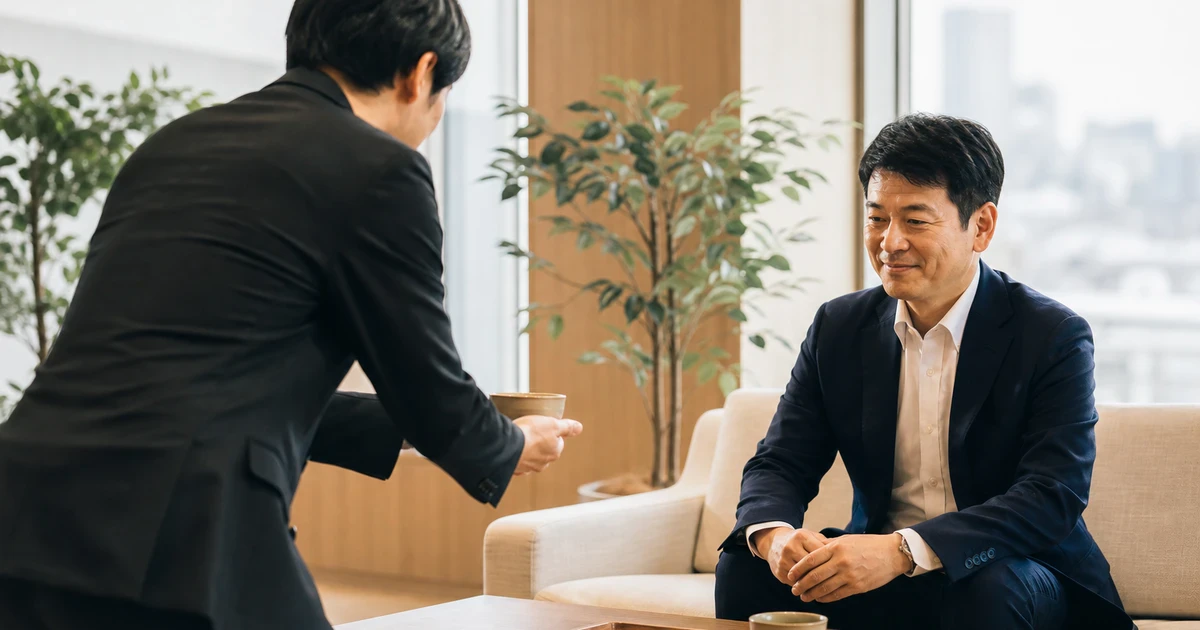
Business Japanese keigo practice means choosing the right polite, respectful, or humble form for a real work situation. The goal is not to make every sentence longer. The goal is to sound respectful, clear, and natural with clients, interviewers, customers, teachers, senior colleagues, and people outside your group.
The key question is always: Who is doing the action? If the client does the action, you usually raise the client with respectful language. If you or your company side does the action toward the client, you usually lower your side with humble language.
The Core Rule for Business Keigo
Business keigo works by matching the action to the relationship: raise the other side, lower your side, and keep the sentence clear.
There are three main levels you need for work:
- 丁寧語 (teineigo, polite language): the safe base using polite endings.
- 尊敬語 (sonkeigo, respectful language): raises the client, interviewer, customer, or outside person.
- 謙譲語 (kenjōgo, humble language): lowers you, your team, or your company side.
Business Japanese also depends on 内 (uchi, inside group) and 外 (soto, outside group). Your company, school, or team is usually your inside group. A client, customer, interviewer, guest, or outside company is usually the outside group.
Use this decision rule:
- If the client does the action, use respectful language.
- If you do the action for the client, use humble language.
- If your boss does the action while you speak to a client, your boss is usually treated as your inside group.
- If the situation is light or internal, simple polite Japanese may be enough.
For first meetings where greetings and manners matter together, review Japanese business card etiquette and meishi manners.
Keigo Conversion and Phrase Reference
Use this table as your core business Japanese keigo practice sheet: start from the everyday verb, identify who acts, then choose the work-safe form.
Situation | Type | Japanese | Romaji | English meaning |
|---|---|---|---|---|
Basic polite “go” | 丁寧語 | 行きます | ikimasu | I go / will go |
Humble “go/come/visit/ask” | 謙譲語 | 伺います | ukagaimasu | I will go, come, visit, or ask humbly |
Respectful “go/come/be” | 尊敬語 | いらっしゃいます | irasshaimasu | goes, comes, or is respectfully |
Basic polite “say” | 丁寧語 | 言います | iimasu | says |
Humble “say” | 謙譲語 | 申します | mōshimasu | I say / my name is humbly |
Respectful “say” | 尊敬語 | おっしゃいます | osshaimasu | says respectfully |
Basic polite “see” | 丁寧語 | 見ます | mimasu | sees / looks |
Humble “see/read” | 謙譲語 | 拝見します | haiken shimasu | I look at it humbly |
Respectful “see” | 尊敬語 | ご覧になります | goran ni narimasu | sees / looks at respectfully |
Basic polite “do” | 丁寧語 | します | shimasu | does |
Humble “do” | 謙譲語 | いたします | itashimasu | I do humbly |
Respectful “do” | 尊敬語 | なさいます | nasaimasu | does respectfully |
Basic polite “know” | 丁寧語 | 知っています | shitte imasu | knows |
Humble “know” | 謙譲語 | 存じております | zonjite orimasu | I know humbly/formally |
Respectful action pattern | 尊敬語 | お読みになります | o-yomi ni narimasu | reads respectfully |
Humble action pattern | 謙譲語 | お送りいたします | o-okuri itashimasu | I will send it humbly |
Respectful confirmation | 尊敬語 | ご確認なさいます | go-kakunin nasaimasu | confirms respectfully |
Respectful confirmation, lighter | 尊敬語 | 確認されます | kakunin saremasu | confirms respectfully |
Polite request using humble “receive” | 依頼表現 | ご確認いただけますか | go-kakunin itadakemasu ka | Could you please confirm? |
More formal request | 依頼表現 | ご確認いただけますでしょうか | go-kakunin itadakemasu deshō ka | Would you be able to confirm? |
Ask someone to wait | 依頼表現 | 少々お待ちいただけますか | shōshō o-machi itadakemasu ka | Could you please wait a moment? |
Ask if something is acceptable | 丁寧語 | よろしいでしょうか | yoroshii deshō ka | Would that be all right? |
Your company | 謙譲語 | 弊社 | heisha | our company |
Other person’s company, spoken | 尊敬語 | 御社 | onsha | your company |
Other person’s company, written | 尊敬語 | 貴社 | kisha | your company |
Introduce your affiliation | 丁寧語 | Kind Japaneseの者です | Kind Japanese no mono desu | I am with Kind Japanese. |
The pattern “honorific prefix + verb stem + ni narimasu” is useful for the other person’s action. The pattern “honorific prefix + verb stem + itashimasu” is useful for your action. With many Sino-Japanese nouns, the prefix is go rather than o. For requests, ご確認いただけますか (go-kakunin itadakemasu ka, could you please confirm?) is a natural polite request using humble いただく (itadaku, to receive humbly). For the other person’s own action, ご確認なさいます (go-kakunin nasaimasu, confirms respectfully) or 確認されます (kakunin saremasu, confirms respectfully) is safer.
Example Sentences in Context
Practice these five sentences aloud until you can say them without translating word by word.
- Client email or chat request
こちらの資料をご確認いただけますか。
Kochira no shiryō o go-kakunin itadakemasu ka.
Could you please confirm these materials? - Visiting another company
明日の午後、御社に伺います。
Ashita no gogo, onsha ni ukagaimasu.
I will visit your company tomorrow afternoon. - Talking about a document you reviewed
資料を拝見しました。
Shiryō o haiken shimashita.
I looked at the materials. - Phone or reception situation
少々お待ちいただけますか。
Shōshō o-machi itadakemasu ka.
Could you please wait a moment? - Customer handling
お客様がおっしゃった内容を確認いたします。
Okyaku-sama ga osshatta naiyō o kakunin itashimasu.
I will confirm what the customer said.
If everyday polite sentences still feel slow, build fluency first with basic Japanese conversation practice for beginners.
Workplace Mini-Scripts You Can Adapt
Use one short script per situation instead of memorizing isolated phrases. Replace the role, company, time, or item in English first, then practice the Japanese version.
Email request
いつもお世話になっております。
Itsumo o-sewa ni natte orimasu.
Thank you for your continued support.
添付資料をご確認いただけますでしょうか。
Tenpu shiryō o go-kakunin itadakemasu deshō ka.
Would you be able to confirm the attached materials?
どうぞよろしくお願いいたします。
Dōzo yoroshiku onegai itashimasu.
Thank you in advance.
Business chat
本日中に確認いたします。
Honjitsu-jū ni kakunin itashimasu.
I will confirm it by the end of today.
少々お待ちいただけますか。
Shōshō o-machi itadakemasu ka.
Could you please wait a moment?
Phone call
お電話ありがとうございます。Kind Japaneseでございます。
O-denwa arigatō gozaimasu. Kind Japanese de gozaimasu.
Thank you for calling. This is Kind Japanese.
担当者に確認いたします。
Tantōsha ni kakunin itashimasu.
I will check with the person in charge.
Interview
本日はお時間をいただき、ありがとうございます。
Honjitsu wa o-jikan o itadaki, arigatō gozaimasu.
Thank you for your time today.
前職ではオンライン対応を担当しておりました。
Zenshoku de wa onrain taiō o tantō shite orimashita.
In my previous role, I was in charge of online support.
Meeting
明日の10時でよろしいでしょうか。
Ashita no jū-ji de yoroshii deshō ka.
Would 10 o’clock tomorrow be all right?
それでは、当日よろしくお願いいたします。
Sore de wa, tōjitsu yoroshiku onegai itashimasu.
In that case, thank you in advance for the meeting day.
Practice Drills With Answers
Strong keigo practice uses short correction loops: identify the actor, choose respectful or humble language, say the sentence, then adjust the formality.
Drill 1: Client confirmation
Goal: Ask a client to check a document.
Practice:
こちらの資料をご確認いただけますでしょうか。
Kochira no shiryō o go-kakunin itadakemasu deshō ka.
Would you be able to confirm these materials?
Prompt: Make it shorter but still polite.
Answer:
こちらの資料をご確認いただけますか。
Kochira no shiryō o go-kakunin itadakemasu ka.
Could you please confirm these materials?
Drill 2: Meeting time
Goal: Confirm whether a meeting time is acceptable.
Practice:
明日の10時でよろしいでしょうか。
Ashita no jū-ji de yoroshii deshō ka.
Would 10 o’clock tomorrow be all right?
Prompt: Change it to next Monday and make it online.
Answer:
来週の月曜日、オンラインでよろしいでしょうか。
Raishū no getsuyōbi, onrain de yoroshii deshō ka.
Would next Monday online be all right?
Drill 3: Apology and next action
Goal: Apologize for an error and say what you will do.
Answer:
書類に誤りがあり、申し訳ございません。すぐに修正いたします。
Shorui ni ayamari ga ari, mōshiwake gozaimasen. Sugu ni shūsei itashimasu.
I am very sorry; there was an error in the document. I will correct it immediately.
For more apology structure, study how to apologize in business Japanese.
Drill 4: Talk about your boss to a client
Common learner error:
田中がいらっしゃいます。
Tanaka ga irasshaimasu.
Tanaka will come respectfully.
Problem: When speaking to a client, your colleague or boss is usually your side.
Answer:
田中が参ります。
Tanaka ga mairimasu.
Tanaka will come humbly.
Drill 5: Interview self-introduction
Goal: Introduce yourself politely without sounding too stiff.
Answer:
はじめまして。Kind Japaneseの者です。本日はよろしくお願いいたします。
Hajimemashite. Kind Japanese no mono desu. Honjitsu wa yoroshiku onegai itashimasu.
Nice to meet you. I am with Kind Japanese. Thank you for your time today.
Drill 6: Client waiting request
Prompt: Ask a customer to wait while you check something.
Answer:
確認いたしますので、少々お待ちいただけますか。
Kakunin itashimasu node, shōshō o-machi itadakemasu ka.
I will check, so could you please wait a moment?
Common Mistakes in Work Keigo
The biggest mistakes come from pointing respect in the wrong direction or using “manual keigo” that sounds formal but unnatural.
Common learner error:
私がいらっしゃいます。
Watashi ga irasshaimasu.
I come/am here respectfully.
Better:
私が伺います。
Watashi ga ukagaimasu.
I will visit humbly.
Common learner error:
お客様が参ります。
Okyaku-sama ga mairimasu.
The customer comes humbly.
Better:
お客様がいらっしゃいます。
Okyaku-sama ga irasshaimasu.
The customer will come/is here respectfully.
Learners also overuse させていただきます (sasete itadakimasu, I will be allowed to do). It is natural when you really receive permission or benefit, but it becomes heavy if used for every action. For a normal promise, 確認いたします (kakunin itashimasu, I will confirm) is cleaner.
Another common trap is になります (ni narimasu, becomes/is) for everything. For example, using it to mean “this is your receipt” can sound like scripted part-time-job Japanese. In clear business speech, choose a direct polite sentence instead.
Do not attach o or go to every noun. Honorific prefixes work with many set phrases, but not all words need them. Keigo should make the relationship clear, not decorate every noun.
How to Practice With a Teacher
Bring one real scene, one listener, and one action to each practice session. Keigo improves fastest when the sentence has a purpose: requesting confirmation, apologizing, visiting a company, answering interview questions, or speaking to a customer.
In a 25-minute one-on-one online lesson, you can practise over LINE, Zoom, or Google Meet with a teacher who can help you check whether your respectful and humble forms point in the right direction. If you are deciding whether structured lessons fit your goals, read whether paying for Japanese lessons is worth it.
To practise these exact business keigo patterns with live correction, book a Free Trial business Japanese keigo lesson and bring one work, interview, or school situation you want to say naturally.
FAQ
What is the best way to practice business Japanese keigo?
The best way is to practise with roles, not word lists alone. Decide who you are, who you are speaking to, and who performs the action. Then repeat one workplace scene at several formality levels, such as a short chat request, a formal email request, and a spoken meeting version.
Should I use humble language for my boss when speaking to a client?
Usually, yes. When speaking to a client, your boss is normally part of your inside group, so you avoid raising your boss above the client. This feels strange to many learners, but it is a core business rule: the outside person receives the higher treatment.
Is email keigo different from spoken meeting keigo?
The grammar is mostly the same, but email often uses fuller and slightly more formal sentences. Spoken meetings can be shorter and warmer when the relationship allows it. Practise both versions so you can write carefully without sounding too heavy when you speak.
Do I need perfect keigo before using Japanese at work?
No. Clear polite Japanese is already useful, and you can add respectful and humble forms step by step. Focus first on high-frequency work actions: confirming, sending, visiting, waiting, apologizing, and introducing yourself. Avoiding the biggest direction mistakes matters more than sounding extremely formal.
This standalone article supports the Kind Japanese beginner curriculum by helping learners turn polite Japanese into practical business keigo for formal work situations.

