
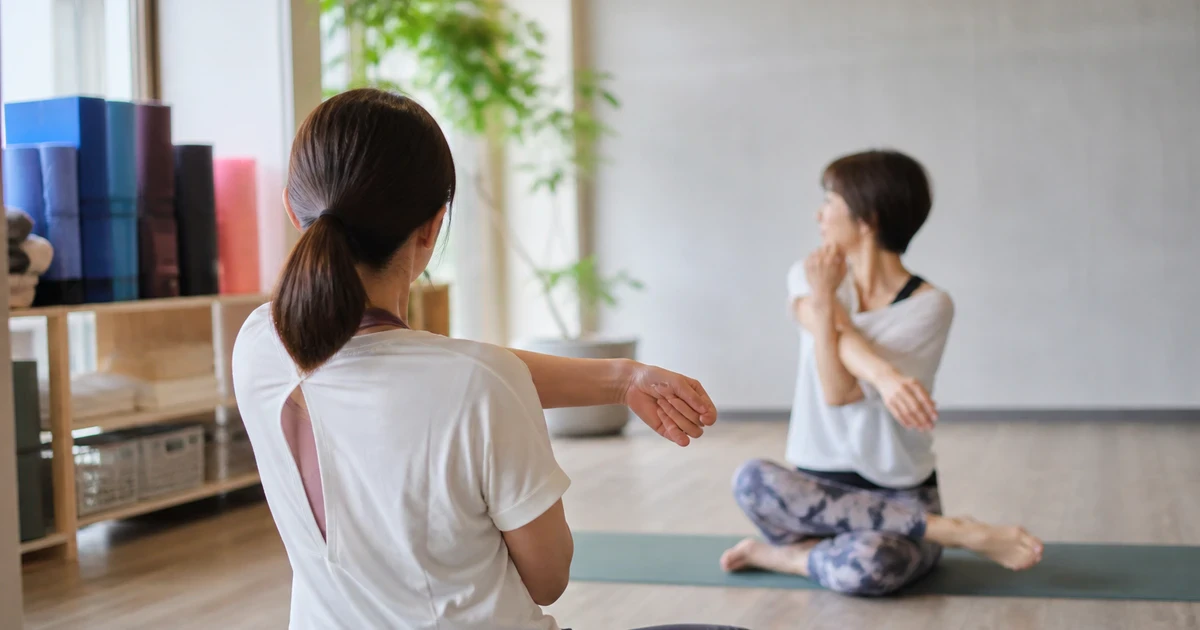
Walking into a gym in Japan for the first time is a strange experience for most learners. You may already handle restaurants and train stations comfortably, but the front desk hands you a clipboard of forms, the staff member speaks quickly about your membership plan, and then an instructor starts calling out movements in a fitness class while everyone else moves and you are still translating.
The good news: gym Japanese is a small, closed vocabulary. Once you learn the registration words, the katakana loanwords, and about fifteen instruction verbs, you can join almost any gym or studio in Japan and follow along. This guide covers exactly those pieces of daily Japanese, with romaji and English throughout.
Registration: Joining a Gym in Japan
Registration is the hardest conversation you will have at a gym, and it happens once. Prepare for it and everything afterwards is easier.
At the reception desk, staff will typically ask about three things: which plan you want, what identification you have, and how you intend to pay. Membership plans are often described by time bands (day-only, full-time, weekends), and you will hear 入会 (nyūkai, joining/enrolment) and 会員証 (kaiin-shō, membership card) repeatedly.
Before you sign anything, these two requests do most of the work:
初めてなので、入会の手続きを教えてください。 Hajimete na node, nyūkai no tetsuzuki o oshiete kudasai. It's my first time, so please explain the registration procedure.
見学と体験はできますか。 Kengaku to taiken wa dekimasu ka. Can I look around and try a session?
Many gyms in Japan offer a tour or a paid one-day trial before you commit, and asking directly is completely normal. If you do not understand a plan explanation, do not nod politely — say すみません、もう一度お願いします (Sumimasen, mō ichido onegai shimasu, Excuse me, once more please). Staff are used to repeating.
Cultural note: most Japanese gyms and studios are 土足禁止 (dosoku kinshi, no outdoor shoes). You are expected to bring a separate, clean pair of indoor training shoes and change in the 更衣室 (kōishitsu, changing room). Turning up in the shoes you wore on the street is one of the few things that will actually get you stopped at the door.
The Core Gym and Fitness Vocabulary List
This is the reference set. Almost everything you hear at a gym in Japan comes from this list or is built from it.
Japanese | Romaji | English Meaning |
|---|---|---|
ジム | jimu | gym |
フィットネスクラブ | fittonesu kurabu | fitness club |
入会 | nyūkai | joining, enrolment (registration) |
退会 | taikai | cancelling membership |
会員証 | kaiin-shō | membership card |
受付 | uketsuke | reception desk |
手続き | tetsuzuki | procedure, paperwork |
見学 | kengaku | looking around, a tour |
体験 | taiken | trial session |
予約 | yoyaku | reservation, booking |
更衣室 | kōishitsu | changing room |
ロッカー | rokkā | locker |
持ち物 | mochimono | things to bring |
土足禁止 | dosoku kinshi | no outdoor shoes |
初心者 | shoshinsha | beginner |
準備運動 | junbi undō | warm-up exercise |
ストレッチ | sutorecchi | stretching |
筋トレ | kintore | strength training |
ランニングマシン | ranningu mashin | treadmill |
レッスン | ressun | class, lesson |
休憩 | kyūkei | rest, break |
息を吸って | iki o sutte | breathe in |
息を吐いて | iki o haite | breathe out |
無理しないでください | muri shinaide kudasai | don't overdo it |
Notice how many of the gym words are katakana. That is not an accident — the vocabulary of modern Japanese fitness arrived through English, and reading it fluently is a katakana skill more than a kanji skill.
Following Instructions in a Fitness Class
Fitness class instructions are almost entirely て-form commands, which means you can decode them with one grammar pattern.
Instructors chain verbs in te-kei (て形, te-kei, the te-form) and add ください (kudasai, please) or nothing at all. Learn the verb stem once and you will recognise it every time:
- 上げて (agete, raise) — 手を上げて (te o agete, raise your hands)
- 下ろして (oroshite, lower)
- 曲げて (magete, bend) — 膝を曲げて (hiza o magete, bend your knees)
- 伸ばして (nobashite, stretch out, extend)
- 回して (mawashite, rotate)
- 止めて (tomete, stop, hold)
- ゆっくり (yukkuri, slowly) and もっと (motto, more) as speed and intensity modifiers
Counting reps is where learners genuinely stumble, because the reading of 回 (kai, times/reps) changes depending on the number in front of it. These forms are worth drilling out loud until they are automatic:
- 一回 (ikkai, one rep)
- 三回 (sankai, three reps)
- 六回 (rokkai, six reps)
- 八回 (hakkai, eight reps)
- 十回 (jukkai, ten reps)
The changes exist because Japanese speakers naturally compress these combinations — it is easier to say. Learners tend to assume they have misheard the number. They have not; they have heard a sound change.
Two sentences that keep you safe in any class:
すみません、もう一度ゆっくりお願いします。 Sumimasen, mō ichido yukkuri onegai shimasu. Excuse me, could you say that once more slowly?
膝が痛いので、少し休憩します。 Hiza ga itai node, sukoshi kyūkei shimasu. My knee hurts, so I'll rest a little.
You do not need to explain yourself further. ちょっと休みます (Chotto yasumimasu, I'll rest a moment) is a complete, socially acceptable sentence in a Japanese studio.
Daily Japanese on the Gym Floor
Outside the class, gym Japanese becomes short, polite, everyday exchanges — the same daily Japanese you use in a shop or a shared kitchen.
The one phrase you will use most is a question about equipment:
このマシン、今使っていますか。 Kono mashin, ima tsukatte imasu ka. Are you using this machine right now?
If the answer is yes, どうぞ (dōzo, go ahead) and すみません (sumimasen, excuse me / sorry) cover the rest of the interaction. If someone leaves a machine and you want to check, 空いていますか (Aite imasu ka, Is it free?) is the natural phrasing.
This kind of low-stakes, high-frequency speech is exactly the same register you need at a homeplace or in a shared house — if you are building that base, our guide to Japanese Phrases for a Homestay Host Family covers the same polite-neutral tone in a domestic setting, and Survival Japanese Lessons Online That Work explains how to turn these fragments into fluent, automatic speech.
Common Mistakes
Learners make a very predictable set of errors in gym Japanese, and almost all of them are fixable in one focused session.
1. Misreading katakana under time pressure. In our one-on-one lessons, teachers see the same character pairs cause trouble again and again: ツ and シ, ソ and ン and リ, ぬ and め, ね and れ. On a gym timetable printed in small katakana, one misread character turns ランニング (ranningu, running) into a word that does not exist. The fix is boring and effective — kana cards, focused on the specific pairs you personally confuse, checked by eye until the distinction is instant. The trick for ツ/シ and ソ/ン is direction and length: look at whether the short strokes come in from the top or the side, and how long the sweeping stroke is.
2. Freezing mid-sentence to self-correct. When learners stop after every error, the sentence never gets built. In our one-on-one lessons, teachers generally let the learner finish the whole utterance first, then feed back — often indirectly, by re-saying the sentence correctly — so that fluency and accuracy are trained separately rather than fighting each other. Try it at the gym: finish your question, then repair it if needed.
3. Using anime pronouns with strangers. Learners sometimes arrive with second-person pronouns absorbed from anime — 君 (kimi), あんた (anta), そなた (sonata) — and use them on a stranger at the reception desk. Character catchphrases picked up from a single series are not general Japanese. At a gym, use the person's name plus さん (-san), or simply drop the pronoun entirely, which is what Japanese speakers usually do.
4. Treating 回 (kai, times/reps) as one fixed reading. See the counter list above. This is a sound change, not an exception to be memorised individually — but it does need to be said aloud dozens of times before it sticks.
5. Over-apologising for resting. A single すみません (sumimasen, excuse me) is enough. Long explanations in a class disrupt the flow more than the rest does.
Practising This in a 25-Minute Lesson
Gym Japanese is a speaking skill, and speaking skills need a live listener. Kind Japanese runs 25-minute one-on-one lessons over LINE, and this topic maps neatly onto a single focused session:
- Warm-up (a few minutes). Read the katakana equipment words aloud. A teacher can catch the ツ/シ and ソ/ン confusions the moment they happen, which a text-only app cannot do.
- Target speaking task. Role-play the registration desk. You are joining a gym; the teacher plays the staff member and asks about your plan, your ID, and your payment method. Then swap into a fitness class scenario and respond to spoken て-form instructions in real time.
- Correction. Say the full sentence first, get feedback second. Pronunciation, vowel length, and register (polite vs. casual) are the three things worth correcting here — not vocabulary you can look up later.
- Your review note. Before the lesson ends, write your own short list: three sentences you want to say better, and one question you did not know how to ask. That list is yours, and it becomes the opening of your next practice.
Because lessons run over LINE, the same tool most people in Japan use for everyday messaging, having it set up is useful well beyond your Japanese study — it is how you will exchange contacts with the people you meet at that gym.
If you are outside Japan, propose lesson windows in your own time zone rather than trying to convert them yourself. A sentence like ヨーロッパの夜の時間にレッスンを受けたいです (Yōroppa no yoru no jikan ni ressun o uketai desu, I want to take lessons in the evening in Europe) or アメリカ時間の夜にレッスンを受けたいです (Amerika jikan no yoru ni ressun o uketai desu, I want to take lessons in the evening US time) is clear, natural, and avoids confusion.
FAQ
Do I need Japanese to join a gym in Japan?
Some large chains in major cities have English-language forms or staff, but you cannot count on it, and smaller neighbourhood gyms and studios are usually Japanese-only. Knowing about twenty registration words plus a few clarification phrases is enough to complete the paperwork and understand your membership plan without assistance.
What is the fastest way to understand fitness class instructions?
Learn the て-form (te-kei) of roughly ten body-movement verbs: raise, lower, bend, extend, rotate, hold, breathe in, breathe out, push, pull. Instructors combine these with a body part and a speed word. Once you recognise the verb endings, you can follow a class by watching and listening together rather than translating.
Why do numbers change pronunciation when counting reps?
Japanese counters undergo sound changes when certain numbers meet certain counter sounds, because the combination is easier to pronounce. With 回 (kai, times), one, six, eight, and ten all shift: ikkai, rokkai, hakkai, jukkai. This is regular and predictable, not random, and it appears with many other counters too.
Is gym vocabulary mostly katakana?
Largely, yes. Equipment, class names, and training terms overwhelmingly come from English via katakana, while the body parts, movement verbs, and administrative words (registration, membership card, changing room) stay in kanji and hiragana. That split means gym Japanese rewards strong katakana reading speed more than most everyday topics do.
Gym Japanese is a small vocabulary that pays off every single week you are in Japan. If you want to practise the registration conversation and class instructions with a live teacher before you walk in, book a Free Trial lesson with Kind Japanese over LINE — bring one gym scenario you want to survive, and work through it out loud.

