
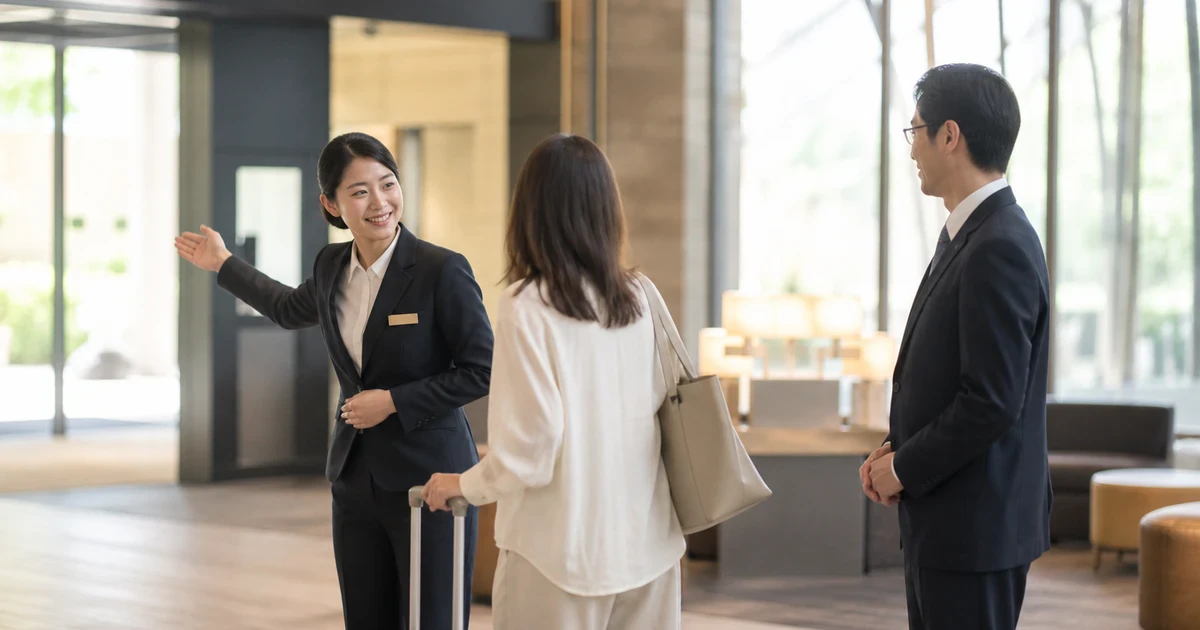
A Japanese tutor for customer service Japanese is most useful when you need to speak politely in real work scenarios, not just memorize formal phrases. Customer service depends on timing, tone, listening, and choosing words that make the customer feel respected.
This is different from studying business Japanese only from a textbook. You may know a polite phrase, but still sound too direct when a customer is upset, unsure, or asking for something complicated. A private tutor can help you practise roleplay, receive feedback, and adjust your wording for realistic situations such as greetings, confirming needs, apologizing, explaining limits, and closing conversations warmly.
Kind Japanese offers one-on-one online lessons over LINE, with standard lessons lasting 25 minutes. If you are comparing lesson styles, you may also find this guide to Business Japanese Tutor Online: Choose the Right Fit helpful.
What Customer Service Japanese Needs
Customer service Japanese needs polite language that is clear, warm, and practical. The goal is not to sound extremely formal all the time. The goal is to help the customer while keeping the conversation smooth.
A learner often needs practice in four areas:
- Greeting the customer naturally
- Asking what they need without sounding pushy
- Confirming details before acting
- Apologizing or explaining a problem without sounding cold
From a teacher's perspective, learners often know individual polite phrases but struggle to use them at the right moment. For example, a phrase may be grammatically polite but too vague for the situation. In customer service, vague politeness can create confusion.
A simple example is ご用件をお伺いしてもよろしいでしょうか (Go-yōken o o-ukagai shite mo yoroshii deshō ka, May I ask how I can help you?). This is useful at the beginning of an interaction. But if the customer already said they want to change a reservation, a better response is 変更内容をお伺いしてもよろしいでしょうか (Henkō naiyō o o-ukagai shite mo yoroshii deshō ka, May I ask what you would like to change?).
That small adjustment shows you listened.
Core Polite Phrases for Service Situations
Use a small set of reliable polite phrases first, then practise them in roleplay. Long phrase lists are easy to forget under pressure. These phrases cover greetings, needs, confirmation, apology, and closing.
Japanese | Romaji | English Meaning |
|---|---|---|
いらっしゃいませ | Irasshaimase | Welcome. |
何かお探しでしょうか | Nanika osagashi deshō ka | Are you looking for something? |
ご用件をお伺いしてもよろしいでしょうか | Go-yōken o o-ukagai shite mo yoroshii deshō ka | May I ask how I can help you? |
変更内容をお伺いしてもよろしいでしょうか | Henkō naiyō o o-ukagai shite mo yoroshii deshō ka | May I ask what you would like to change? |
少々お待ちください | Shōshō o-machi kudasai | Please wait a moment. |
確認いたします | Kakunin itashimasu | I will check. |
かしこまりました | Kashikomarimashita | Certainly. |
申し訳ございません | Mōshiwake gozaimasen | I am very sorry. |
ご不便をおかけして申し訳ございません | Go-fuben o o-kake shite mōshiwake gozaimasen | I am sorry for the inconvenience. |
こちらでよろしいでしょうか | Kochira de yoroshii deshō ka | Would this be all right? |
もう一度確認してもよろしいでしょうか | Mō ichido kakunin shite mo yoroshii deshō ka | May I confirm one more time? |
ありがとうございました | Arigatō gozaimashita | Thank you very much. |
Tone matters as much as vocabulary. かしこまりました (kashikomarimashita, certainly) sounds more service-oriented than わかりました (wakarimashita, understood). Both are useful, but they do not create the same impression.
Cultural note: in Japanese customer service, a clear apology often comes before the explanation. This does not always mean accepting legal responsibility. It often functions as a polite acknowledgement that the customer experienced trouble.
Roleplay Practice With a Private Tutor
Roleplay helps you turn polite phrases into automatic responses. A private tutor can play the customer, pause the scene, and help you repair your sentence before it becomes a habit.
Here are four short service moments to practise.
いらっしゃいませ。何かお探しでしょうか。 Irasshaimase. Nanika osagashi deshō ka. Welcome. Are you looking for something?
変更内容をお伺いしてもよろしいでしょうか。 Henkō naiyō o o-ukagai shite mo yoroshii deshō ka. May I ask what you would like to change?
確認いたしますので、少々お待ちください。 Kakunin itashimasu node, shōshō o-machi kudasai. I will check, so please wait a moment.
ご不便をおかけして申し訳ございません。 Go-fuben o o-kake shite mōshiwake gozaimasen. I am sorry for the inconvenience.
A realistic roleplay should include pressure. For example, the customer may speak quickly, change their request, or sound disappointed. Your job is not only to answer correctly. Your job is to keep the conversation moving.
A useful tutor correction might look like this:
- Too direct: 予約を変えたいですか (Yoyaku o kaetai desu ka, Do you want to change the reservation?)
- Better: 変更内容をお伺いしてもよろしいでしょうか (Henkō naiyō o o-ukagai shite mo yoroshii deshō ka, May I ask what you would like to change?)
The better version avoids sounding abrupt. It also asks for the next useful detail.
For deeper keigo foundations, review Business Japanese Keigo Practice for Work, then bring one or two customer service scenes into speaking practice.
A 25-Minute LINE Lesson Focus
A focused 25-minute one-on-one LINE lesson can target one customer service skill instead of trying to cover everything. This is especially useful if you work in hospitality, retail, reception, support, sales, or client-facing operations.
A practical lesson flow might be:
- Warm-up: describe your customer service role and the situations you face.
- Target task: practise one scenario, such as greeting a customer or handling a change request.
- Correction: adjust direct phrases into more natural polite phrases.
- Repeat roleplay: try the same situation again with better timing and tone.
- Learner notes: write down the phrases and questions you personally want to review.
Before the lesson, prepare one real situation in English. For example: “A customer wants to change a booking, but the requested time may not be available.” You do not need perfect Japanese before the lesson. The useful part is having a realistic scene.
If you live outside Japan, suggest lesson windows using your own time zone clearly. For example, “weekday evenings US time” or “Saturday morning Central European Time.” Clear time-zone wording prevents confusion and makes scheduling easier.
When you are ready to practise customer service Japanese one-on-one over LINE, book a Free Trial lesson with Kind Japanese.
Common Mistakes
Learners often sound too direct because they translate from English too closely. Customer service Japanese usually needs a softer question, a reason, or a confirmation step.
Using a command when a request is better.
待ってください (matte kudasai, please wait) is understandable, but 少々お待ちください (shōshō o-machi kudasai, please wait a moment) sounds more appropriate in customer service.
Asking the same general question after the customer already explained.
If the customer says they want to change a reservation, do not restart with a broad “How may I help you?” Ask for the change details instead.
Apologizing without the problem.
申し訳ございません (mōshiwake gozaimasen, I am very sorry) is polite, but adding the issue makes it clearer: ご不便をおかけして申し訳ございません (go-fuben o o-kake shite mōshiwake gozaimasen, I am sorry for the inconvenience).
Ending too suddenly.
In many service situations, closing with ありがとうございました (arigatō gozaimashita, thank you very much) helps the conversation feel complete. Without a closing, even correct Japanese can feel unfinished.
FAQ
Is customer service Japanese the same as business Japanese?
Not exactly. Business Japanese is broader and includes meetings, emails, reporting, negotiation, and internal communication. Customer service Japanese focuses on helping customers directly in real-time interactions through polite phrases, listening, problem-solving, and warm conversation endings.
Do I need advanced Japanese before practising customer service phrases?
No. Beginners can start with greetings, simple confirmation phrases, and short apology patterns. Intermediate learners can practise longer explanations and roleplay. Advanced learners can refine tone, speed, and keigo choices. The key is practising phrases inside realistic work scenarios, not memorizing them alone.
Can a private tutor help with customer service roleplay?
Yes. A private tutor can act as the customer, change the situation, and give feedback on wording and tone. This is useful because customer service Japanese depends on response timing. You need to practise what to say after the customer speaks, not only prepare isolated phrases.
What should I prepare before a customer service Japanese lesson?
Prepare one real or likely service situation, your current Japanese version if you have one, and the tone you want to achieve. For example, you might practise a reservation change, a product question, or an apology. Clear preparation helps the lesson focus on usable correction.

