
The Sa-Row at a Glance
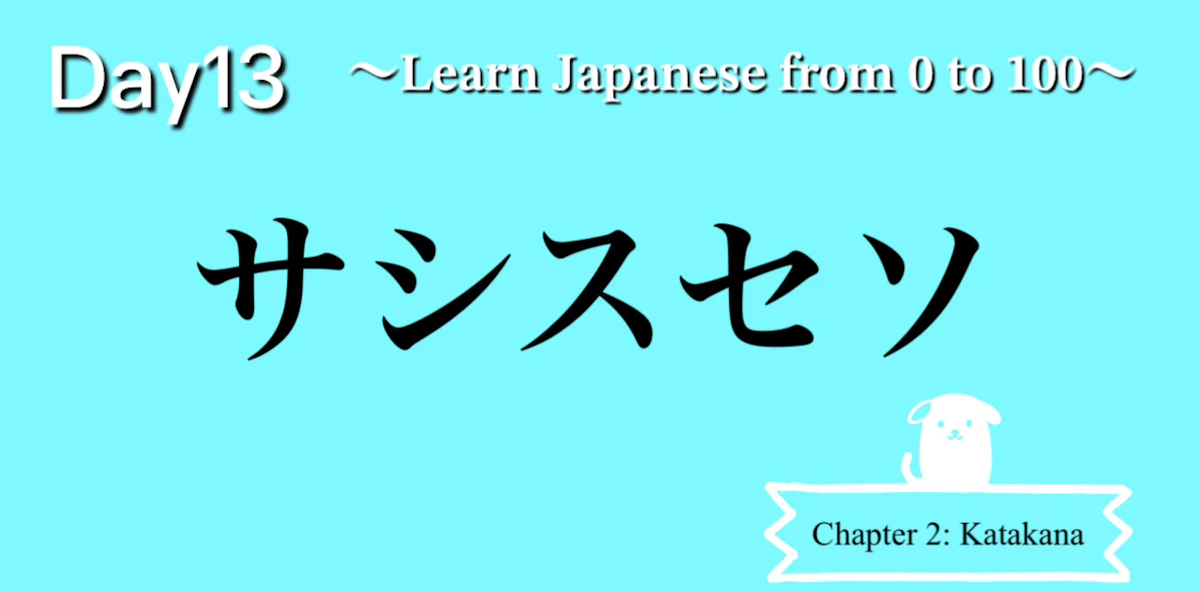
The sa-row gives you five katakana characters — サ, シ, ス, セ, ソ — that carry exactly the same sounds as their hiragana counterparts. If you have already worked through the hiragana sa-row (さしすせそ), the sounds are already wired into your memory. Your only new task here is recognising the angular, blocky katakana shapes that represent them.
Katakana | Romaji | Sound guide |
|---|---|---|
サ | sa | "sah" — as in saga |
シ | shi | "shee" — as in the word she |
ス | su | "soo" — very short, lips barely rounded |
セ | se | "seh" — like set without the final t |
ソ | so | "soh" — the musical syllable sol |
Pronunciation alert: Some romanisation tables write シ as "si." This comes from a different system (Nihon-shiki) and will mislead you. The actual Japanese sound is firmly shi — like the English word she. Always read シ as shi.
Already know your hiragana? Here is the quick visual cross-reference:
Hiragana | Katakana | Romaji |
|---|---|---|
さ | サ | sa |
し | シ | shi |
す | ス | su |
せ | セ | se |
そ | ソ | so |
The sounds are identical in both scripts. Katakana is simply the angular twin — used for foreign loanwords, brand names, and emphasis — while hiragana is the softer, rounder script used for native words and grammar. Same phonetics, different visual style.
Mnemonics: A Hook for Every Character
Bare repetition is slow. Attach each character to a vivid image and you will retain it far more reliably after a single pass. These are starting points — if a sharper, stranger, or more personal image clicks for you, use that instead.
サ (sa) — Two horizontal cuts at the top, one vertical stroke driving through them. Picture a samurai making two swift horizontal slashes, then a powerful downward cut to finish. Sa — slash — slam.
シ (shi) — Three strokes: two short angled marks on the left side, one long stroke sweeping up and to the right. Tilt your head to the left and you see two dots for eyes and a wide upward curve for a smile. Shi rhymes with she, and she is always smiling.
ス (su) — A horizontal bar at the top, then a curved stroke that sweeps down and hooks back up at the base. That hook is a straw dipping into a glass. You suck a cold drink up through it on a hot day.
セ (se) — An angular shape like a backwards F with two horizontal bars and one vertical leg. Picture a simple seat or bench: the two bars are the seat and backrest, and the vertical leg props it all up.
ソ (so) — One short diagonal flick in the upper-left, one longer stroke sweeping broadly down and to the right. Step back and you see a bold, slanted 7. "So far, so good," says the seven.
Stroke Order and Writing Tips
Katakana lives in right angles and crisp diagonals. Writing it with rounded, soft strokes produces characters that blur into each other. Here is the correct stroke order for each of the five:
サ (3 strokes) ① Short diagonal stroke, upper-left angling to lower-right ② Long horizontal stroke below ① ③ Vertical stroke driving straight down, crossing the centre of ②
シ (3 strokes) ① Short diagonal in the upper-left, angling to the right ② Another short diagonal directly below ①, parallel to it ③ Long stroke beginning to the right of ②, curving upward and to the right — with a slight upward flick at the tip
ス (2 strokes) ① Horizontal stroke across the top ② Curved stroke from the right end of ①, sweeping leftward and downward, then hooking rightward at the base
セ (3 strokes) ① Short horizontal stroke at the top ② Longer horizontal stroke directly below ① ③ Vertical stroke downward from the right end of ②
ソ (2 strokes) ① Short diagonal stroke in the upper-left, angling down toward the right ② Longer stroke from the upper-right of ①, sweeping down and to the right with an upward flick at the end
Practical tip: Five slow, deliberate repetitions beat fifty rushed ones. If a character starts looking rounded or uncertain, stop, shake out your hand, and write it once more at half speed with full attention to the angles.
Real Japanese Vocabulary Using サシスセソ
The sa-row appears in a large number of everyday loanwords. You will encounter most of the words below on restaurant menus, product packaging, and shop signs almost immediately — learning them now is not just script practice, it is practical survival vocabulary.
Katakana | Romaji | English |
|---|---|---|
サラダ | sarada | salad |
サービス | saabisu | service |
サンドイッチ | sandoicchi | sandwich |
シール | shiiru | sticker / label |
シャツ | shatsu | shirt |
シーツ | shiitsu | bed sheets |
スープ | suupu | soup |
スーパー | suupaa | supermarket |
ストレス | sutoresu | stress |
スポーツ | supootsu | sports |
セール | seeru | sale / discount |
セット | setto | set meal / combo |
センター | sentaa | centre |
ソース | soosu | sauce |
ソファ | sofa | sofa / couch |
Cultural note: サービス (saabisu) has a very specific meaning on Japanese bills and menus — it signals that a service charge is already included in the price. No tipping is expected or customary. Spotting this word on a restaurant receipt is one of those small, immediate wins that katakana knowledge delivers in daily life.
Example Sentences in Context
Reading individual characters is one skill; reading them embedded in natural sentences trains a different one. Try reading each sentence aloud before looking at the translation:
- このスープはおいしいです。 Kono suupu wa oishii desu. This soup is delicious.
- セールはいつですか? Seeru wa itsu desu ka? When is the sale?
- サラダをください。 Sarada o kudasai. Please give me a salad.
- スーパーでサラダを買います。 Suupaa de sarada o kaimasu. I buy salad at the supermarket.
- ソファにすわります。 Sofa ni suwarimasu. I sit on the sofa.
Common Mistakes
Confusing シ (shi) and ツ (tsu)
This is the most notorious mix-up in the entire katakana chart — every learner hits it. Both characters have three strokes in a similar arrangement; the critical difference is orientation. In シ, the two short strokes sit on the left side and the long stroke curves up and to the right. In ツ, the two short strokes sit along the top and the long stroke curves down and to the right. A quick mental shortcut: シ smiles upward, ツ frowns downward. When you move on to the next lesson and meet ツ for the first time, drill both characters side by side — that direct comparison is the fastest fix.
Confusing ソ (so) and ン (n)
ソ has its short stroke in the upper-left and its long stroke sweeps broadly to the lower-right, ending in a slight flick. ン looks similar at a glance but its long stroke is steeper and more vertical, without the same wide rightward arc. In running text, context nearly always resolves the ambiguity: ン is a final nasal — it only appears at the end of a syllable and never opens one. When you get to the lesson covering ワ, ヲ, and ン, you will drill ン in depth and the distinction will become automatic.
Pronouncing ス with a long "oo" vowel
The Japanese vowel in ス is short and nearly swallowed — think of a very quick s + u, not a drawn-out "sooo." Extending it sounds unnatural to native speakers. The vowel is present, but it is brief and unstressed.
Writing ス too rounded
ス has a sharp, clean hook at the base of its second stroke. When learners soften that hook into a smooth curve, the character begins to resemble ヌ (nu) — a completely different syllable. Keep the angular hook crisp.
Practice Quiz
Cover the answers and work through all three parts before checking. Honest self-testing — however uncomfortable — cements retention far better than passive re-reading.
Part 1 — Read the Katakana
# | Katakana | Your reading |
|---|---|---|
1 | サ | ? |
2 | シ | ? |
3 | ス | ? |
4 | セ | ? |
5 | ソ | ? |
Part 2 — Write in Katakana
# | Romaji | Katakana |
|---|---|---|
6 | sa | ? |
7 | shi | ? |
8 | su | ? |
9 | se | ? |
10 | so | ? |
Part 3 — Translate the Word
# | Katakana | English meaning |
|---|---|---|
11 | サラダ | ? |
12 | スープ | ? |
13 | セール | ? |
14 | ソース | ? |
15 | シャツ | ? |
Answers
# | Answer |
|---|---|
1 | sa |
2 | shi |
3 | su |
4 | se |
5 | so |
6 | サ |
7 | シ |
8 | ス |
9 | セ |
10 | ソ |
11 | salad |
12 | soup |
13 | sale / discount |
14 | sauce |
15 | shirt |
FAQ
Why is シ pronounced "shi" and not "si"?
Japanese phonology has no plain si syllable. The s sound naturally palatalises before the vowel i, shifting toward "sh" — this applies equally to hiragana し and katakana シ. Hepburn romanisation, the system most learners use, transcribes this as "shi" so that English speakers land on the correct sound automatically without any extra explanation.
How do I tell シ (shi) and ツ (tsu) apart?
Focus on the direction of the long stroke: in シ it curves upward to the right — like a smile. In ツ it curves downward to the right — like a frown. The two short strokes in シ are on the left edge of the character; in ツ they sit along the top. If you can answer "Is the long stroke going up or down?", you will never mix them up again.
How do I tell ソ (so) and ン (n) apart?
In ソ, the long stroke sweeps broadly to the right, finishing low with a slight upward flick. In ン, the long stroke is steeper and more vertical — it does not arc to the right in the same open sweep. Context resolves most real-world cases: ン appears only as a final nasal syllable (as in ラーメン raamen or センター sentaa); ソ always opens a syllable that carries a full so vowel sound.
Where will I see サシスセソ in real Japanese?
On virtually every food menu: スープ (soup), サラダ (salad), セット (combo meal), and ソース (sauce) appear constantly. In clothing stores: シャツ (shirt) and スポーツ (sportswear). On receipts: サービス (service charge included). The sa-row is among the highest-frequency rows in everyday written Japanese — you will be recognising words in the wild within days of studying this page.
Start your Free Trial lesson over LINE and practise reading サシスセソ vocabulary in real conversation with a one-on-one tutor — it is the fastest way to move from recognising characters on a page to using them naturally.
Continue learning
← Katakana vowel row: ア, イ, ウ, エ, オ — the five foundational vowel characters that underpin all of katakana
→ Katakana ta-row: タ, チ, ツ, テ, ト — your next five characters, including ツ — the perfect moment to put the シ vs ツ distinction to the test
This article is Lesson 13 of the Kind Japanese 100-day beginner curriculum.

