
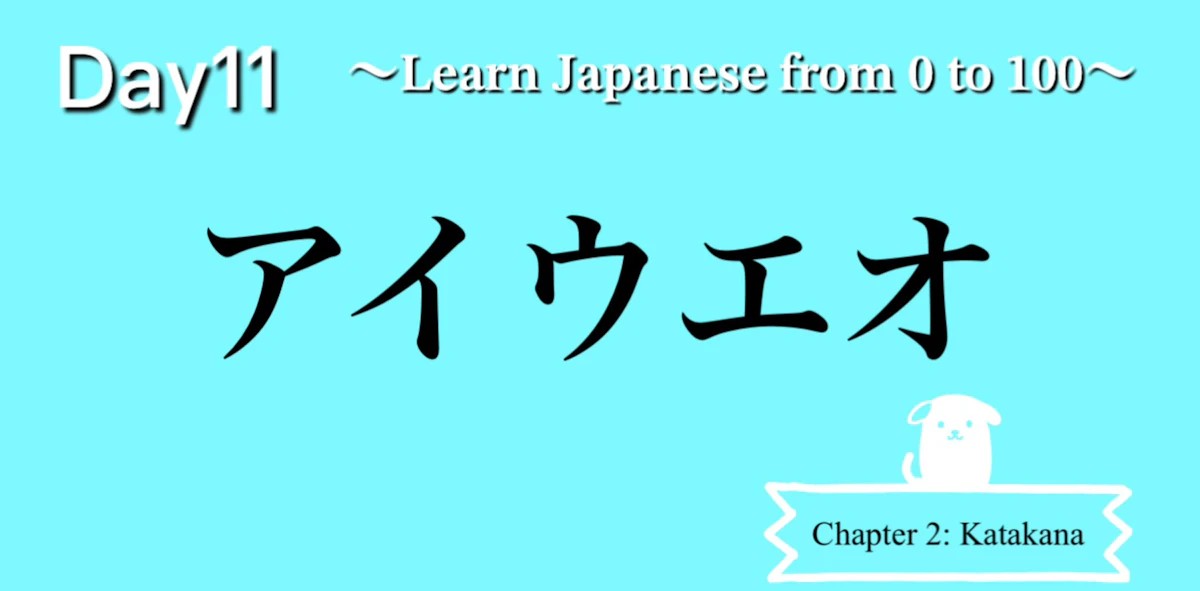
What Katakana Is and Why It Matters
Katakana (カタカナ) is one of Japan's three writing systems, sitting alongside hiragana and kanji. Where hiragana is rounded and flowing, katakana is sharp and angular — built for clarity and precision.
Its primary job is writing loanwords from foreign languages: コーヒー (kōhī, coffee), アイスクリーム (aisukurīmu, ice cream), インターネット (intānetto, internet). You will also find it on menus, product labels, scientific terms, and foreign names. Think of it as the Japanese equivalent of italics — a visual signal that a word is borrowed or needs to stand out.
The key point to understand now: katakana uses exactly the same sounds as hiragana. Every character in this lesson has a hiragana twin with an identical pronunciation. If you can read あいうえお, you already know how to say アイウエオ. What you are learning here is new shapes for familiar sounds.
Cultural note: Katakana loanwords are everywhere in modern Japanese life. A single page of a magazine or a restaurant menu can contain dozens of them — brand names, food items, technology terms. Getting comfortable with katakana quickly is one of the highest-leverage moves a beginner can make.
The Five Katakana Vowels: Readings and Pronunciation
Here is your core reference for this lesson. Each character is shown with its romaji, IPA symbol, a plain-English sound guide, and its hiragana counterpart.
Katakana | Romaji | IPA | Sound Guide | Hiragana |
|---|---|---|---|---|
ア | a | /a/ | Like "ah" in father | あ |
イ | i | /i/ | Like "ee" in feet — pure, no glide | い |
ウ | u | /ɯ/ | Like "u" in put — lips flat, not rounded | う |
エ | e | /e/ | Like "e" in bed — pure, no rising glide | え |
オ | o | /o/ | Like "o" in go — clean, no "w" tail | お |
Pay close attention to ウ. English speakers hear "u" and instinctively round their lips into an "oo" shape. Japanese ウ is an unrounded back vowel /ɯ/ — produced with the lips spread flat and relaxed. Rounding your lips on ウ is one of the clearest markers of a non-native accent, so it is worth correcting right at the start.
Memory Hooks: One Mnemonic per Vowel
Pure repetition can get you through the katakana vowels, but a one-second visual story will outlast any drilling session. Here is a hook for each character:
- ア (a): ア looks almost like the letter A — a slanted A with one leg kicked aside. The resemblance is close enough that most learners lock this one in immediately. "A is for ア."
- イ (i): Two diagonal strokes leaning together, like the Roman numeral II. Two strokes, two I's, one sound: /i/. "II for イ."
- ウ (u): A bowl with a lid. The horizontal stroke sits on top of a curved base — imagine a covered urn or a small ceramic cup viewed from the front. "A urn for ウ."
- エ (e): Two horizontal bars connected by a single vertical stroke — exactly like a capital I with serifs, or two floors in an elevator shaft. "An elevator column for エ."
- オ (o): A cross with a sweeping curved tail. Picture a signpost with an octopus arm hooked around its base. That diagonal curve is the tentacle. "An octopus for オ."
Silly? Perhaps. Effective? Absolutely. The moment you can see the image inside the character, your recall time drops dramatically.
How to Write ア イ ウ エ オ
The cardinal rule of katakana writing: straight lines, sharp corners, confident strokes. Katakana is not calligraphy and does not reward softness. If your characters look curved or rounded, they begin to resemble hiragana.
ア — 2 strokes. Draw the short diagonal element at the top first, then make the longer main stroke that crosses through it and sweeps out. Think: a short slash, then a longer cut across and down.
イ — 2 strokes. Two diagonal strokes, both descending. The first is shorter; the second is longer with a gentle curve at its base. Keep both crisp and separate — do not let them merge into a loop.
ウ — 3 strokes. Top horizontal bar first; a short descending stroke on the upper right; then the large bowl stroke curving around the bottom from left to right. The bowl must read as open and flat at the bottom — not a closed loop.
エ — 3 strokes. Top horizontal bar; vertical center stroke; bottom horizontal bar (slightly longer than the top). This one is satisfying to write cleanly — like assembling a small fence bracket.
オ — 3 strokes. Horizontal bar; vertical stroke crossing through it; a sweeping curved stroke from upper right down to lower left. That final sweep is what distinguishes オ from エ — do not shorten it.
Practice suggestion: Write each character 10 times individually, then write the full sequence アイウエオ five times from memory. Flashcards — shape on the front, romaji on the back — reinforce reading recognition faster than line drills alone.
Real-World Words You Already Know
All of the following are everyday loanwords written in katakana, most borrowed from English. Notice how the five vowels you just learned appear in every single one.
Katakana | Romaji | Meaning |
|---|---|---|
アイスクリーム | aisukurīmu | ice cream |
インターネット | intānetto | internet |
ウクレレ | ukurere | ukulele |
エレベーター | erebētā | elevator |
オレンジ | orenji | orange |
アメリカ | Amerika | America |
エアコン | eakon | air conditioning |
When you encounter a katakana word you do not recognize, sound it out syllable by syllable — you will often find an English word waiting inside.
Example sentences:
- アイスが すきです。 Aisu ga suki desu. I like ice cream.
- エアコンが あります。 Eakon ga arimasu. There is air conditioning.
- インターネットで べんきょうします。 Intānetto de benkyō shimasu. I study on the internet.
- オレンジを たべます。 Orenji wo tabemasu. I will eat an orange.
- アメリカから きました。 Amerika kara kimashita. I came from America.
Common Mistakes Learners Make
Confusing ア and マ. These two characters share a horizontal element and downward strokes, and beginners frequently swap them. The key distinction is the crossing-and-sweeping stroke in ア that マ does not have. Drill them side by side until the difference is instant.
Rounding ウ too much. Learners fresh off hiragana often carry over the rounded mouth shape from the English "oo." Japanese ウ is unrounded — keep lips flat and relaxed. A small amount of awareness now prevents a persistent accent habit later.
Making katakana too soft. After weeks of writing rounded hiragana, the natural tendency is to apply the same softness to katakana. Resist it. Katakana corners are sharp; curves exist only in the bowl of ウ and the tail of オ.
Mixing up イ and ノ. Both characters involve simple diagonal strokes, and when written quickly they can blur together. The difference: イ has two distinct strokes with a specific structure; ノ is a single sweeping diagonal. Slow down and count your strokes.
Treating katakana as a separate phonetic system. Because katakana looks different from hiragana, some learners assume it must sound different. It does not. ア = あ = /a/ in every context. The sounds are 100% identical; only the visual encoding changes.
Practice Quiz
Work through all three sections before checking the answers. Cover the right column, answer each row, then reveal.
① Read (Katakana → Romaji)
# | Katakana | Your answer |
|---|---|---|
1 | ア | ? |
2 | イ | ? |
3 | ウ | ? |
4 | エ | ? |
5 | オ | ? |
② Write (Romaji → Katakana)
# | Romaji | Your answer |
|---|---|---|
6 | a | ? |
7 | i | ? |
8 | u | ? |
9 | e | ? |
10 | o | ? |
③ Read the words
# | Word | Romaji | Meaning |
|---|---|---|---|
11 | アメリカ | ? | ? |
12 | エアコン | ? | ? |
13 | オレンジ | ? | ? |
14 | アイス | ? | ? |
15 | インターネット | ? | ? |
✓ Answers
# | Answer |
|---|---|
1 | a |
2 | i |
3 | u |
4 | e |
5 | o |
6 | ア |
7 | イ |
8 | ウ |
9 | エ |
10 | オ |
11 | Amerika — America |
12 | eakon — air conditioning |
13 | orenji — orange |
14 | aisu — ice / ice cream |
15 | intānetto — internet |
FAQ
Is katakana harder to memorize than hiragana?
Most learners find katakana slightly more challenging because the angular shapes look more similar to one another than hiragana's rounder forms. That said, you are learning new shapes only — the sounds are identical. With mnemonics and consistent daily practice, reading both scripts becomes natural within a few weeks for most committed learners.
Do I need to handwrite katakana, or is typing enough?
Typed katakana is far more common in daily Japanese life, but handwriting practice is still valuable at the beginner stage — it forces you to observe each character's structure precisely and accelerates reading recognition. Even ten minutes of handwriting per day during the learning phase makes a noticeable difference.
Why does katakana sometimes appear in the middle of a Japanese sentence?
Katakana signals that a word is foreign, technical, or being visually emphasized — similar to how English uses italics. A sentence can mix hiragana, katakana, and kanji freely. Seeing アメリカ mid-sentence simply marks "America" as a loanword rather than a native Japanese term.
How many total katakana characters are there?
The core katakana syllabary has 46 characters, mirroring the 46 hiragana characters exactly. You have now covered the 5 vowels. The remaining rows follow the same vowel pattern — for example, the K-row (カキクケコ) pairs a k consonant with each of these same five vowels — so the foundation you are building here carries through the entire system.
Continue Learning
Previous lesson: Completing hiragana with わをん — the final hiragana row
Next lesson: Katakana サシスセソ — the S-row characters
Further ahead in the curriculum, you will practise katakana タチツテト — the T-row characters and eventually complete the full chart with katakana ワヲン — the final katakana row.
Ready to put ア イ ウ エ オ to work with a real teacher? Start your Free Trial lesson on LINE and get one-on-one feedback on your katakana pronunciation and writing from the very first session.
This article is Lesson 11 in the Kind Japanese 100-day beginner curriculum.

